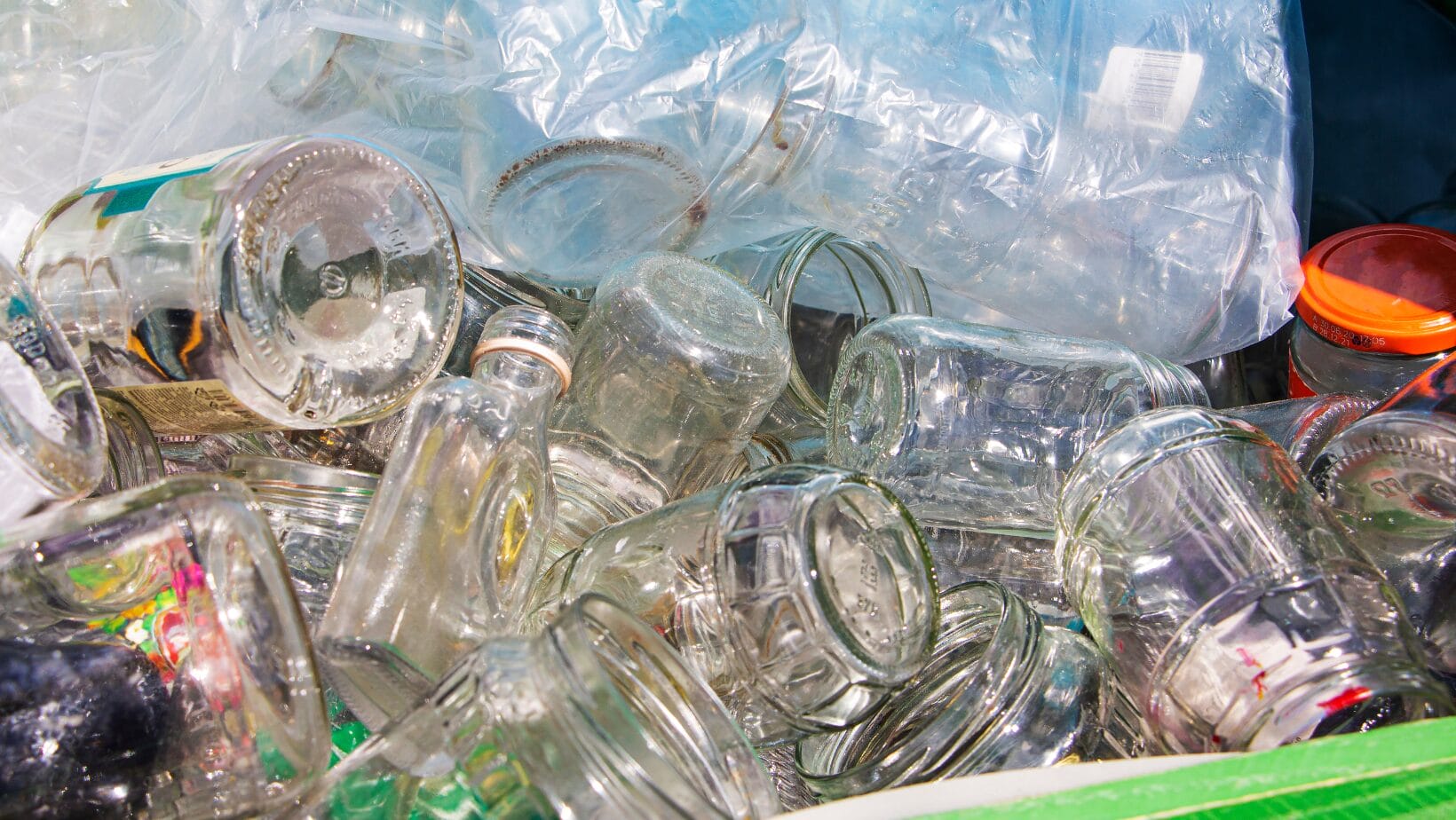
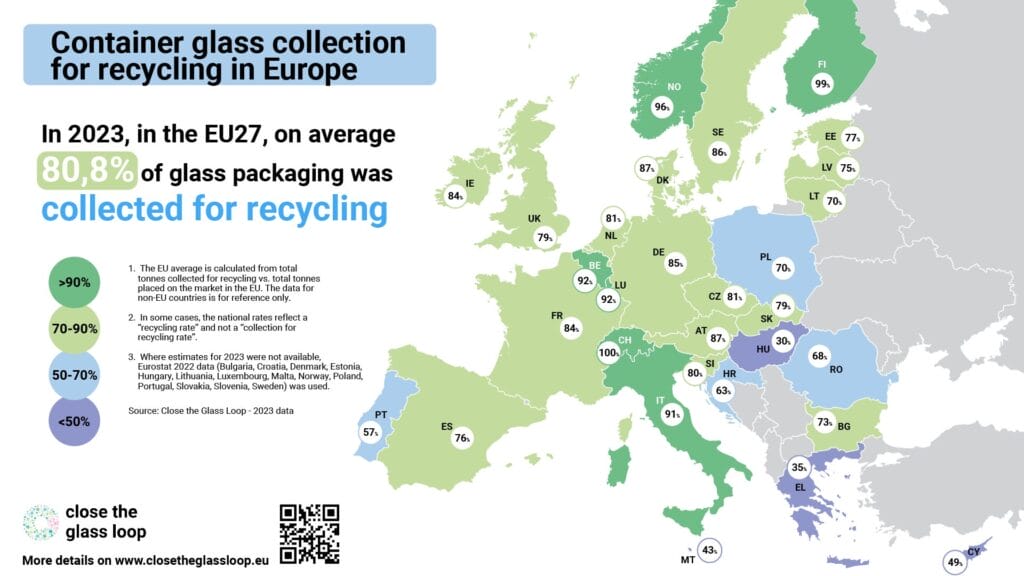
According to the latest data from the Close the Glass Loop industry initiative, an average collection rate of just under 81% was achieved for glass packaging for recycling in the EU in 2023. A total of over 12 million tonnes of glass packaging was collected.
The actual rate could be even higher, as EU member states are now obliged to report actual recycling - not just collection.
This development is based on established separate collection systems for households and catering businesses as well as a functioning network of recycling companies. The collected glass is recycled in a closed cycle and back to one of the 162 European glass packaging plants led. Despite the positive trend, industry representatives are calling for further efforts to achieve the target of a 90 per cent glass collection rate by 2030.

„85 per cent of the glass packaging collected is effectively recycled. This makes glass a central component of the European circular economy.“
Carlo Pirrone, Secretary General of the European Container Glass Federation FEVE.
Olivier Deweerdt, Secretary General of the European glass recyclers„ association FERVER, emphasised: “Every additional tonne of glass collected is a valuable raw material that helps to close the loop."
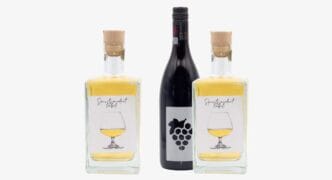
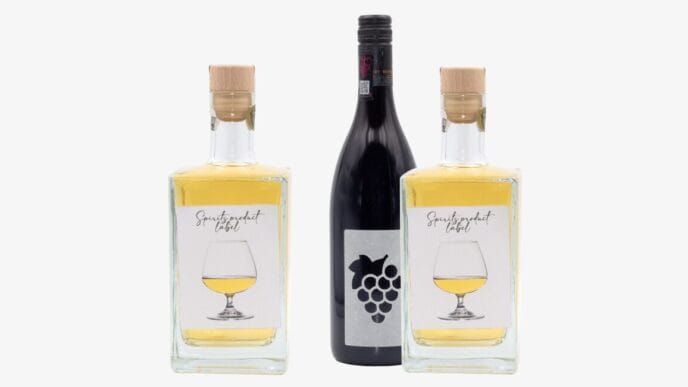
Spirits producers are also focussing on glass packaging. Sarah Melina Siebel from spiritsEUROPE emphasised: „Over 90 per cent of spirits in Europe are sold in glass bottles. We support every measure to improve collection and recycling.“
Austria is an example of many years of commitment: since 1977, over eight million tonnes of glass packaging have been collected there. Today Around two thirds of the glass packaging produced in Austria is made from recycled glass.
Progress has also been made at national level: Portugal and Greece increased their collection volumes by 12.6 per cent and 11.1 per cent respectively compared to 2022. Spain increased by seven per cent and achieved a collection rate of 75.9 per cent. Italy passed the 90 per cent mark for the first time.
Source: Close the Glass Loop