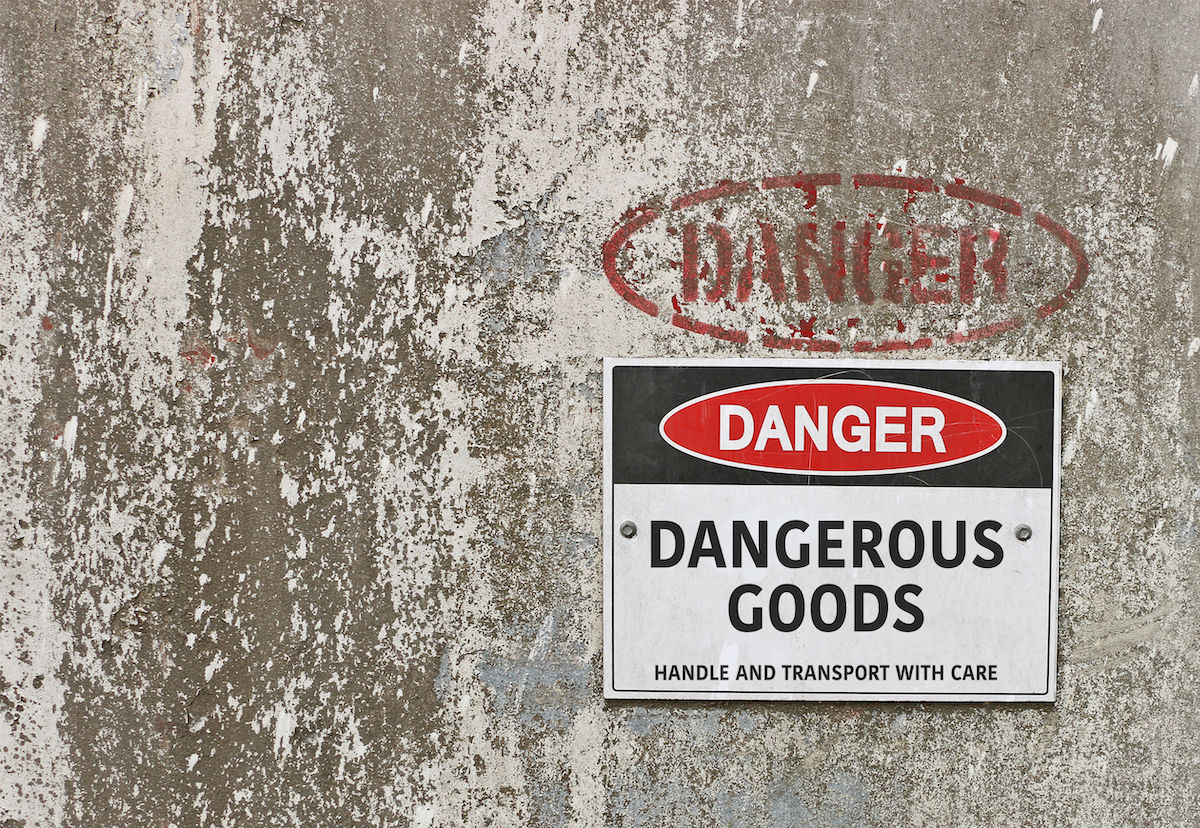
The transport of hazardous goods, for example from the chemical industry, places high demands on the safety of the packaging material.
The RAL Quality Mark for Plastic Packaging for Dangerous Goods has stood for high quality standards in the production of safe drums, canisters, sacks made of plastic fabric or plastic film, rigid plastic IBCs and combination IBCs with plastic inner containers as well as flexible intermediate bulk containers (IBCs) made of plastic fabric or film since 1983.
The criteria for its award, the quality and test specifications, have now been completely revised on the basis of the new regulations of the European Agreement concerning the International Carriage of Dangerous Goods by Road (ADR).

In order to ensure the safety of packaging materials in which dangerous goods are transported, the RAL Quality Mark for Plastic Packaging for Dangerous Goods high demands on their production, which largely go beyond legal and normative regulations.
Regular checks and continuous monitoring
In order to be able to use the RAL quality mark, manufacturers must, for example, closely monitor the minimum wall thickness, tightness, external quality and the correct assembly and function of seals, closures and valves during the production of plastic canisters.
The finished packaging is then thoroughly Tested for leaks and internal pressure. Compliance with the quality assurance programme is continuously monitored by the companies themselves and once a year by neutral auditors.
The RAL Quality Assurance Association for Plastic Packaging for Dangerous Goods, in which the users of the RAL quality mark have joined forces, currently has 21 members. The number of hazardous goods approvals granted for the products of members of the Quality Association is around 1,500, making the RAL Quality Association the leading organisation in the field. largest external supervisor in the field of hazardous goods packaging.
Source: RAL German Institute for Quality Assurance and Labelling.