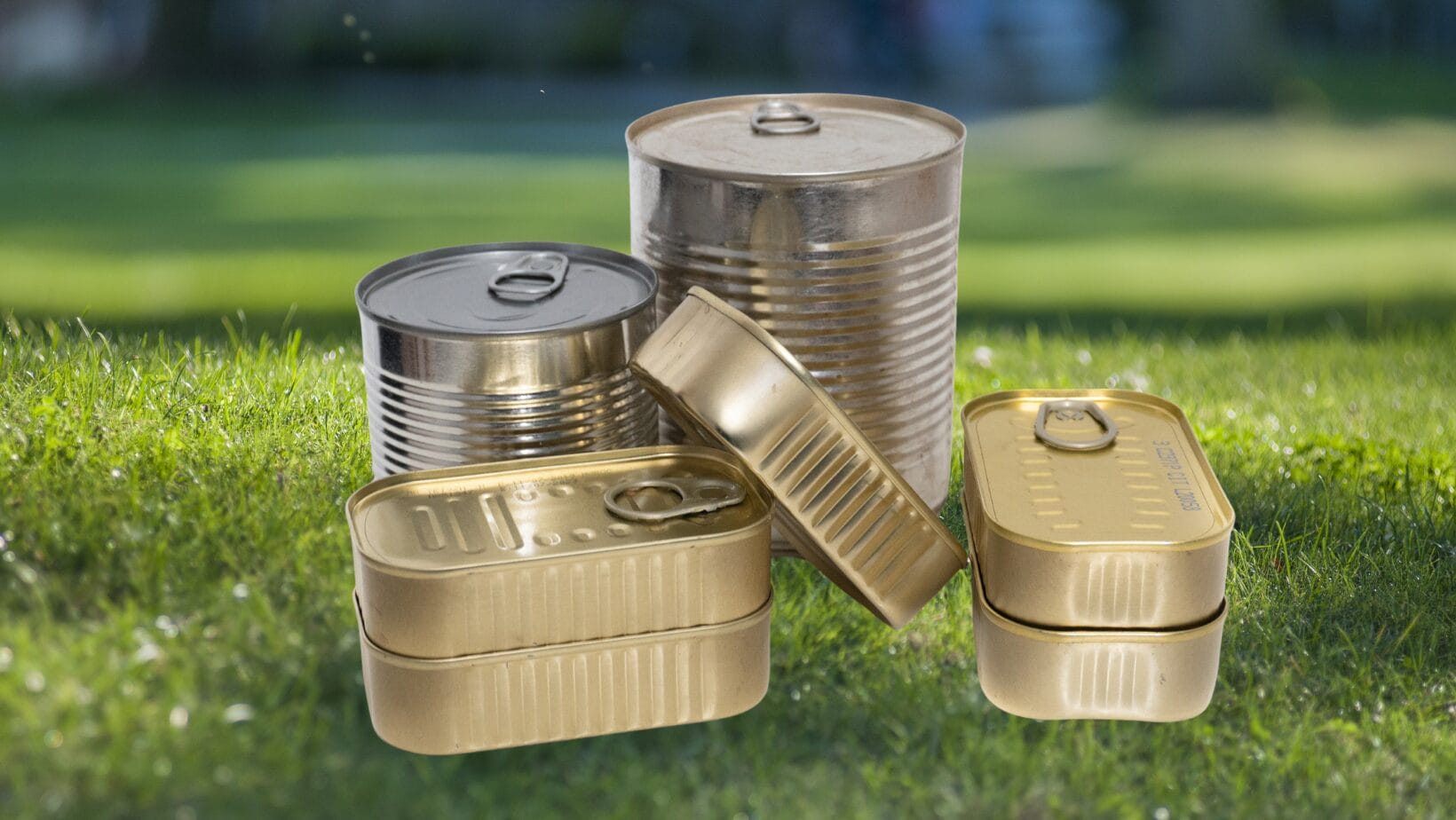
Whether it's May Day, Father's Day or simply a sunny Sunday - for many, the merry month marks the start of the outdoor season. Many hiking and excursion fans use tinplate packaging for their snacks, as it is practical and easy to recycle. The ‚Weissblech-kommt-weiter‘ initiative, a platform of thyssenkrupp Rasselstein GmbH, provides tips on how to dispose of them correctly.
Unlike many fresh products, foods such as tinned sardines or sausages do not require refrigeration. So you don't need a cool box or freezer elements for transport. This saves weight and space in the rucksack or on the handcart and makes Tinplate food packaging is the ideal companion for the next day of hiking. In addition, tinned food is usually pre-cooked and can also be eaten cold. This saves on the gas cooker and therefore additional luggage. This means that some hikers can cover a few more kilometres a day without carrying unnecessary weight.
Tinplate belongs in the yellow bin
After eating the contents, you should make sure that you take the empty cans home with you and dispose of them in your own yellow bin or yellow bag. This is because public rubbish bins are generally for residual waste. This means that tinplate packaging that is disposed of there does not go for recycling. This is Tinplate is a valuable raw material that is easy to recycle. This is because it is magnetic and can be easily separated from other materials. With a recycling rate of more than 90 per cent, tinplate is far ahead of other materials such as plastic.
Tinplate is also multi-recyclable. This means that the material does not lose its properties through recycling and can be reused to make a new high-quality steel product. Steel scrap such as tinplate scrap is always used in the production of crude steel for new products. So if you want tinplate packaging to be returned to the cycle, you should dispose of it correctly. And: as with all packaging, consumers have already paid the costs of disposal when they buy the products. So anyone who disposes of tinplate packaging with household waste is paying twice.

Collect crown corks, save resources
Also Crown corks from beer, soft drinks etc. belong in the yellow bin or the yellow bag. Just like the lids of jars. Because they are also made of tinplate. So if you go out with your drinks crate in a handcart, it's a good idea to collect the caps in a small cup or bag to dispose of them at home. The same applies here: only crown corks that do not end up in public rubbish bins along the roadside or even in nature can be returned to the cycle and thus help to save important resources.