The HolyGrail 2.0 initiative has reached another milestone and proven the feasibility of digital watermarking technology for the precise sorting of plastic packaging on an industrial scale.
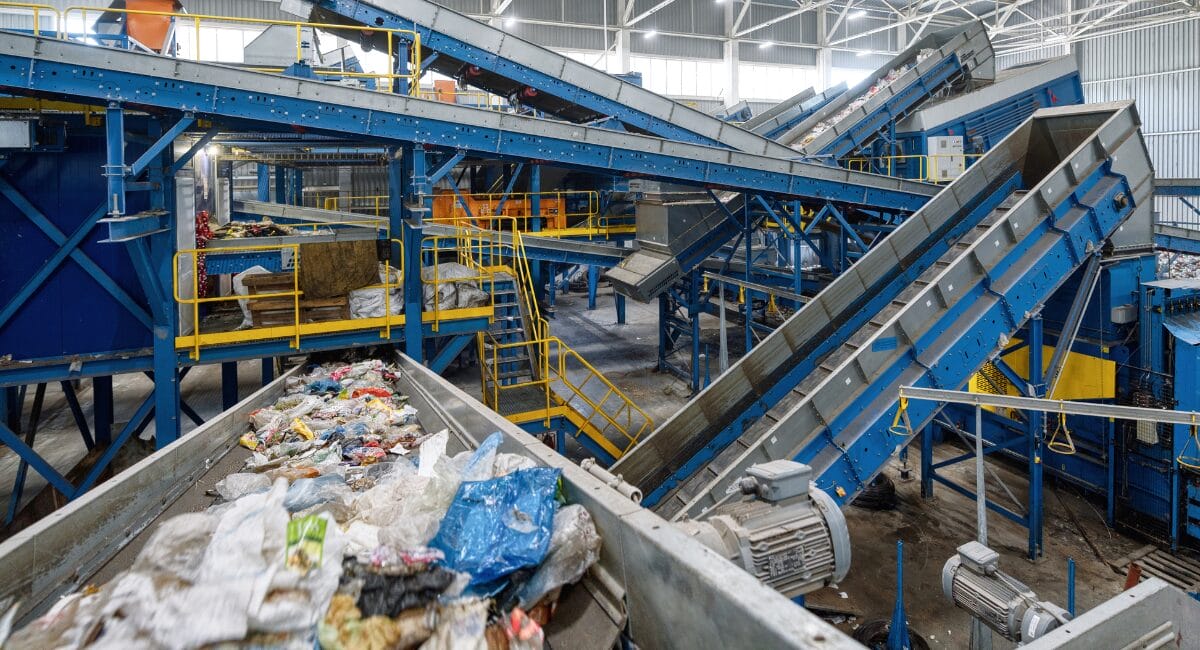
The latest tests were carried out at Hündgen Entsorgung's material recycling facility (MRF) in Swisttal, which processes 100,000 tonnes of waste from three million households every year. The aim was to evaluate the efficiency of digital watermarks on rigid household packaging collected in Germany and Denmark. The system was equipped with recognition prototypes and additional modules developed jointly by technology provider Digimarc and machine supplier Pellenc ST. These modules combined near infrared (NIR) and digital watermarking (DW) technology for improved sorting accuracy.
The quantities of material sorted were remarkable: the recognition rates reached an average of almost 56,000 detections per day. Detection efficiency was between 87.9 and 93.8 per cent, with the strict cloud-based analysis consistently showing over 90 per cent.

Digital watermarks on many branded products
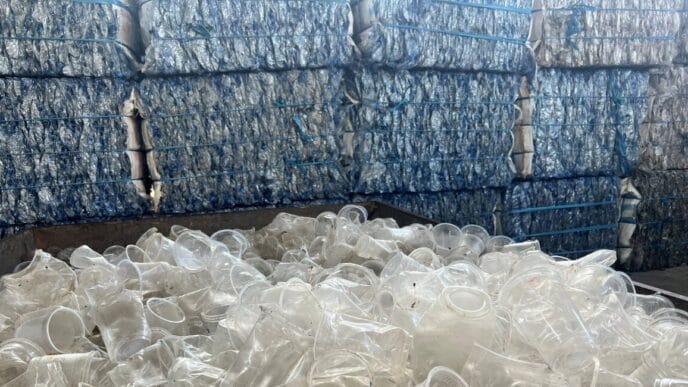
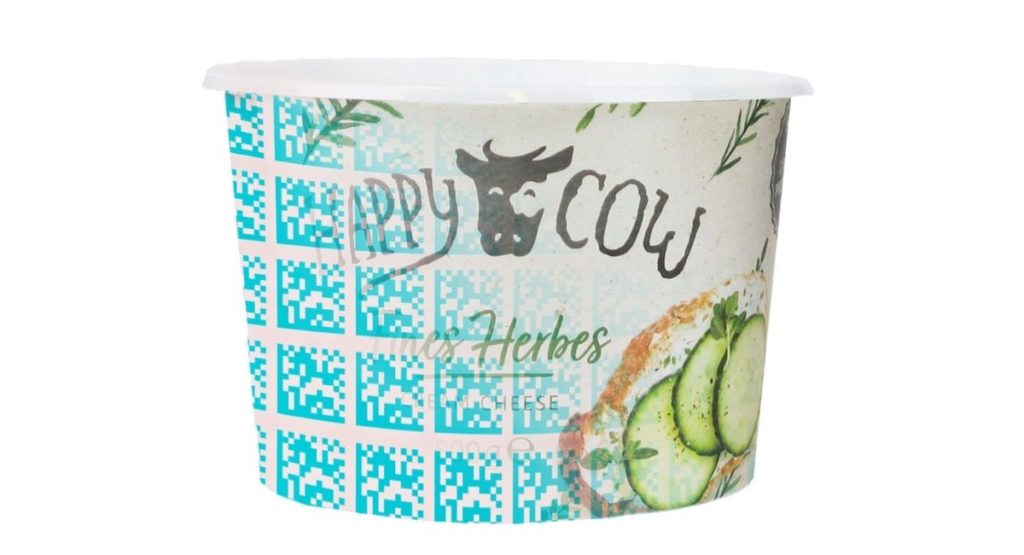
The trials focussed on rigid packaging waste from the end consumer sector in four different types and formats: PET non-food bottles, rigid PP, rigid PE and PET trays. The participating companies Aldi, Arla foods, Netto Marken-Discount, Haleon, Hochland, Mondelēz International, Orkla and Procter & Gamble had previously labelled their packaging with digital watermarks and made it available on the German and Danish markets for consumer use, disposal and collection in designated areas. Coca-Cola and McDonald's additionally filled the streams with further quantities of Drinking cups with digital watermark on. Similar sorting tests were also carried out with tobacco tins from Imperial Brands.
The sorting efficiency and purity was measured for the various material fractions. The results confirm that the digital watermark enables high-precision sorting, even under difficult conditions on an industrial scale, characterised by material overlaps and contaminated object surfaces. The two-pass sorting process commonly used in recycling plants is expected to further improve sorting efficiency and purity - as demonstrated in previous HolyGrail 2.0 sorting trials.
The results were for sorting in one pass achieved. They are expected to improve in industrial environments with additional processing, proving that the technology is ready for full commercial use is.
On the way to market acceptance
For the initiative, these results mark a significant step forward in the Introduction of intelligent recognition and sorting solutions. The trials had shown that Digimarc's digital watermarking technology can facilitate the traceability of packaging waste and thus also a way to comply with the PPWR in particular the requirements for the recycled content of plastic packaging, which will apply from 1 January 2030.
With the completion of HolyGrail 2.0, the focus is now shifting to to market adoption programmes as part of the HolyGrail 2030 - Circular Packaging initiative. The aim is to demonstrate the economic viability of intelligent sorting and reprocessing into high-quality recyclates that can be reused in packaging applications, including food packaging, for all players in the packaging chain.
In Belgium (for flexible PP food packaging) and Germany (for rigid PP food packaging), initial market presentations are being organised with the aim of Further scaling of the technology and to give the participants Access to special recycled PP food materials to make this possible.
HolyGrail 2.0 is supported by the European Brands Association AIM and driven by the Alliance to End Plastic Waste (AEPW).
Source: Digital watermarks