Innovative unpacking machine for the food industry
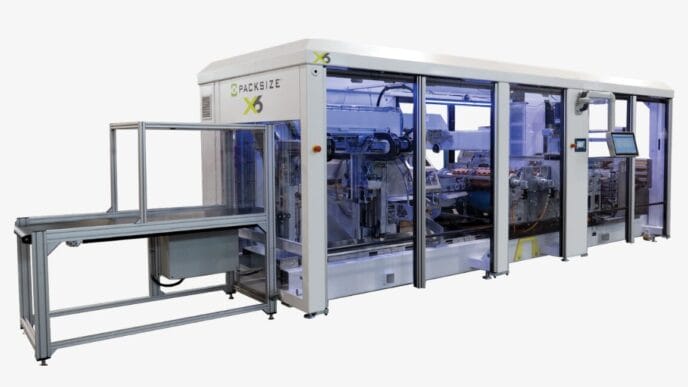
The „Skinner“ unpacking machine from Neckhaim Consulting GmbH enables the automated unpacking of faulty products.
22 September 2020
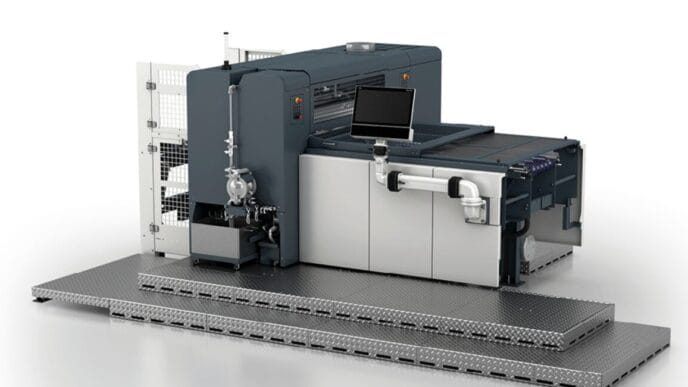
The „Skinner“ unpacking machine in action. (Image: Neckhaim)
The „Skinner“ unpacking machine from Neckhaim Consulting GmbH enables the automated unpacking of faulty products. In this way, the production of reworks can be completely automated and companies can work more economically and sustainably at the same time.
Every manufacturing process produces a certain percentage of broken goods that are unsuitable for sale - for example, because the packaging is not airtight. This not only has a negative impact on sales, but also results in additional recycling costs. Although the materials of the rejected goods could be used for Reworks can be reused, but the recycling of defective products is a time-consuming process.
This is mainly due to the fact that the packaging has to be removed again, a process that until now could only be done manually. This is precisely where Neckhaim Consulting GmbH, which operates in Germany, Austria and Switzerland, comes in.
Ernest Neckhaim, Managing Director of Neckhaim Consulting GmbH (Image: Neckhaim)
„Our vertical solution makes it possible to recycle broken goods in an environmentally friendly and profitable way. Every year, large quantities of faulty food are simply disposed of together with their packaging, both globally and in Germany. Circular economy in which nothing needs to be thrown away,“ explains company boss Ernest Neckhaim.
Display
Particularly in view of the increasingly stringent sustainability requirements for the food industry, entrepreneurs see broken goods as a growing problem factor in these times. With the Neckhaim Consulting GmbH designed Skinner„ unpacking machine“ there is now a suitable solution.
Automation of rework processes
The skinner provides the basis for the automated production of reworks by mechanically removing the broken products from their packaging. Defective products ejected from the production process can be removed via Assembly line connection directly into the Skinner can be entered.
There, the machine removes the packaging from the product using rollers and sucks the packaging away with a Vacuum pump off. The empty packaging is collected in a container attached to the machine and can then be recycled.
The unpacked broken goods are then removed from the skinner in such a way that the rest of the rework process can also be automated via a conveyor belt. Detectors, for example, can then check the food for packaging residues before it can be shredded and reused by roller systems or similar equipment.
In this way, the Skinner automates the entire recycling process and enables German food companies to take a significant step towards Circular economy to go.
Economical use
The economic application range of the Skinner extends across all Products between 2 and 250 grams. According to Neckhaim Consulting GmbH, it doesn't matter what is to be unpacked. Because with just a few fine adjustments, the Skinner's equipment can be adapted to products from different manufacturers.
The machine currently operates at a cycle rate of less than 4 seconds, meaning that over 15 faulty products can be removed from their packaging per minute and returned to the production cycle. The machine thus closes an important gap in food production - a study to analyse the Economic efficiency of Skinner showed that the return on investment is achieved in less than one year after acquisition. In the case of Austrian confectionery producer Manner, it was only 4 months.