Pharmaceutical manufacturers are constantly looking for ways to increase their efficiency. Packaging plays a crucial role in this. During packaging development, extensive stability testing ensures that medicines remain effective throughout their shelf life. However, this can be time-consuming and costly. With its „Advance with Agility“ programme, Sanner provides a quick solution.
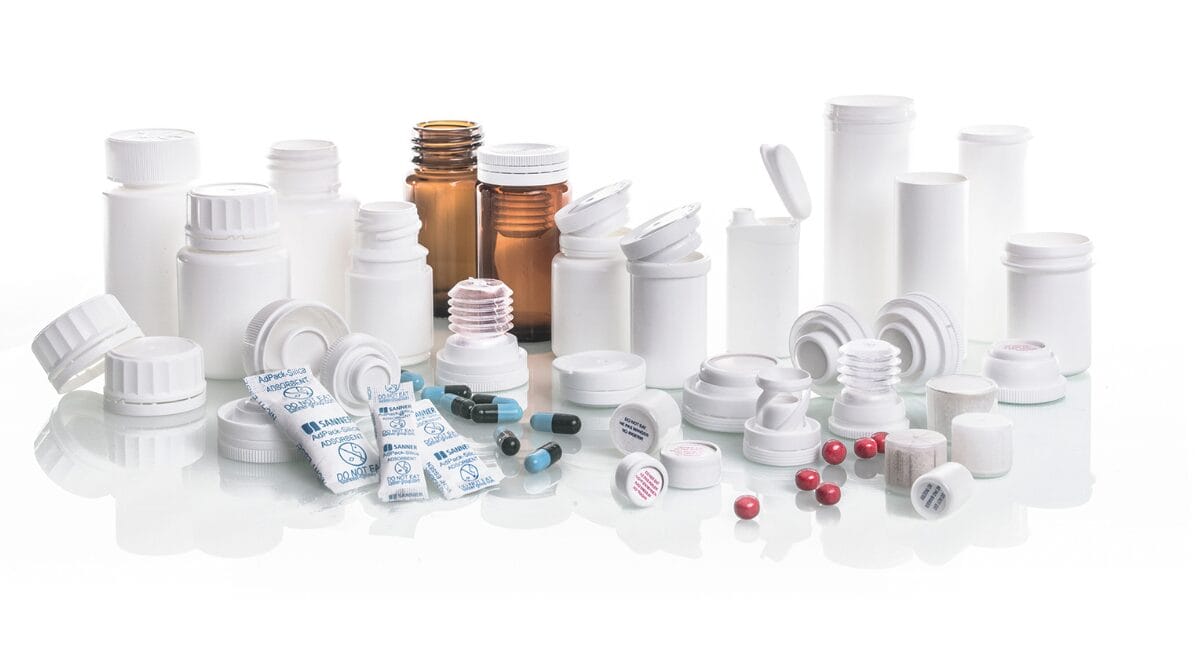
Solid oral dosage forms always present pharmaceutical manufacturers with the same challenge: ensuring the physical and chemical stability of their medicines to guarantee their shelf life. This important task is performed by Desiccant, which can be divided into two main categories: Drop-in and integrated solutions. The drop-in variants include desiccant bags, sachets and capsules. Integrated solutions are bottles, tubes or even tablet dispensers where the desiccant is integrated into the cap or base of the container. This approach is favoured by pharmaceutical companies due to its Efficiency and safety increasingly favoured.
Predict stability results accurately
Through the Quality-by-Design (QbD) approach packaging developers can design robust packaging right from the start and thus Drastically reduce development time and costs. It is crucial to understand how moisture affects a product. Using industry recognised and validated models, potential stability issues and effects can be predicted at the design stage. This reduces the risk of having to repeat stability tests and the need to reformulate or redesign the packaging.

Just 20 years ago, QbD was rarely used so early in the development process. Today, this approach is increasingly used during Phase 2B clinical trials. Scientifically developed predictive stability modelling programs cover a comprehensive range of stability conditions. These programmes determine the results of moisture management by integrating empirical measurements. By working closely with formulation chemists, stability results can be predicted for a specific drug product in packaging.
All parameters at a glance
Sanner GmbH, Bensheim, Germany, also relies on QbD as part of its „Advance with Agility“ programme. This comprehensive approach also involves all key stakeholders to ensure that all requirements are met and the overall efficiency and effectiveness of the process is increased. So the programme accelerates the development, packaging selection or packaging change and market entry.
In the first phase of the programme, the QbD-based „Sanner Atmo Guard System“ will be used. In combination with the industry standard for accelerated drug stability predictions ASAPprime, it allows the moisture profile, which is essential for product stability in primary packaging, to be determined quickly. The experts take the most important parameters into account: Chemical and physical causes of loss of stability, free moisture in the product, adsorption and desorption isotherms for the product and desiccant, moisture ingress in the primary packaging and the original relative humidity in the headspace of the packaging.
Successful practical example
(Image: Sanner)
In the case of packaging for nicotine lozenges that had already been launched on the market, the initial aim was to develop a new Solution for the integration of the desiccant to find. At that time, the packaging consisted of a desiccant-polymer composite. The desiccant was moulded into the plastic packaging as a moisture adsorber.
In accordance with the „Advance with Agility“ programme, we identified Sanner the optimum type and quantity of desiccant. With this solution, a concept was developed in which the Desiccant integrated either in the base or in the cap and the process step of adding a separate desiccant during filling can be avoided.
The Sanner Atmo Guard system has now been used to calculate the amount of desiccant that is actually required to achieve the specified shelf life. The result: 1.7 grams of desiccant in the floor can replace the previous amount of desiccant. For the customer a Significant savings of more than 50 per cent. The tests on the water vapour transmission rate on the real packaging in conjunction with the simulation of the product stability forecast using ASAPprime showed that this cost-effective solution fulfils all the necessary criteria. The subsequent stability tests also confirmed and validated this result. Thanks to the prior simulation, potential delays caused by repeated tests could be avoided.
Child-safe packaging design
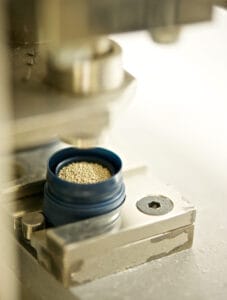
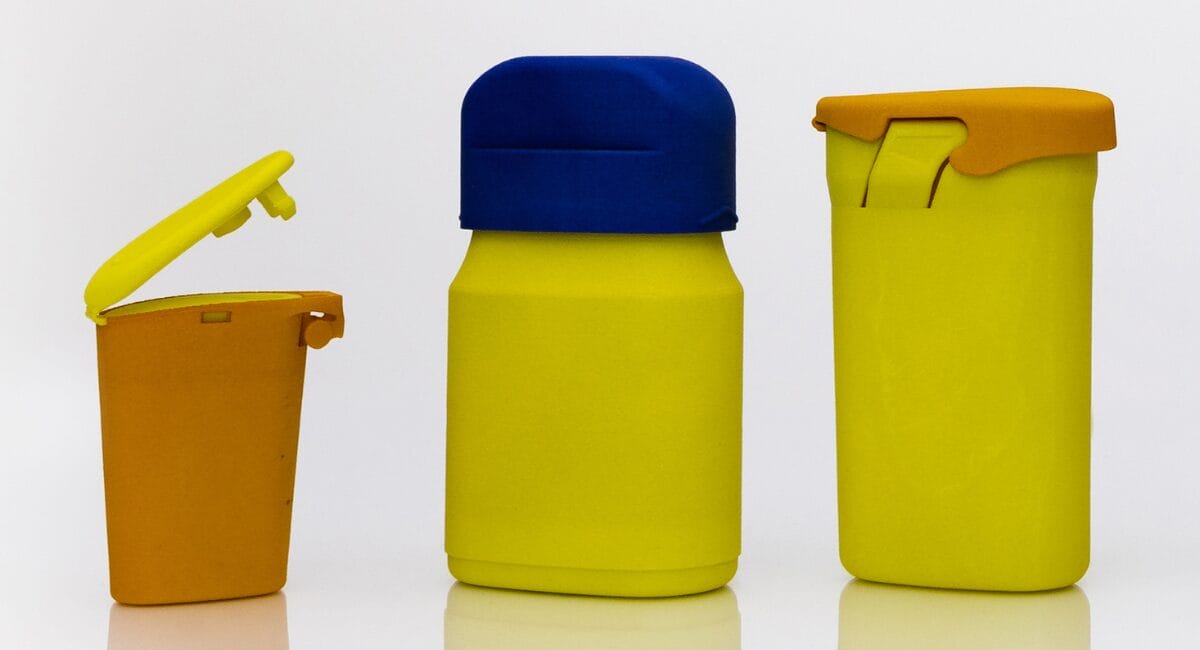
Packaging design follows in the second phase of the „Advance with Agility“ programme. In the case of nicotine lozenges, the aim was to create a Childproof solution that stands out from comparable products due to its high quality and packaging integrity. At the same time, the childproofing should be accommodated in such a way that the packaging size remains the same in principle.
Once the child-resistant closure had been successfully implemented, another major challenge followed, which again related to stability. This is because one of the key factors for product stability lies in the Integrity of the packaging. The connection between the container and the closure is the most critical area where moisture can penetrate the packaging. High-precision injection moulding plays a decisive role here. In both areas, both in the Tightness of packaging and injection moulding, Sanner can look back on decades of experience and was able to propose the optimum solution for the customer.