Manufacturers of paper and film packaging are pessimistic about the current year. Only one in five companies believes that 2021 will be a better business year. One in three anticipate a deterioration.
6 May 2021
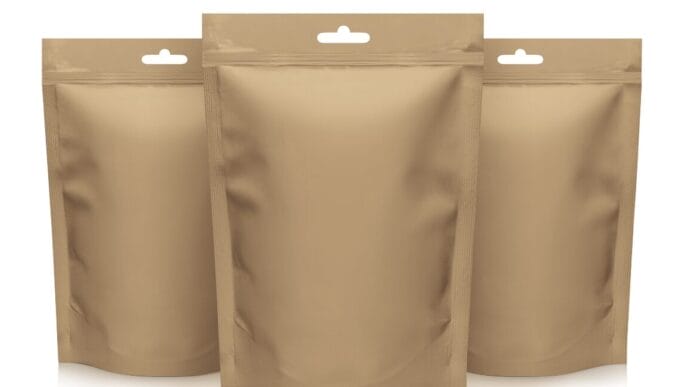
(Image: Shutterstock)
Manufacturers of paper and film packaging are pessimistic about the current year. A survey by the IPV revealed that only one in five companies believes that 2021 will be a better financial year. One in three anticipate a deterioration.
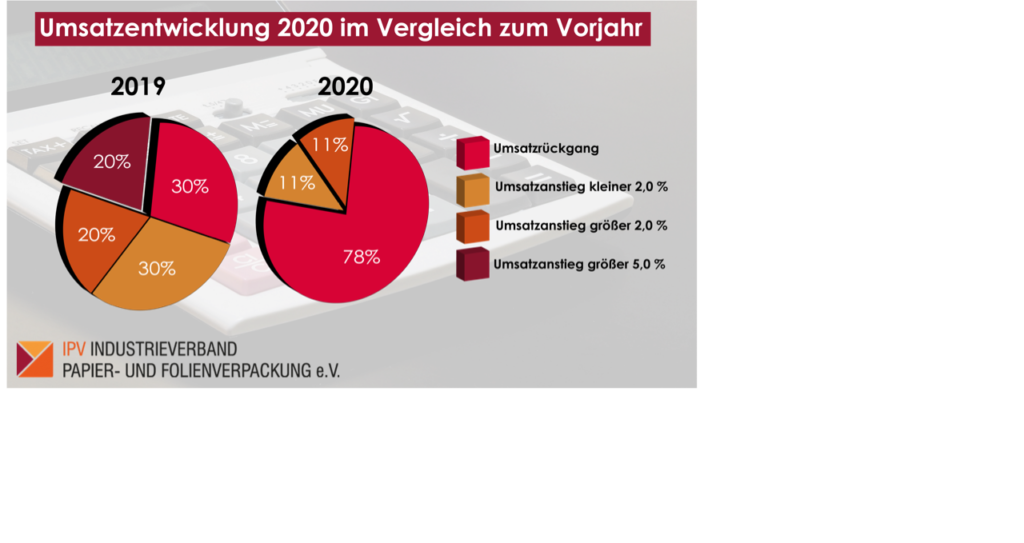
The latest industry survey by the German Paper and Film Packaging Association (IPV) naturally bears the stamp of the past corona year. Many processes had to be completely overhauled and economic expectations have been significantly dampened. 78 per cent of companies saw a drop in sales in 2020 due to Covid 19. These could not be fully absorbed and therefore had the effect of reducing profits for many members.
(Image: IPV)
Only 11 per cent of companies were able to achieve significant growth in turnover despite the pandemic, including suppliers to large food retailers. Restraint and „driving on sight“ are clearly noticeable in purchasing. Customers' planning behaviour was very cautious but also extremely volatile. Instead of continuous incoming orders, there were extreme peaks with the requirements of a three-shift operation, but also very quiet phases. In autumn 2020 in particular, some companies had to switch to short-time working arrangements.
Fewer jobs needed?
Two thirds of companies cut jobs or did not fill new positions during the crisis year. „Of course, this is a snapshot. The Shortage of skilled labour remains a serious problem of the coming years. Especially when it comes to quality. Of course, the statistics also include positions that could not be filled due to a lack of qualifications,“ explains IPV Managing Director Karsten Hunger.
Display
(Image: IPV)
„Nevertheless, you can feel how profoundly the pandemic is affecting companies. Only one in three companies currently state that they still have a shortage of skilled labour. In comparison: last year, the figure was a whopping 90 per cent.“ Karsten Hunger, IPV Managing Director
Nevertheless, it should be noted that, thanks in part to the extensive economic aid, those companies that are still desperately looking for skilled labour are still in good shape, Hardly any improvement on the labour market see. The association therefore does not believe in sustainable development.
IPV sees a decline in willingness to invest
Only 22 per cent made more investments in their business last year. Over 44 per cent even reduced expenditure compared to 2019. And also In 2021, one in three companies plans to invest less again. By contrast, roughly the same number want to increase the investment budget again. Of course, it should not go unmentioned that an enormous amount has been invested in the packaging industry in recent years, meaning that there is not always an urgent need for new investments.
(Image: IPV)
„Looking at the current year, only a few companies are optimistic about the future. Only around one in five companies believe they will have a better business year in 2021. One in three anticipate a deterioration.“ Klaus Jahn, Association spokesman
Increasing demand for fibre-based solutions
In addition, packaging is coming under further pressure in terms of acceptance and the demand for replacement solutions for plastics is picking up speed. „We expect times to remain difficult for packaging manufacturers. But of course, new hygiene requirements and e-commerce, which has been boosted by coronavirus, also offers opportunities for the sectors. And not least in the development of new product processes for packaging,“ says Jahn.
(Image: IPV)
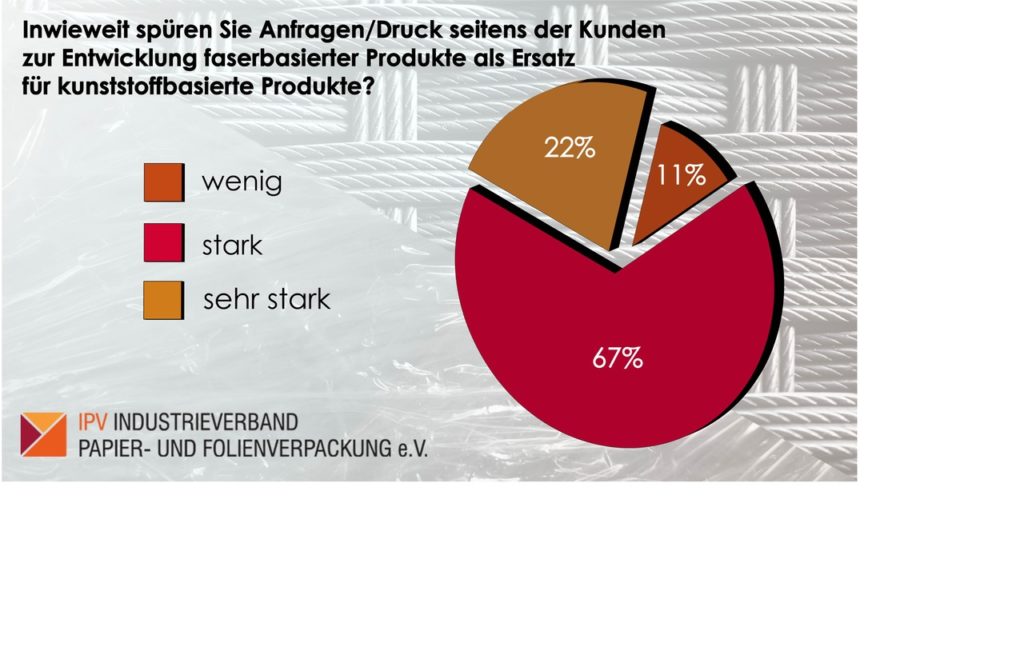
The demand for fibre-based products to replace plastic packaging remains strong and has been a noticeable trend for several years. Almost 89 per cent of IPV members feel strong or very strong customer pressure for more fibre-based solutions. The switch to renewable raw materials and good recyclability are often cited as advantages. On a par with the desire to avoid plastic entering the environment.
„We can't talk that away. Certainly also politically motivated, a very critical attitude towards plastic packaging has become firmly established among end consumers. This will continue to be a topic of public debate even after the pandemic. As a manufacturer, we naturally have to take this into account and we are working flat out on innovative solutions, but also on the Clarification of the need for plastic and their environmentally safe recyclability,“ says Karsten Hunger.
Shortage of raw materials causes supply difficulties and price increases
Back in March, the association published a brief survey on procurement problems on the current raw materials market. Suppliers are talking about „force majeure“, i.e. force majeure triggered by the surprisingly rapid recovery of individual sectors and diverted raw material imports to China.
In an update to the brief survey of members at the end of April still no easing to report. HDPE and OPP are particularly affected. In particular, the prices of raw materials have risen significantly due to the shortage, with increases of more than 50 per cent in some cases. While some members of the association have been forced to stockpile larger quantities, others are having problems with production.
The unexpected delivery delays have necessitated changes to the production schedule and have led to orders being postponed in some cases. The supply situation is generally expected to continue or deteriorate further. The member companies of the IPV therefore urgently call on the entire supply chain to pull out all the stops to eliminate the bottlenecks and ensure the supply of packaged food and other systemically important products. It is already clear that the shortage of raw materials and the increase in transport costs will continue to have an impact on prices.