K 2019: International meeting place for heated discussions
At K 2019 in Düsseldorf from 16 to 23 October 2019, topics such as „Circular economy“ and „Plastics for sustainable development“ will be discussed intensively.
1 October 2019
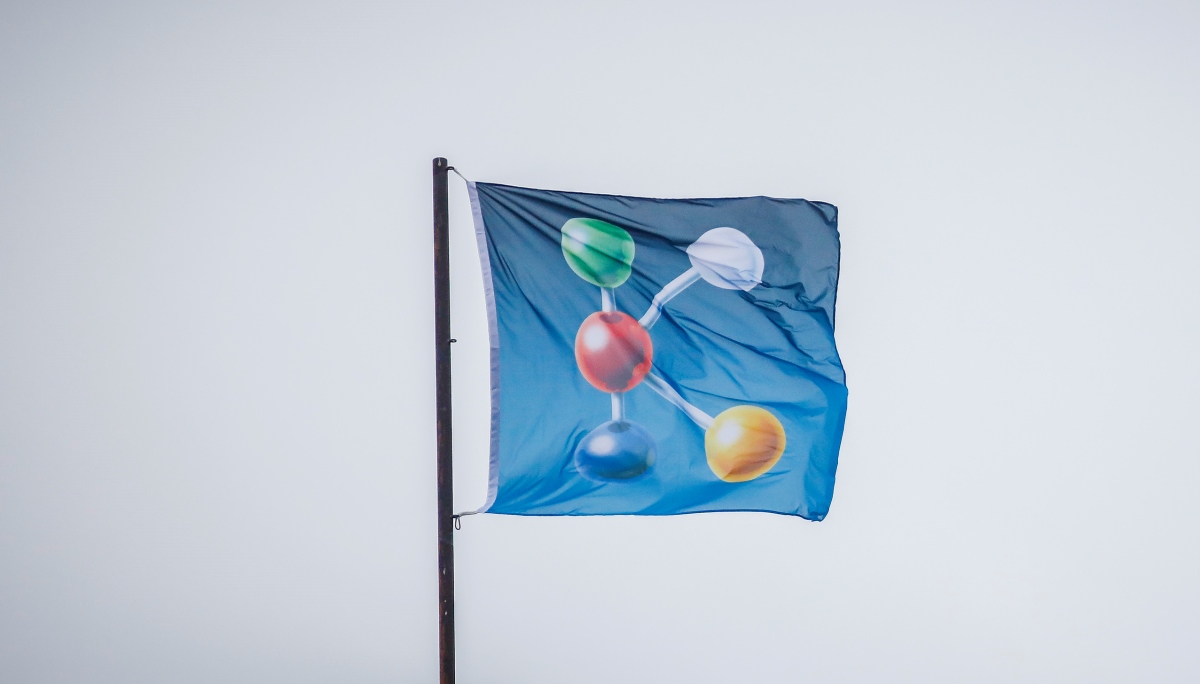
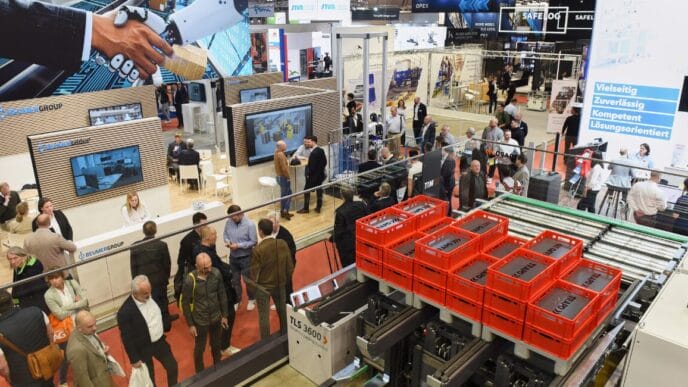
K Trade Fair (Picture Messe Düsseldorf, Constanze Tillmann)
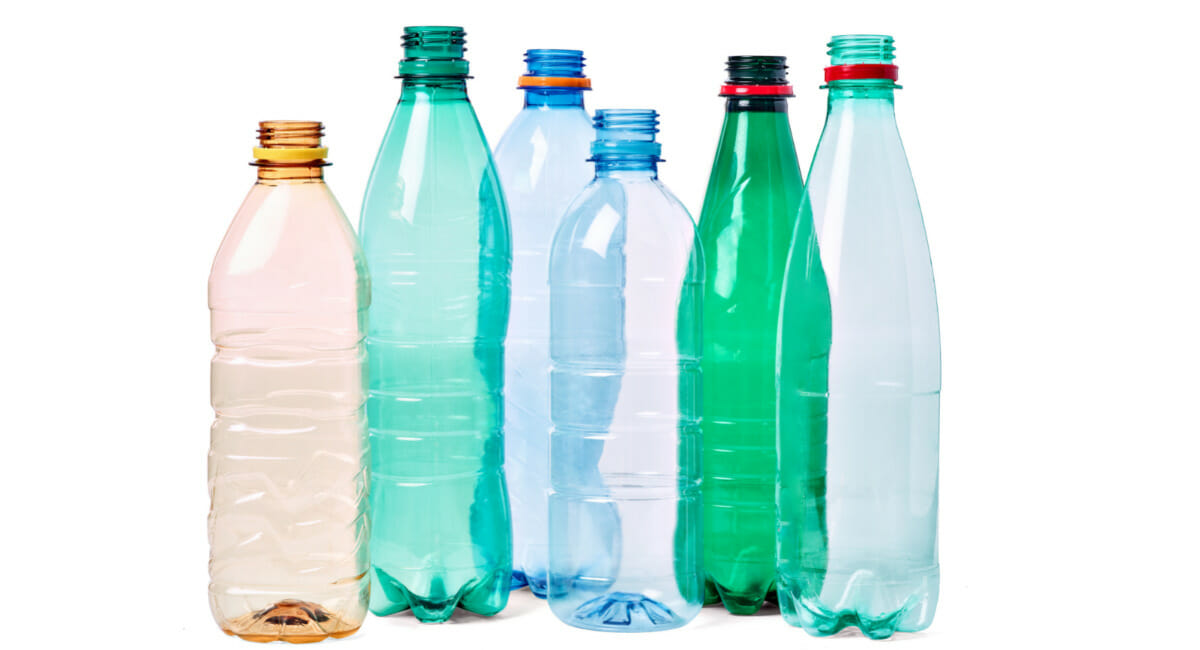
They are light, durable, flexible, inexpensive and almost true all-rounders. And indispensable in many situations. They protect food and extend its shelf life. But plastics have fallen into disrepute. An irritating topic for many. Plastic floats in the sea and is even found as microplastics in organisms. But what to do? A question that will be discussed intensively at the K 2019 trade fair.
Primarily, an answer must be found to the question of why vast amounts of plastic waste end up in the environment. What could be more obvious than educating consumers and consumers intensively about how to deal with food-safe packaging? Industry on the one hand and consumers on the other are challenged.
How people can be persuaded to handle waste more carefully, especially plastic packaging waste, was recently demonstrated by the Clean River Project. Launched by Stefan Horch in 2012, the project came Paddling and photo art for clean rivers and seas also arrived at Messe Düsseldorf. Starting in Koblenz and stopping at various locations, including a stop in Düsseldorf, where Messe Düsseldorf employees also joined in, the CleanUp Tour concluded in Berlin on 6 September 2019. At each stopover, waste was removed from the river and surrounding green spaces.
More circular economy
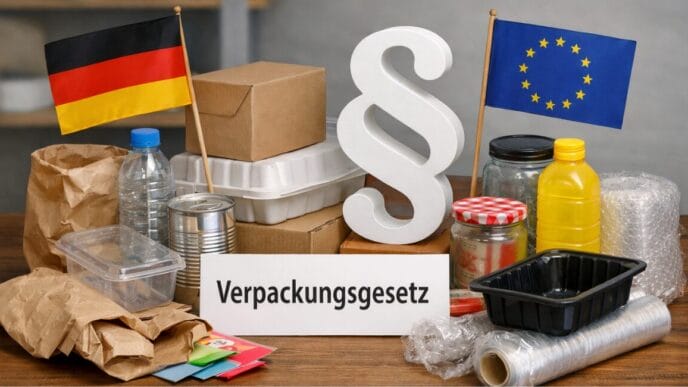
In the fight against plastic waste, the circular economy in conjunction with the new packaging law reduce packaging waste and solve the acute problems in this way. In and of itself, the idea is plausible: the valuable materials used at the end of their useful life can be recycled. Life cycle to reprocess them so that they can be used again. Preferably permanently in a recurring cycle.
Display
However, not all plastic materials can currently be used in this way. Because the Recyclability of the packaging must be guaranteed. In addition, the appropriate Infrastructure must be available in order to realise this process in the best possible ecological and economic way. A suitable infrastructure for both sorting and recycling, including suitable buyers for the processed materials, would be ideal.
This poses a challenge for the plastics industry, as the supply of recycled plastic exceeds demand. This is probably also related to the quality of the recycled material. Separation by type is the ideal situation. This is the only way to produce single-origin products again.
[infotext icon] K 2019 in figures
K 2019, The World's No. 1 Trade Fair for Plastics and Rubber, from 16 to 23 October 2019 in Düsseldorf, is fully booked. Around 3,200 exhibitors from more than 60 countries will occupy the entire exhibition centre with 175,000 m² of exhibition space. Over 200,00 trade visitors from all over the world are expected[/infotext].
Time is of the essence
Everything had to happen as quickly as possible. In collaboration with the European Commission circular platforms are to be expanded and newly established to achieve 50 per cent material recycling of plastic waste and 70 per cent recycling and reuse of plastic packaging by 2040. The transition to a circular economy will only succeed with the commitment and concrete measures of all those involved in the plastics processing industry and all players along the entire value chain.
The actual core idea of the circular economy lies in the Networking the areas of waste management and recycling with production. This is automatically accompanied by the topic of Digitisation, which to date only exists in rudimentary form in this complexity. Although examples of a circular economy will be presented at the trade fair, these are only the first pioneering beginnings. The linking of all processes is still lacking. This includes collection, recycling and production in its entirety across all companies.
Initial approaches are encouraging
On behalf of the mechanical engineering sector Andreas Lichtenauer, Managing Director & Partner at Kautex Maschinenbau GmbH, when asked what opportunities a manufacturer such as Kautex has to improve the handling of plastic:
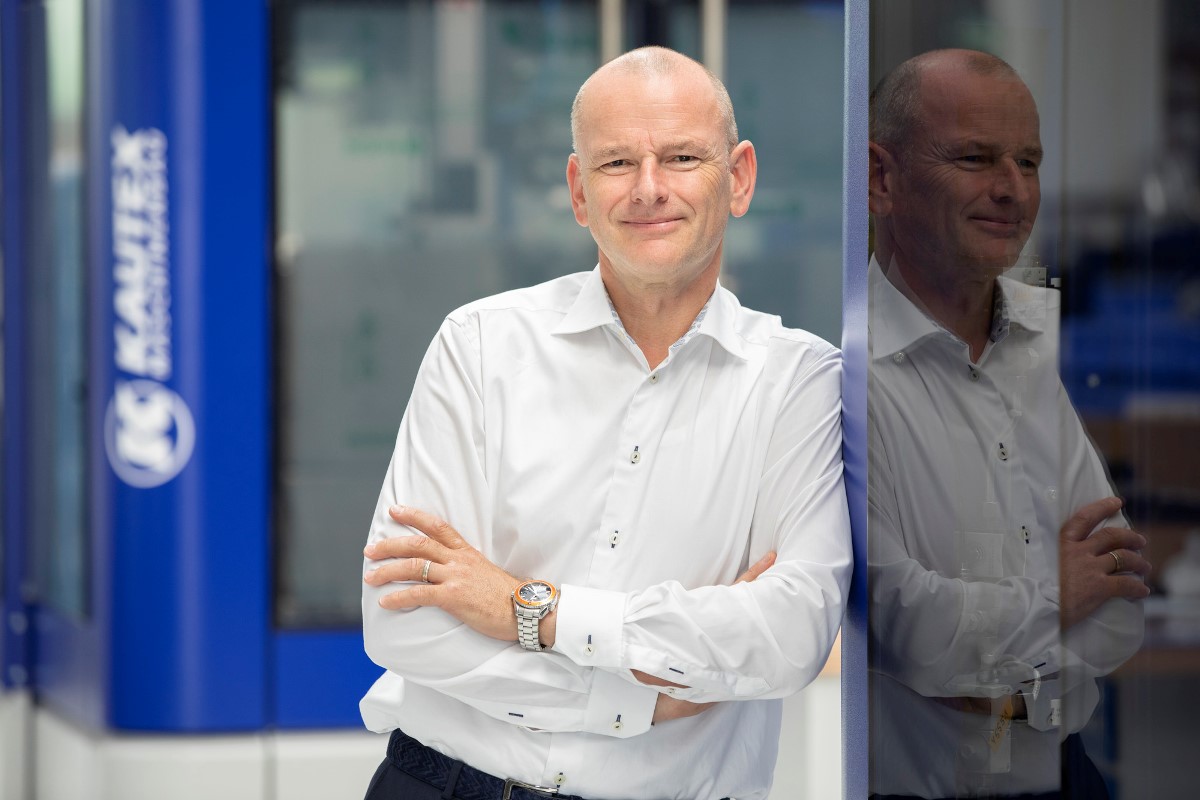
Andreas Lichtenauer, Kautex (Image: Kautex Maschinenbau GmbH))
„Among other things, we are working on ways to save material in hollow bodies. This ultimately reduces the overall consumption of plastic. And that's not all. We are also helping to reduce global CO2 to reduce the energy consumption. Considering that plastic packaging requires less energy to produce than alternatives made of glass or paper, this is a very important aspect. There are also global reduction targets in this area for good reason. It is therefore extremely important to get the global recycling cycles going, and we are working on optimising the processing of PCR, i.e. recycled plastic, and reducing the amount of material required. This is the adjustment screw that we can help turn. We will be presenting concrete examples of exactly what this means at K 2019.“
The long-term goal of a smart factory is getting closer
In addition to the circular economy, other important topics will be discussed intensively at K 2019. For example, the topic of Plastics for sustainable development. Today, it is not enough to judge the quality of materials by their functionality alone. Their sustainability is also becoming increasingly important. With Plastics industry 4.0 The increasing degree of digital networking, which has a relevant influence on the company's success, is addressed in this section. The realisation of the „smart factory“ is therefore within reach.
Under System integration extraordinary materials are created. Polymers can be designed specifically and efficiently for the respective application. With Young Professionals puts people at the centre. The Science Campus focusses on qualified young talent in education and research.