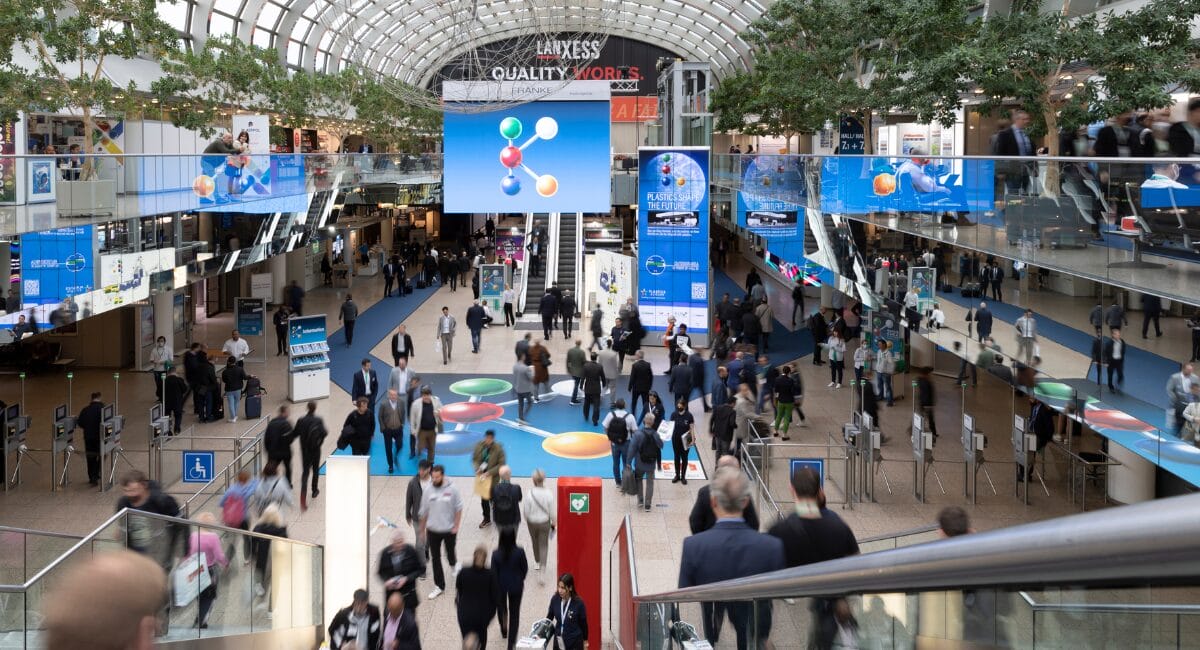
One of the three hot topics at K 2025 is „Shaping the circular economy“. Reason enough to take a look at the current status of the circular economy around the world six months before the world's leading trade fair for the plastics and rubber industry.
The world is in the midst of a raw materials crisis: more than 100 billion tonnes of raw materials are consumed every year, but more than 90 per cent of the raw materials used are not recycled. The European Investment Bank (EIB) has drawn an alarming conclusion. Rising CO₂ costs, volatile commodity prices and geopolitical uncertainties are putting additional pressure on companies to operate in a more resource-efficient manner.
The circular economy is regarded as Decisive lever for a sustainable future. An analysis by management consultancy Material Economics shows that Europe could save 450 million tonnes of CO₂ equivalents per year by 2030 by closing material cycles - that is equivalent to eight per cent of today's emissions. In the long term, the Ellen MacArthur Foundation predicts, up to 45 per cent of emissions worldwide could can be avoided through a closed circular economy.

The change also offers enormous economic potential: according to estimates by the consulting firm EY the use of secondary raw materials reduces energy consumption by 20 to 90 per cent, saves large quantities of water and could help European companies by up to 465 billion euros a year in material costs. The International Labour Organization (ILO) also expects that the transition to a circular economy by 2030 will result in seven to eight million new jobs worldwide are created.
Plastics industry: key sector with pent-up demand
The plastics industry plays a central role in this transformation. According to Plastics Europe, 413.8 million tonnes of plastics were produced worldwide in 2023, but the proportion of recycled material is still low: only 8.7% of plastics were recycled - mostly mechanically - while the majority was incinerated or sent to landfill. At the same time recyclates have enormous potential. Their production requires significantly less energy than the production of new goods from fossil raw materials, which considerably reduces CO₂ emissions. Their use also strengthens security of supply - a factor that is becoming increasingly important in times of geopolitical crises.
However, recycling is Technically demanding - and often more expensive than the production of new plastics. This is because used plastics have to be sorted, cleaned and processed at great expense, the legal requirements are strict, high-quality recyclates are scarce and many processes are energy-intensive, which leads to higher overall production costs compared to new plastics.
„But nobody wants to pay the higher costs. Plastic has taken off because it is so much better than other materials. But the step towards a circular economy costs money. It will not be possible to get to grips with this cost problem without regulatory requirements.“
Ulrich Reifenhäuser, Chairman of the K
The answer to the question of how the transition to a functioning circular economy can succeed, varies internationally, however. Europe relies heavily on regulation, while Asia combines state control with technology offensives. In North and South America, the spectrum ranges from ambitious targets and a patchwork of individual measures to reliance on the invisible hand of the market.
Europe favours regulation
Where other nations rely on voluntary commitments and market-orientated solutions, regulates Europe by law. Strategies such as the Circular Economy Action Plan (CEAP) and directives such as the Packaging Ordinance (PPWR) and the Single-Use Plastics Directive (SUPD) are driving the transition to a circular economy with recycling quotas, mandatory recycled content and extended producer responsibility (EPR). The SUPD is also having an impact: in Lithuania, the return rate of PET bottles rose from 34 to 92 per cent after the introduction of a deposit system - in just two years. Companies are facing considerable challenges: The availability of high-quality recyclates is limited, the changeover to recycling-friendly design is technically complex - and the deadlines for implementing the often complex specifications are tight.
Asia: Between progress and structural deficits
With 53 per cent of global plastics production Asia is the main player - and the main source of plastic waste. While some countries are pursuing ambitious recycling strategies, others lack basic infrastructure.
China's circular economy offensive: Centrally controlled, consistently implemented
For a long time, China was the largest importer of plastic waste, Now the country is changing course. China has stopped the import of unsorted plastic waste and is now pushing ahead with the expansion of its own recycling structures. The 14th five-year plan focuses on modern collection and separation systems and promotes mechanical and chemical recycling. By 2035, the industry is to be largely decarbonised and transferred to closed material cycles. Alongside this, companies are to be obliged to take back and dispose of certain products without causing harm, while ecentrally manage the transformation in a newly founded state-owned company shall.
Japan and South Korea: Systematic technology drivers
Japan and South Korea are among the pioneers of the circular economy - not least due to clear political objectives and early legislation. Companies have been obliged to participate in take-back and recycling systems since the 1990s. Since 2022, the use of recyclates has been promoted and detailed recycling plans for plastic products have been prescribed. South Korea is pursuing a systemic, technology-driven approachBinding recycling quotas, clear guidelines for sustainable product design and targeted regulation for products that are difficult to recycle. In addition, companies that want to launch new recycling technologies on the market, for example, are temporarily exempt from requirements.
In contrast to Europe, both countries rely less on small-scale regulation and more on on clear responsibilities, practical implementation and targeted promotion of innovation. This approach is complemented by a High level of social acceptance and broad co-responsibility - waste separation and resource conservation, for example.
From India to Indonesia: Why the circular economy is faltering
In India, a law obliges companies to take back plastic waste. Despite this important step the inadequate infrastructure and regional differences in implementation a major challenge for nationwide implementation. Thailand is pursuing the goal of recycling 100 per cent of plastic waste or recovering energy from it by 2027. There are local initiatives in Indonesia, but No comprehensive national strategy. One goal is to drastically reduce the amount of plastic waste that ends up in the sea by 2040.
North America: A patchwork of strategies
In North America, circular economy strategies are highly fragmented. The USA pursues an approach that is characterised by both government initiatives and private-sector measures. For example, 33 states have established EPR programmes that oblige manufacturers of disposable packaging to contribute financially to waste management. By 2032, 100 per cent of packaging should be recyclable or compostable and 65 per cent of single-use packaging should be recycled. But Other states are lagging behind. The fact that plastics recycling in the USA Despite advanced recycling technologies, market penetration is low by global standards However, there is another reason for this: „There is neither a nationwide nor a recycling programme that would at least cover entire states. Instead, individual cities and municipalities decide for themselves whether, how and which waste they collect and sort,“ explains Germany Trade & Invest (GTAI), the federal economic development agency.
Canada is pursuing a more comprehensive approach to promoting the circular economy. The government has introduced a national plastics register, to collect data on the production, use and disposal of plastics. An action plan is also intended to reduce plastic pollution and establish a circular economy for plastics. In addition, a step-by-step approach is being pursued to help reduce plastic waste by banning single-use plastic products and introducing EPR.
The long road of South America
The circular economy in South America is still in its infancy - Around 90 per cent of waste ends up in landfill sites, Recycling has only played a minor role so far. Chile, Colombia and Brazil have national take-back and circular economy programmes. However, despite various advances and initiatives, the infrastructure in many regions of South America remains inadequate and success will depend on further government investment, international cooperation and greater awareness among the population.
Shaping the Circular Economy at the K 2025
At K 2025 from 8 to 15 October, companies from the various sectors - materials production, mechanical engineering and processing - will present their products and services under the guiding theme of „Shaping the circular economy“.“ highlight the progress and future solutions of the circular economy. The numerous specials at K will also address the topic, above all the VDMA Forum and the special show Plastics Shape the Future, organised by Plastics Europe Germany.
Source: Düsseldorf Trade Fair Centre