Sister companies Kapag (Switzerland) and Oppboga (Sweden) support converters and brand owners in their efforts to switch from plastic to renewable raw materials and at the same time fulfil the requirements of the EU packaging regulation with the renewable Changemaker paper and cardboard grades.
With Changemaker, the two companies want to show that sustainable raw materials can indeed replace plastic without compromising on functionality. To ensure that the right cardboard or paper product meets the needs of the entire supply chain and can be developed in a timely manner, a close and cooperative partnership is necessary. This is the only way to ensure that the customer receives a product that fulfils all requirements, including the EU packaging regulation PPWR.
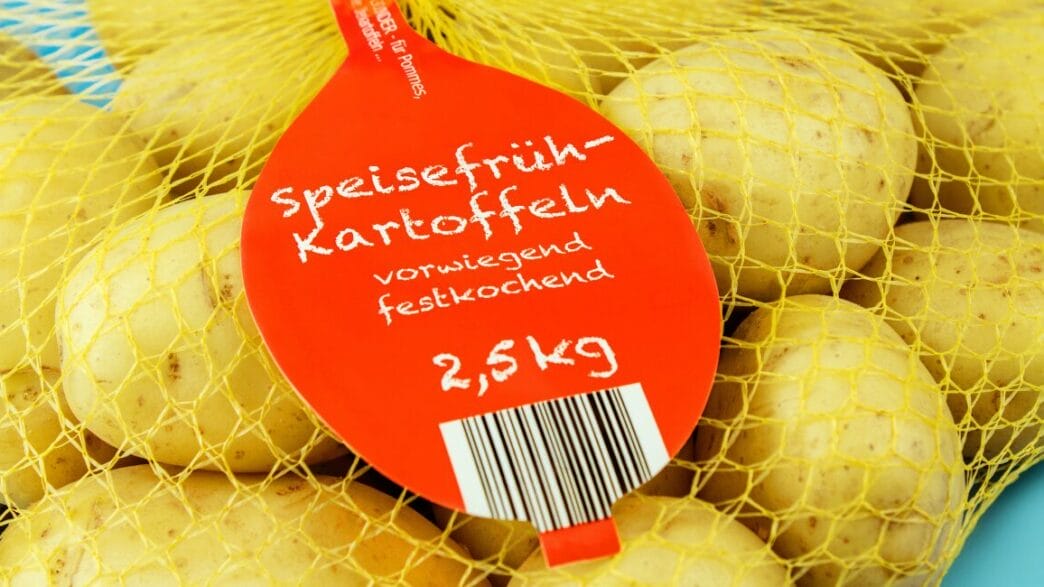
One successful example is labels made from Kapag's Pure Design paper grade, which are used to label fruit or vegetables packaged in mesh bags. A thin paper replaces the conventional plastic label. The challenge: the label must be able to bear the entire weight of the filled net, as consumers like to use it as a handle to lift the bag from the fruit or vegetable compartment into their shopping basket. The different printing processes along the supply chain (flexographic, thermal transfer and direct thermal printing) were also taken into account during development.

Pilot test in the building trade
Extensive tests were also carried out for a multinational tool manufacturer. It switched the packaging for its entire range of screws and nuts from hard plastic to Oppboga Resilient, a PE and wax-free cardboard. The packaging is mainly used on outdoor construction sites, which means it is exposed to adverse weather conditions and heavy wear and tear - the cardboard solution proves its worth in this challenging environment. A large-scale pilot test prior to the new market launch in the building trade proved that buyers favoured the new cardboard packaging.
Plastic savings of up to 75 per cent have also been achieved thanks to the flat-skin packaging for fish, meat and other fresh foods. The Pure Kraft C2S carton from Oppboga is the carrier material and replaces the conventional plastic tray. The carton is covered with a thin polymer film onto which the food is vacuum-sealed using a barrier skin film. After opening the pack, the consumer can easily separate the carton and film thanks to a tab and dispose of them properly. The carton can be printed on both sides and, thanks to its rigidity, is presented hanging or standing in the chiller cabinet.
Kapag's FibreForm Brown Duo and FibreForm Silk Plus Duo cartonboard grades also have a good market presence. These are used for processing trays for cheese slices and sliced sausages and reduce the plastic content by 70 to 80 per cent. Customers can choose between brown kraft board or coated cellulose board. And the heat-sealable Pure White Barrier cartonboard protects food from aggressive fats, water vapour, oxygen, MOA/MOSH and aroma.
Kapag and Oppboga will be exhibiting their Changemaker cartonboard range and other fibre products at Interpack in Düsseldorf (Hall 8A, Stand D53).