How do cold cuts stay fresh and appetising in the fridge for as long as possible? Innovative, sustainable multilayer lightweight packaging with separate freshness chambers promises progress in this respect. The Kaufland chain has installed a new processing and packaging line from technology specialist GEA at its own meat plant in Heilbronn.
Lyoner, Bierwurst and Fleischkäse are an integral part of eating culture in Germany. Preferences for sausage purchasing behaviour are less constant. Many customers in the food retail trade opt for branded cold cuts in chiller cabinets, industrially packaged in robust, promotionally effective printed rigid film. Meanwhile, labour-intensive traditional sales at the counter are on the decline. Younger shopper groups in particular are also tending towards self-service and pre-pack offerings in transparent lightweight film in the fresh food sector - pre-packed on site and easily accessible for quick, yet personalised product selection.
The Kaufland food retail chain is picking up on the trend towards light and customer-friendly packaged cold cuts with a specially designed product line that is produced centrally at its own meat plant in Heilbronn, but is orientated towards the pre-pack style. It is characterised by multi-layer packaging specially developed for the range, consisting of three thin films that form two separately sealed chambers - each with its own flap for opening. This gives shoppers a freshness advantage: those who are rarely at home or live in a single household can now divide up the slices flexibly. Once the pack has been opened, the second half remains fresh for later consumption - until the expiry date printed on the pack.

Responsible for the production is Kaufland Fleischwaren Heilbronn GmbH & Co. KG, one of five meat plants in the retail chain and specialising in cooked sausage and grilled sausage. Together with long-standing technology partner GEA, the initiators developed a fully automatic cutting and packaging line with end-of-line automation for the new multilayer packaging. „Plastic packaging offers many positive properties as a protective barrier, for the producer as well as for the food retail trade and the end consumer,“ explains Pascal Hofmann, shift manager for the packaging division and deputy head of the project„With the new multi-layer packaging, we can sustainably reduce the amount of material used and enable added value through the two-chamber system.“
When planning the system, the initiators focused on a high yield of packs that could be dispatched, with minimised product loss during processing. According to Hofmann, it was also important for the company to minimise the strain on employees and to ensure that the system was highly flexible so that production could be switched from cooked sausage in round blanks such as Lyoner or Paprika-Lyoner to meatloaf or ham products on a rotational basis.
From the blank to the convenience pack
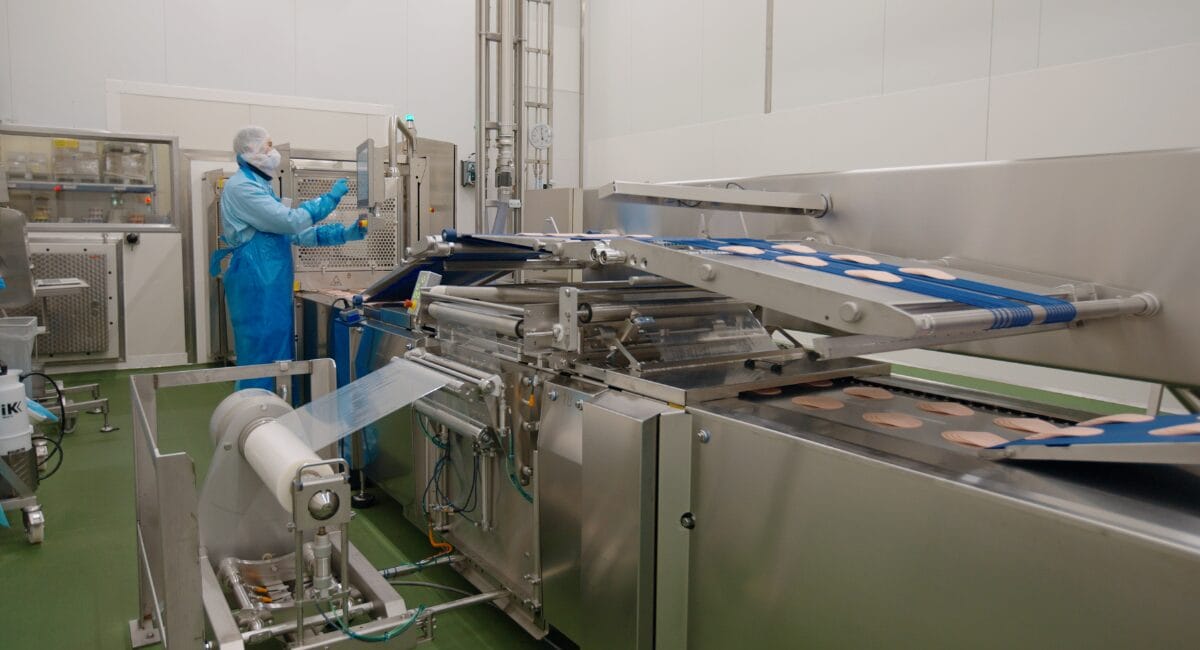
The fully automatic processing and packaging line consists of three machines and can be operated by two people. The actual packaging module, a GEA PowerPak thermoformer, is preceded by a GEA MegaSlicer and a GEA ShingleLoader loading system. The slicer in midsize format first processes the cooked sausage blanks from the plant's own meat processing into the required sausage slices. Precise product guidance and weight monitoring prevent incorrect cuts and minimise losses in the first and last cuts. Automatic grippers load the machine at the rear with subsequent sausage sticks in less than eight seconds. The GEA ShingleLoader takes the cut slices and servo belts position them fully automatically in the intended positions - sensor-controlled, without the need for personnel and therefore under optimum hygienic conditions. The loading gap of eight seconds is completely closed by the buffer.
Sustainable material concept
Once the bottom film has been fed in, the thermoformer takes over the precise joining and sealing of all the films - also sensor-controlled. Three films are used for the multilayer packs: the bottom film, the top film and the additional centre layer film to separate the two chambers. As the two-chamber structure mechanically stabilises the pack, a film thickness of just 50 µm (8 g total weight) is sufficient to guarantee the hygienic safety and visual appeal of the pack. Compared to the classic blister pack with a thickness of 180 µm (30 g weight), over 70 per cent of the plastic material is saved - a benefit for both resource conservation and the production budget. The all-round transparent film with a simple printed label also supports the desired fresh appearance. Overall, there is a cost advantage of up to 40 per cent compared to conventional rigid film packaging.
Reliability from cutting to delivery
According to Hofmann, technical advances in the current generation of PowerPak machines help to ensure higher system productivity and, above all, make work even easier. With the newly added web edge control, the positioning and sealing of the films is even more efficient, explains the specialist. The reason: the films are held exactly in the centre and can no longer run. „In addition, the sealing area is now even more accessible for the supervising employees,“ says Hofmann.
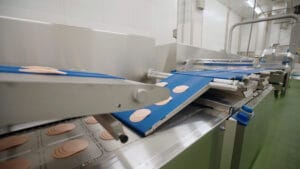
All processing steps in the system up to the final sealing run in a cleanroom atmosphere with a minimal airborne germ content, thus ensuring the required hygienic purity and shelf life of the sausage products. The partner's strengths, which make everyday work easier, are also evident in the clean room, emphasises Hofmann - the new GEA machines develop a gently low noise level there.
Once sealing is complete, the product packs are transferred to the end-of-line automation - here they leave the hygienic white area, are cut ready for presentation, detected, weighed and, depending on the type and shipping destination, labelled, boxed, palletised and delivered to the shops in the DSD (Direct Store Delivery) system in an efficient way - at lower costs than with rigid film packaging thanks to the savings in weight and volume.
All technical components are connected to the central communication network in the production plant via MDI (Machine Data Interface) to monitor system performance and plan preventive maintenance work. Possible problems in the system can thus be detected at an early stage, while spare parts planning can be optimised as required.
Long-standing partnership with future potential
The current collaboration with GEA is based on decades of experience with the system provider, emphasises Pascal Hofmann. For him, it was the first major project of this kind at the Heilbronn meat plant, but the company has long been familiar with the supplier's components, especially packaging machines of various generations, from day-to-day operations. „We were also able to test the ShingleLoader with our sausage products in advance at GEA in Kempten,“ says the manager. The initiators were in constant contact with GEA from the planning phase of the plant construction, through installation and commissioning, to optimising aftercare.
Together, the requirements for performance, flexibility and sustainability were met and the complex layout was successfully adapted to the space available in the intensively utilised plant, says Hofmann. The harmonious teamwork continues in terms of service. However, the manager also sees continued potential for co-operation with regard to future innovations: „GEA has fulfilled and exceeded Kaufland's expectations. In line with the motto ‘If you stop improving, you stop being good“, we are always striving for new developments that fulfil the changing needs of our customers. In GEA, we have a strong partner with a great deal of expertise at our side who is driving forward engineering for important topics such as productivity, product quality, digitalisation and sustainability."