The plastics debate poses major challenges for the food and beverage industry. For the KHS Group, one thing is certain: the increased use of recycled PET is an important partial solution. This is why the Dortmund systems supplier is focussing on sustainable products and services that contribute to a closed material cycle.
According to the business magazine Forbes around 140 PET bottles per capita come into circulation in Europe every year, and as many as 290 in the USA. Despite all the criticism, the plastic container is actually growing in popularity: globally, this figure is increasing by around four per cent every year. However, awareness of the need for recycling is also growing: according to Forbes, an estimated 57 per cent of all PET bottles worldwide were collected again in 2019.
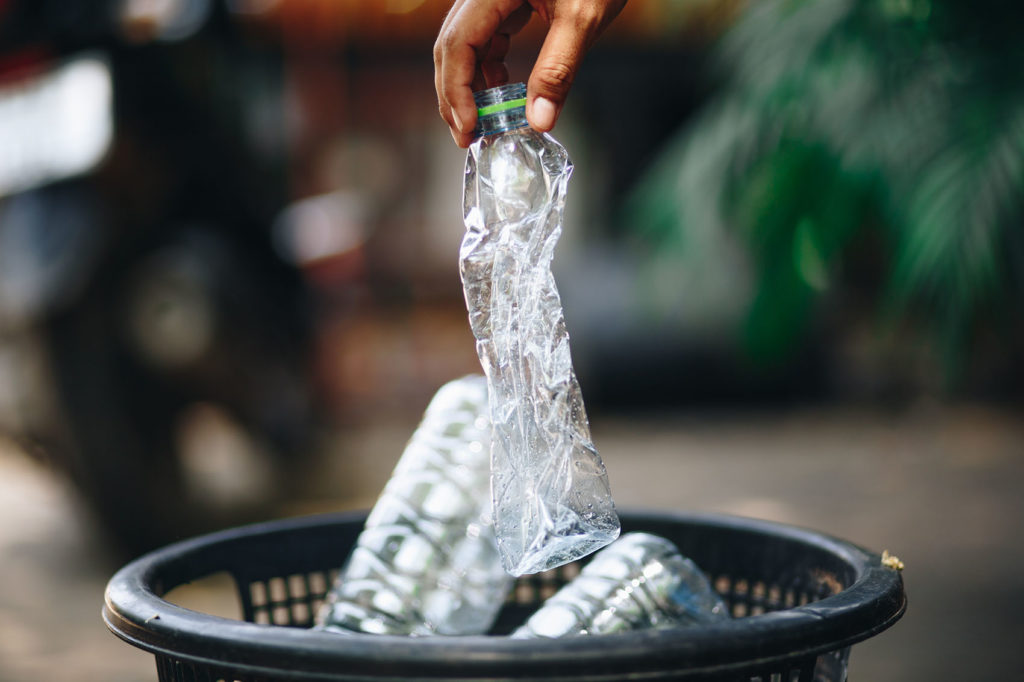
The magazine predicts that this rate will rise to 68 per cent by 2029 - albeit with significant regional differences: While 57 per cent of all bottles are collected in Europe, the figure in the USA is only 30 per cent. China, on the other hand, is shaping up to be the poster child, with a collection rate of an impressive 82 per cent in ten years' time. However, collecting is not the same as recyclingIn the USA, 70 per cent of collected plastics end up in landfill, in the EU it is still 30 per cent.

Made for recycling: plastic
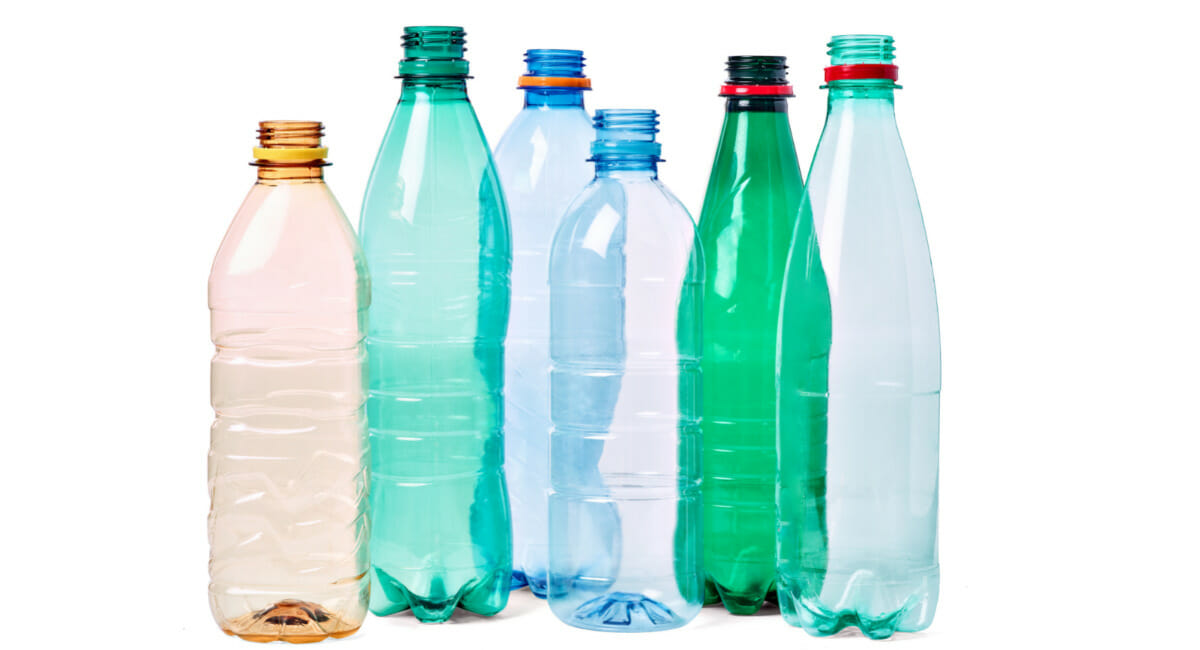
Plastic is very easy to recycle, especially PET. It is the only plastic that fulfils the legal requirements for food suitability when recycled. And while with other materials such as polypropylene, polyethylene or polystyrene, the loss of quality associated with the usual recycling processes is irreversible, PET can be recycled in the same way. recycled PET can always be brought back up to the standard of virgin material.
It is therefore no surprise that around 93% of the approximately 477,000 tonnes of PET that go into the production of bottles in Germany alone are recycled every year. However only about a third of these are used again for bottles - the rest is used for the production of films and, above all, textile fibres. This means that a significant proportion of the raw materials are removed from the closed bottle-to-bottle recycling loop.
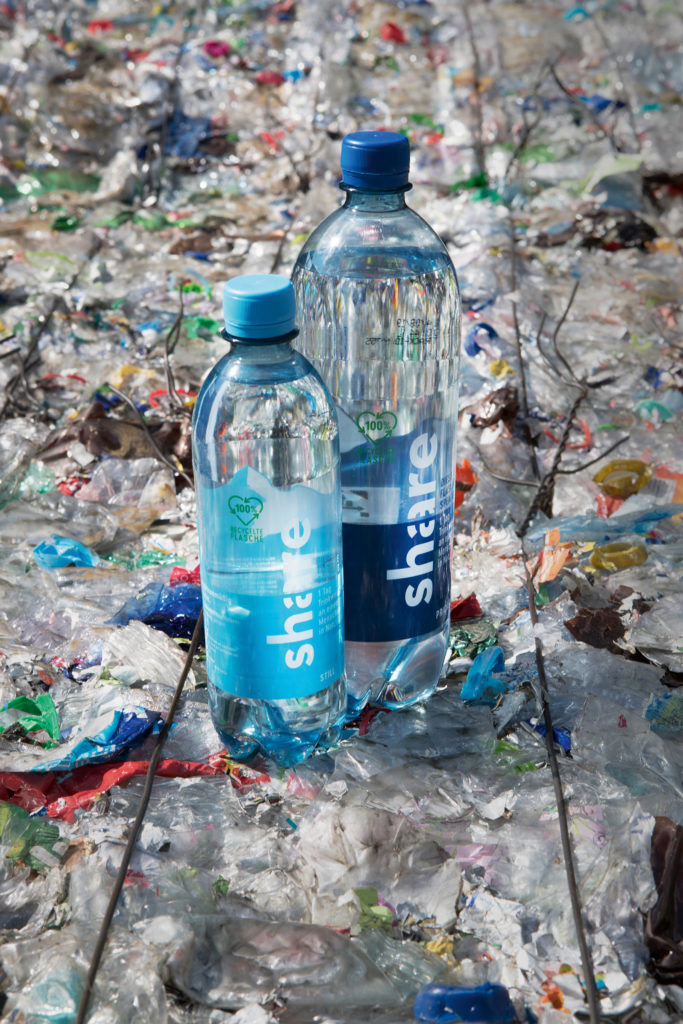
Added to this is the price trend: while the price of so-called virgin PET based on the cost of crude oil and benefiting from its current low market price, the cost of recycled PET has risen continuously over the past three years: Around 20 per cent more has to be paid for rPET today than for the original material - also because the supply does not meet the growing demand.
High quality standards
However, there are hurdles not only on the raw material side, but also on the part of some beverage manufacturers. Their reluctance to use rPET is often based on fears that the material will discolour or that its intrinsic viscosity will decrease. Another point is safety standards and the associated harmlessness of the material. And again and again the question arises as to whether multiple recycling is possibly associated with a loss of quality.
Although this has not yet been fully researched in practice, one thing is clear: thanks to the reconstruction of the polymer chains do not have to compromise on material quality as long as additives can be completely separated. High quality standards are ensured by the European PET Bottle Platform (EPBP) with its clear specifications and certifications.
While until a few years ago there was still a lot of experimentation and the food and beverage industry gathered its experience with recycled PET according to the trial-and-error principle, today there is a lot of room for improvement. Comprehensive use of high proportions of recycled PET (from a technical point of view).
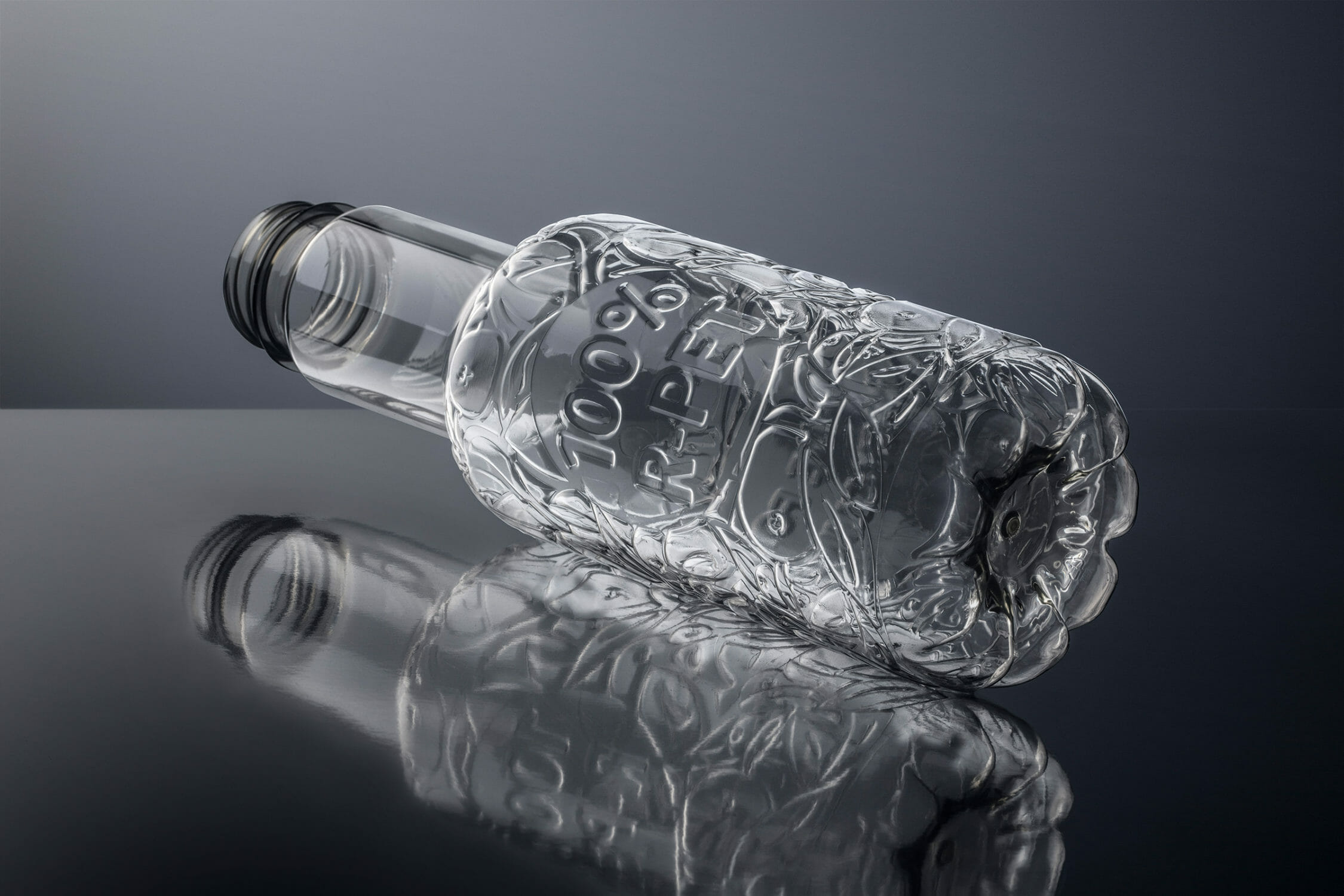
An increasing number of drinks manufacturers and brands are even using bottles made from 100 per cent recycled material. Where this is not yet the case, voluntary commitments are being published: Poland Spring, one of the largest water brands in the USA, and Evian want to use 100 per cent rPET by 2025. The remaining brands of Danone Waters, Pepsi and Coca-Cola are planning to introduce a global quota of 50 per cent by this date. Their aim: They want consumers to recognise the slight grey haze that can occur when PET bottles are recycled several times as a sign of quality for sustainable packaging.
KHS specialists have been working with rPET since 2012
The KHS Group deals with the use of recycled materials - The Bottles & Shapes™ service programme focuses on practical application on the stretch blow-moulding machines and on all filling and packaging lines of the Dortmund-based system provider.

„We carry out tests to qualify recycled PET so that we can tell customers in advance what impact the material has on the blow-moulding machine and the bottle quality.“ Arne Wiese, Product Manager Bottles & Shapes
The aim is to be able to quantify the different qualities. This requires close cooperation with the preform manufacturers. After all, they are often also the ones who thermomechanically process the washed PET flakes or rPET pellets and prepare them for injection moulding. „In Europe, we are in dialogue with all major plastics processors in this regard,“ emphasises Wiese. And that's not all: even KHS cooperates with the machine manufacturers for preform production. Thanks to the close collaboration, data from the injection moulding process can be used just-in-time to adapt the stretch blow moulding process. This makes bottle production more efficient, faster and improves the quality of the finished containers.
Adaptations required - KHS offers solutions
„With recyclate, for example, there can be variations in colour from batch to batch. Darker-coloured material absorbs heat better. Less energy is used for the lower heat output. Although this makes production more efficient, it also requires adjustments to the blow-moulding programme of the stretch blow-moulding machine. It is therefore essential to quantify the effects. Another example is intrinsic viscosity: the longer the recyclate is cooked under vacuum, the longer the polymer chains become. This means that the intrinsic viscosity increases and the quality improves. This results in additional costs that not everyone is prepared to spend. In this case, we have to find solutions to redistribute the material from uncritical areas - such as the bottom of the bottle in the case of still water - to more critical zones.“
Arne Wiese, Product Manager Bottles & Shapes™
Experience shows that manufacturers of premium brands have less need to adapt their containers to thicker wall thicknesses than discounters, where the Lightweighting options often fully utilised This is where recyclate can reach its limits.
In this context, a technology developed by KHS in collaboration with the inspection technology manufacturer Agr International scores highly: the Unit Mold Control, a digital and automated control system that individually controls the blow moulding stations of the InnoPET Blomax. It helps to control material distribution more precisely, reduces variations in wall thickness by up to 30 per cent and reduces quality fluctuations in the stretch blow moulding process.

„This is particularly relevant for the use of recycled PET. The material quality can fluctuate here, which means that the bottle exhibits ever greater material fluctuations and becomes more unstable as the preform weight decreases. The new system detects undesirable material shifts as part of a continuous wall thickness measurement and automatically counteracts them. Unit Mold Control combines weight reduction and bottle stability and is one of the many sustainable and effective answers that KHS has found to the challenges of the current packaging debate.“
Frank Haesendonckx, Head of Technology at KHS Corpoplast
According to Bottles & Shapes™ expert Arne Wiese, there are no convincing arguments against the use of recycled PET for drinks bottles. The only relevant difference between virgin and recycled material is the slightly darker colour. But this is also a question of sorting - and is only really visible in water bottles. In the case of the „Beyond Juice“ juice bottle made from 100 per cent recycled material, the consumer would not even notice the difference when the bottle is full. In any case, from a mechanical point of view, nothing stands in the way of switching to rPET - best conditions on the way to a functioning circular economy.
Source: KHS Group