The hand of artificial intelligence reaches through efficiently, but it needs the heart and mind of the designer - this is how our guest author Uwe Melichar, Partner Europe at touch Design and Vice President of the European Brand & Packaging Design Association (epda), describes the role of AI in packaging design.
Imagine you are standing in a supermarket aisle. Hundreds of packages scream for attention - colours, shapes, surfaces. But what if these designs no longer came from weeks of manual labour, but were generated by an AI that created and virtually tested hundreds of variants overnight? Welcome to the new reality of packaging design. That's what the AI said about itself when I asked about their role in packaging design have. And within 0.5 seconds.
That doesn't sound bad at first, but it's certainly a long way from becoming reality. Although there are powerful tools, courageous brands and innovative agencies, there are still only individual parts of the process where virtual assistants or generative language models help and support. The fully automated packaging design and production process cannot currently be comprehensively mapped.

The development of packaging has many dimensions. Strategy, design, form-finding, material selection and communication design work together to ensure that packaging protects products, differentiates them, inspires customers and provides functionality and information. In addition, the raw materials used should ideally be returned to the material cycles at the end of the packaging's life. A highly complex endeavour. Development involves the desks of many stakeholders along the value chain and requires good workflows and an intensive dialogue between all those involved.
Where is the added value?
Where does it make sense to integrate artificial intelligence? And what is the deal between input and output? Where is the added value? Here, too, there is no universal answer. AI can provide bandwidth in the brainstorming process and can identify the most suitable solutions from millions of existing ones or combine existing ones in a new form. The more precise the context, i.e. the briefing, the better the result. Usable proposals are created on the basis of a clean data structure and defined assets. Or as a former Telefonica board member once said: „If you digitalise a bad process, you get a bad digital process.“ This also applies to the use of AI.
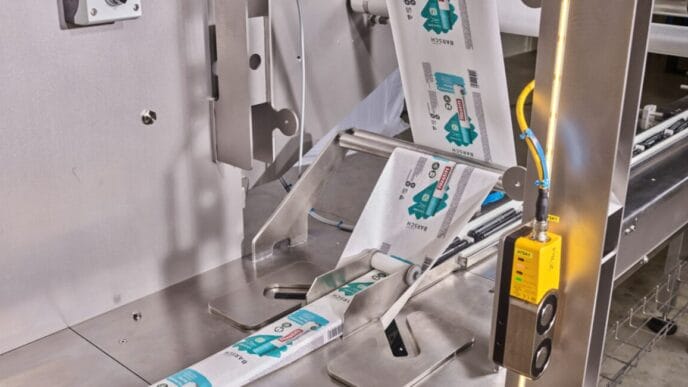
If you look at the workflow, there are a few things in packaging design Powerful tools for automation. But automation per se does not necessarily require artificial intelligence. Automation makes processes fast and reliable - AI adds intelligence, analysis and creativity.
Software solutions from Esko or Dalim, for example, ensure that brands and designers have the process under control, while artwork management partners such as LSD, Froq, BrandPort or Linked2Brands take care of efficient design-to-print workflows. Artificial intelligence checks, accelerates and optimises here invisible in the background.
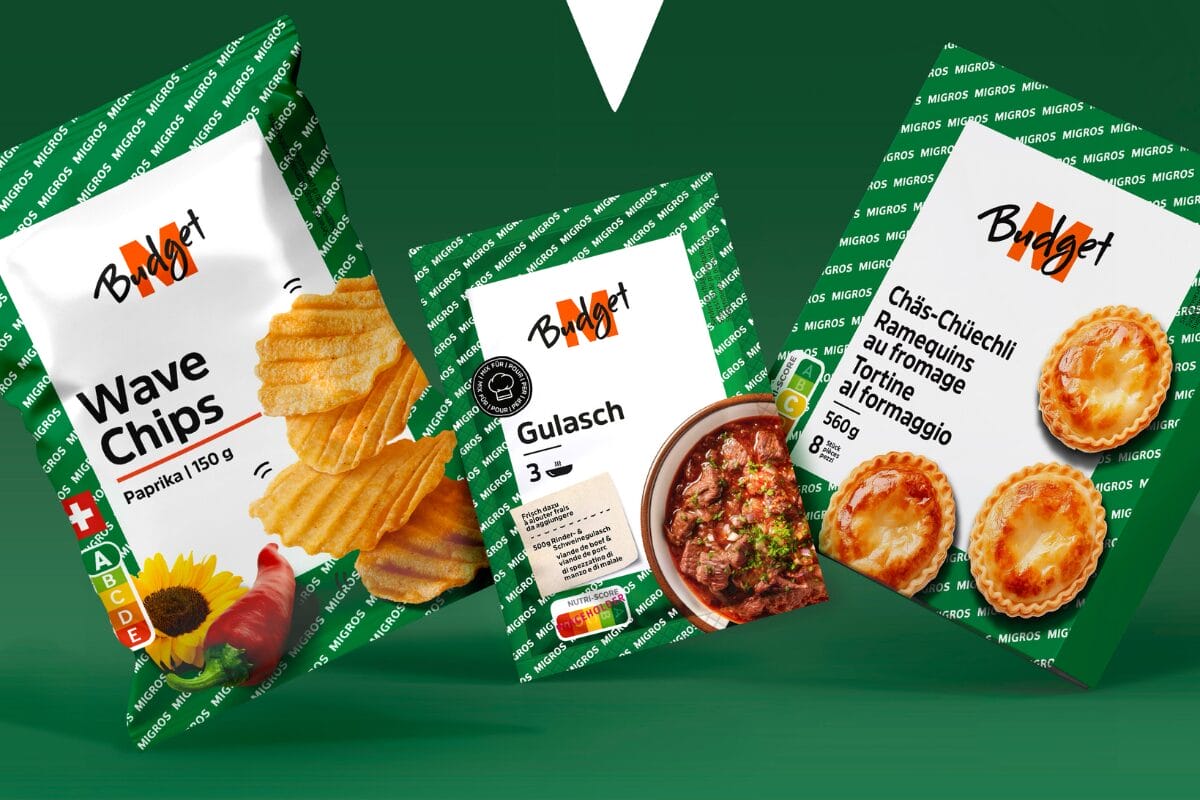
The „M-Budget“ own-brand line from Swiss food retailer Migros is a flagship project in the use of artificial intelligence. The agency Win Creating Images is responsible for the packaging design. They have highly automated the adaptation of hundreds of SKUs and generate great product images based on strict brand specifications with the help of AI, that are used on bags of crisps, ready meals and drinks bottles. Tim Gelzleichter, Head of Digital and AI expert at WIN, calls on us to „own the machine“. What sounds simple is actually a comprehensive interplay of different software and AI tools. The results speak for themselves. The range of image suggestions has increased, the process is more efficient, faster and safer, but it only works when people and machines work together.
AI chatbot checks recyclability
Another AI tool can be found on the Packaging Innovation Platform Vault. The AI chatbot ReX checks recyclability fully automatically and artificially intelligently of packaging, makes suggestions for optimising recyclability. The option of uploading samples as images is convenient. If you wish, you can even receive instructions on how to develop new sustainable packaging solutions in the chat. Everything is based on national and international regulations.
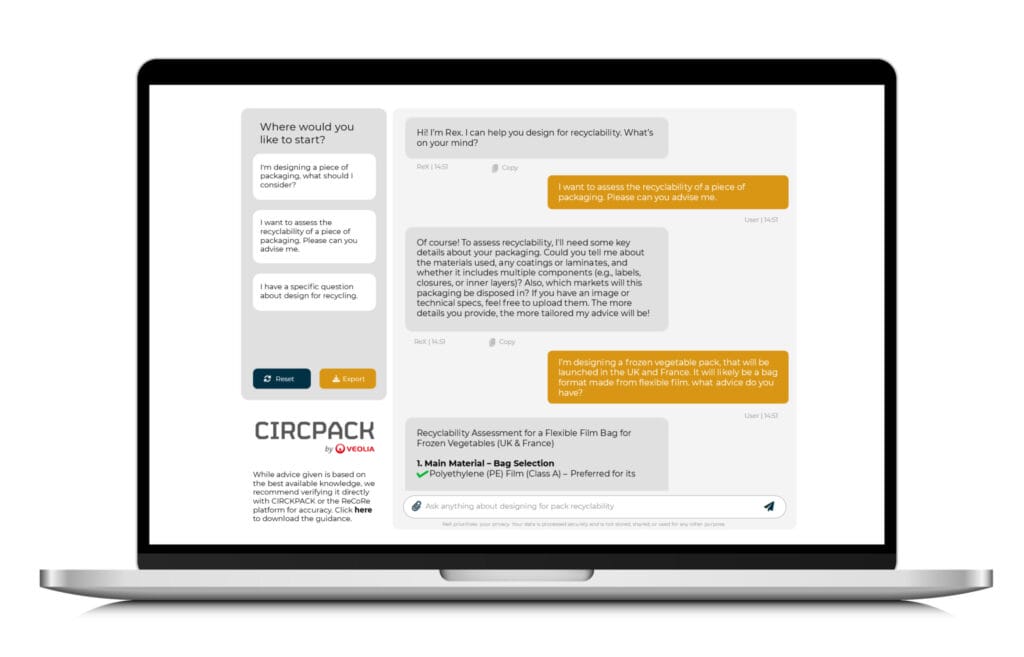
The trick here is that ReX does not access open, insecure sources, but instead collects the relevant Information from Circpack's huge proprietary database gets. Circpack is part of Veolia, the largest recycling company in the world. They have reliable specifications and almost all packaging shapes, designs and materials ever developed have already been through the sorters of their local recyclers. The interpretation of the results for specific packaging is ultimately the responsibility of the brands, agencies or industry partners who use it.
Here are two examples from the big automation and AI puzzle. More solutions are being created every day and whoever succeeds in putting the picture together as holistically as possible is one step ahead.
The artificial intelligence (ChatGPT) writes about himself as a conclusion: Artificial intelligence in packaging design is not a replacement, but a tool. A very powerful one that speeds up processes, saves costs and opens up new möpossibilitiesöopens. But the magic of design always happens when technology and people work together. In other words: AI can design millions of packages. But only designers canöcan really bring a brand to life.
It is surprising how self-critical and honest the statement is. It is certain that it will take quite some time before AI processes are seamlessly integrated into our daily work, but who does not start now, to deal with this will not be competitive in the long term.
I am glad that as a human expert was asked to write this article and it wasn't simply left to the AI. Because writing is no different to design: good quality is created with heart and hand.