The idea of an AI-based platform for knowledge-based service advice, which packaging specialist Klingele has developed together with the University of Stuttgart, is part of the company's own innovation system with which it aims to address its future viability.
10 September 2024
A digital assistant supported by artificial intelligence is to be used to offer various knowledge-based services. (Image: Shutterstock/nuruddean)
The idea of an AI-based platform for knowledge-based service consulting, which packaging specialist Klingele has developed together with the University of Stuttgart, is part of the company's own innovation system with which the company wants to tackle its future viability. We asked Managing Director Dr Jan Klingele and Innovation Manager Florian Härer what role artificial intelligence plays in the company and what the new service platform can do.
The Klingele Paper & Packaging Group, in a teaching co-operation project together with the Chair of Information Systems II and the Graduate School GSaME The concept of a platform for service consulting was developed in collaboration with the University of Stuttgart. It describes a digital assistant supported by artificial intelligence, which Klingele can use to offer various knowledge-based services. Among other things, it is intended to support players in the packaging industry by pooling specific balancing knowledge in the preparation of CO2-support balance sheets.
(Image: Klingele)
„Artificial intelligence is a field of technology that will be a major focus for us in the future. We are also looking for solutions and innovations that will help our customers. This customer-orientated use of future technologies is therefore an important step forward. That is why we want to tackle a prototype of the platform in the next step. Once the service model 1.0 of our knowledge platform has been set up and implemented, we expect to be able to respond quickly to customer needs in order to save costs and resources in the long term.“
Dr Jan Klingele, is the third generation to run the company
Display
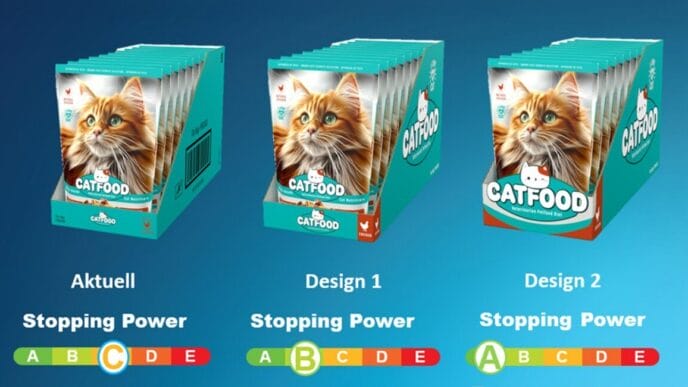
Three further service-orientated use cases have already been developed as part of the cooperation project. Florian Härer, Innovation Manager at Klingele: „We see the first opportunity with regard to packaging development in the Optimisation of design parameters and design proposals. Next, the platform could be used to create a new platform for each user company. Individual key performance indicators (KPIs) with regard to the circular economy and to propose corresponding improvement measures. The platform could also be used toin digital product passport be developed. The main advantage of this service, however, is the ability to monitor CO2-The aim is to carry out holistic accounting and overcome the boundaries of a single company so that the entire circular ecosystem within the upstream and downstream processes can be captured.“
The knowledge platform concept is the first of its kind to be developed by Klingele in this level of detail. However, further use cases that should bring similar benefits to the value chain are already in the works. Härer: „For example, we are currently having the Use of AI in innovation development explore.“
Cooperation between business and science
The University of Stuttgart sees the teaching co-operation project with Klingele as a valuable cooperation between business and science, which offers students the opportunity to gain practical experience with software-intensive business models at the highest level. And for Klingele, collaborations with research partners are a an important part of its own innovation system, which not only enables the development of new paper and packaging solutions in the core business, but also promotes services, processes and new business models.
„Klingele has always been characterised by the ability to react flexibly to change, to continuously learn and improve, i.e. to be innovative. As a family business in the SME sector, we attach great importance to boldly moving forward and using new technologies in such a way that we can survive in times of change (e.g. through advancing digitalisation),“ says Dr Jan Klingele. „At the same time, we are aware of this, that we cannot walk this path alone, there our core expertise in the production of corrugated base paper and recyclable packaging lies. That's why partnerships such as with the University of Stuttgart and the Chair of Information Systems are very valuable for us to continue on this path. They look at our challenges from a different angle so that we can find innovative solutions together.“
The joint project is intended to benefit not only the company itself, but the entire industry. Florian Härer: „The corrugated board industry is facing a number of challenges with regard to sustainability and digitalisation. The industry must therefore become more innovative in the long term, including in the application and use of future technologies. I originally come from the automotive industry and am familiar with a more active and faster approach to innovation management and future technologies, and with our innovation system at Klingele we are trying to address this necessary future viability for the company and the entire industry.“
With the innovation system, Klingele is also Co-operations and networks with external partners and Promotes innovative thinking within the company. Dr Jan Klingele: „In this way, we support the exchange of expertise and the development of innovative projects, create synergies and ultimately strengthen our innovative power in order to develop customised solutions for our customers' requirements. Artificial intelligence is playing an increasingly important role as a technology of the future."