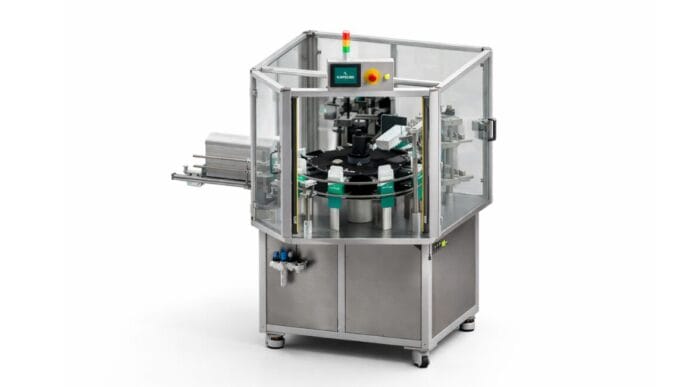
The virtual development of technical systems has arrived in packaging machine construction. As part of K 4.0, Koch Pac-Systeme GmbH, Pfalzgrafenweiler, is also focussing on the topic of virtual engineering. The support it provides by means of three-dimensional product development processes offers great opportunities.
This complex development approach also includes virtual commissioning. The complex packaging line can be virtually programmed on the PC. For the end customer, this process results in a whole package of benefits. The potential is far from exhausted and will continue to develop in the coming years. For companies, but also for their customers, this also offers the opportunity to run through certain scenarios in advance and eliminate sources of error at an early stage.
We have Jürgen Welker, Director Automation and Technology at Koch about virtual commissioning and the new development of the HMI. Both topics will also be the focus of the company's presentation at the upcoming interpack.

pj: Mr Welker, your company is increasingly focusing on the virtual development of technical systems in its future collaboration with customers. How long have your developers been working on this topic and how important is commissioning?
Jürgen Welker: It's not just about the points mentioned, but actually about a wide range of topics that are currently being dealt with across the industry under the term Industry 4.0 are already being discussed and implemented. These digital topics will increasingly influence production in the future and drive forward the networking of processes.
We are involved here in the area of our complex, customised machines and offer appropriate solutions. With the virtual commissioning We have been working on this for some time: we are currently finalising our first projects. We will be presenting examples of applications live at our stand at interpack.
pj: What advantages does this offer in practice?
Jürgen Welker: From the customer's perspective, the main advantages of virtual commissioning are shorter and faster delivery times thanks to a shorter construction phase. Previously, the programmer had to wait until a machine was mechanically completed and could only commission the machine afterwards. With the new requirements, he can work in advance and write his programme virtually. Of course, a Good database, which is provided by the electrical design department. We are convinced that virtual commissioning will greatly improve the quality of the customised system software.
pj: What challenges does this pose for the partners?
Jürgen Welker: Previously, software development only began with software preparation after the electrical design had been finalised. With the virtual commissioning the programmer can be involved for the first time during the mechanical and electrical design phase and contribute his experience to the team. This promotes and strengthens the mechatronic concept.
pj: Mr Welker, Koch Pac-Systeme has developed a new HMI based on web server technology. The previous HMI has been in use for a good 18 years and enjoys a high level of acceptance among customers and employees. Why are you changing over now?
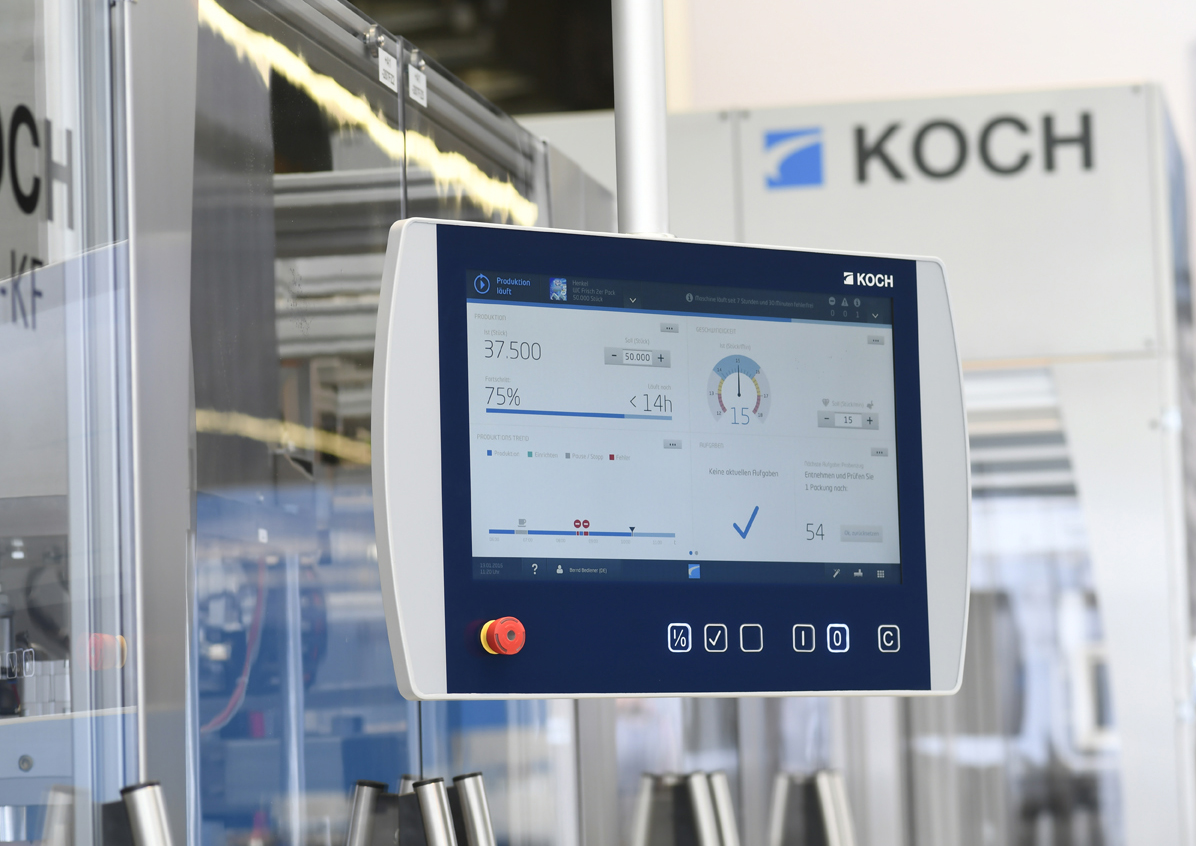
Jürgen Welker: Over the years, the previous panel has really proved its worth. However, our aim is always to set new trends. These are derived from our high Innovation potential from. We wanted to show our customers a new solution based on HTML5 technology, both in terms of aesthetics and appearance, but especially in terms of software technology.
pj: Which features would you like to emphasise in particular?
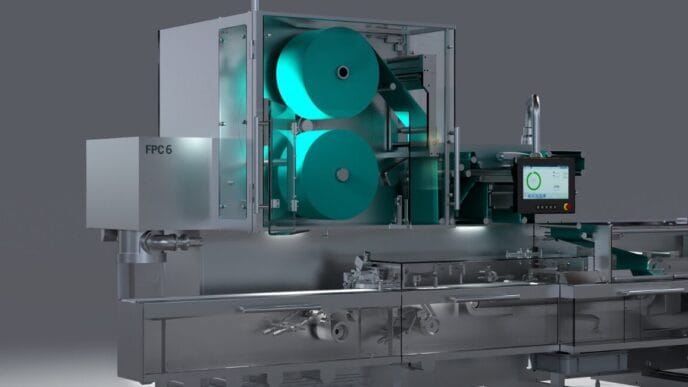
Jürgen Welker: A key point is the basis on web server technology. This allows multiple panels and mobile devices to access the machine (Multi-panel capability). Switching access is only granted to one panel at a time, so that competing situations can be avoided here. However, any other panel with the appropriate authorisations can request switching access. The 21“ panel also offers interactive displays of selected actuators (e.g. motors, cylinders) and sensors. For diagnostic purposes, these actuators and sensors can be better emphasised and make work easier for the user. For each machine-related view (areas, stations), three-dimensional images can also be integrated and displayed in different perspectives (top view, rear view). This is particularly advantageous for set-up operation and the diagnostic display. For further aspects, please refer to our Live operation of the KBS-KF blister machine at interpack.
Koch Pac-Systeme at the interpack 2017: Hall 6, Stand E80