From November, food packaging in German retail stores will feature a new labelling system: the Nutri-Score, also known as the food traffic light. The five-level colour and letter scale is intended to help consumers compare the nutritional quality of processed foods and thus raise awareness of healthy eating. It is already clear that the Nutri-Score is popular!
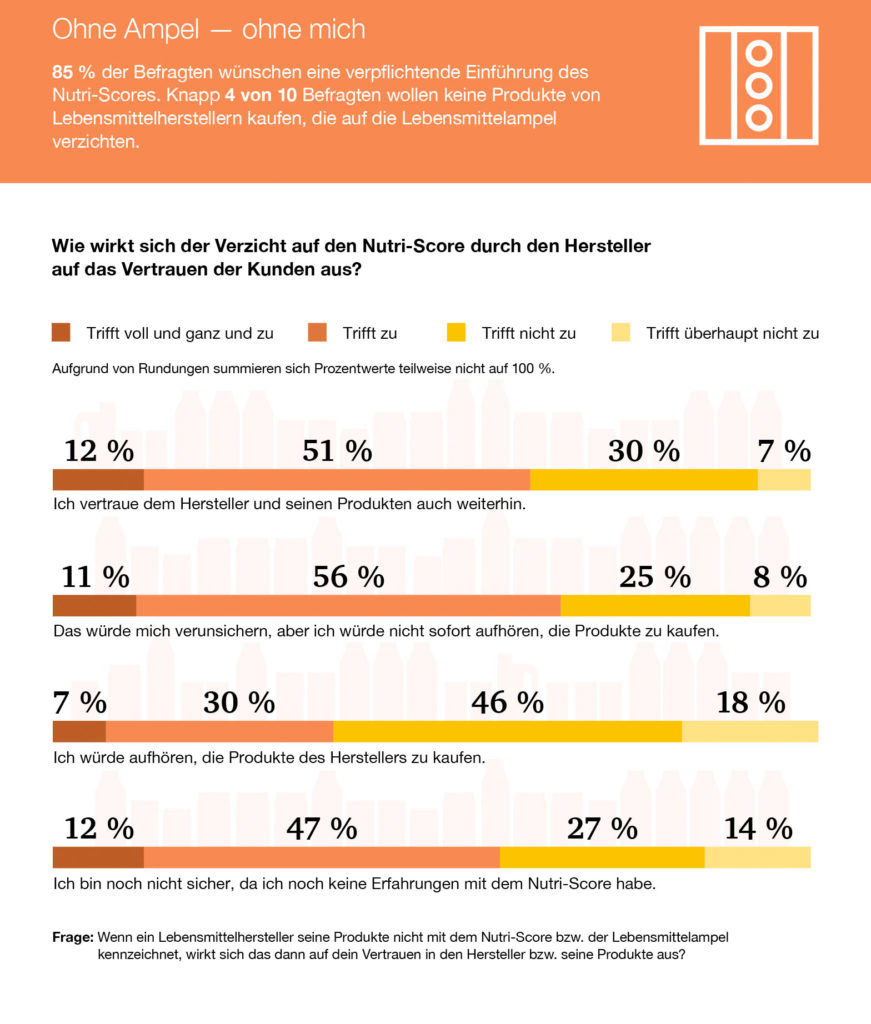
The concept has met with great approval among the population: 89 per cent of consumers think the Nutri-Score is good. 85 per cent are even of the opinion that labelling should be mandatory on all processed foods and non-alcoholic drinks in Germany - labelling is still voluntary for manufacturers.
These are the findings of a recent survey commissioned by the auditing and consulting firm PricewaterhouseCoopers (PwC) of more than 1,000 German consumers aged between 16 and 69, whose age and gender distribution is representative of the German population.

„The overwhelming majority of Germans welcome the Nutri-Score. Furthermore, most would like it to be mandatory for all manufacturers. To meet consumers“ need for transparency and guidance on nutrition and health, we recommend that all food manufacturers label their products with the Nutri-Score." Dr. Christian Wulff, Head of Retail and Consumer Goods at PwC Germany.
The majority know and understand the Nutri-Score
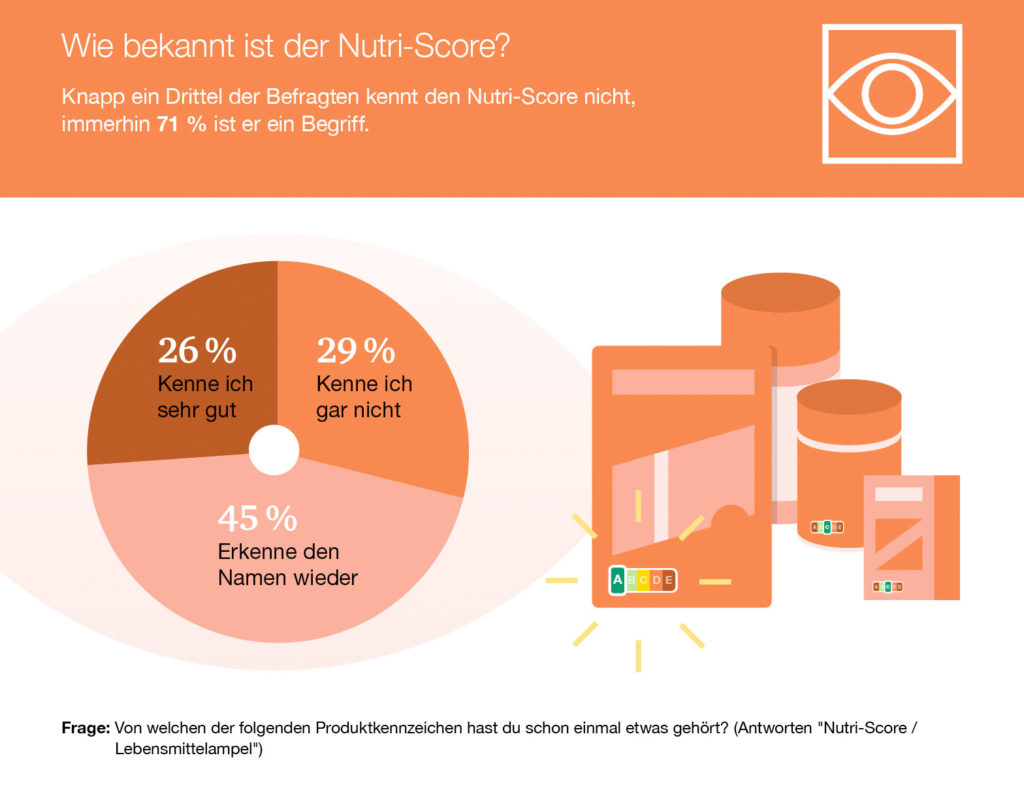
71 per cent of German consumers are familiar with the Nutri-Score. Almost three quarters of them also agree that the colour scale provides information about nutritional values (72%). However, there is still a need for clarification as to what the Nutri-Score does - and what it does not do: one third think that the labelling makes a statement about the sustainability of a product; just under one in four (23%) assume that the colour scale provides information about the shelf life of the product.
In any case, labelling can strengthen consumer confidence in a product: 36 per cent are of the opinion that the Nutri-Score fundamentally increases trust in a product. 41 per cent think that labelling increases trust, but only above a certain level. From the respondents' point of view, a dark or light green rating (A and B) in particular creates trust.
Nutritional information influences purchasing decisions
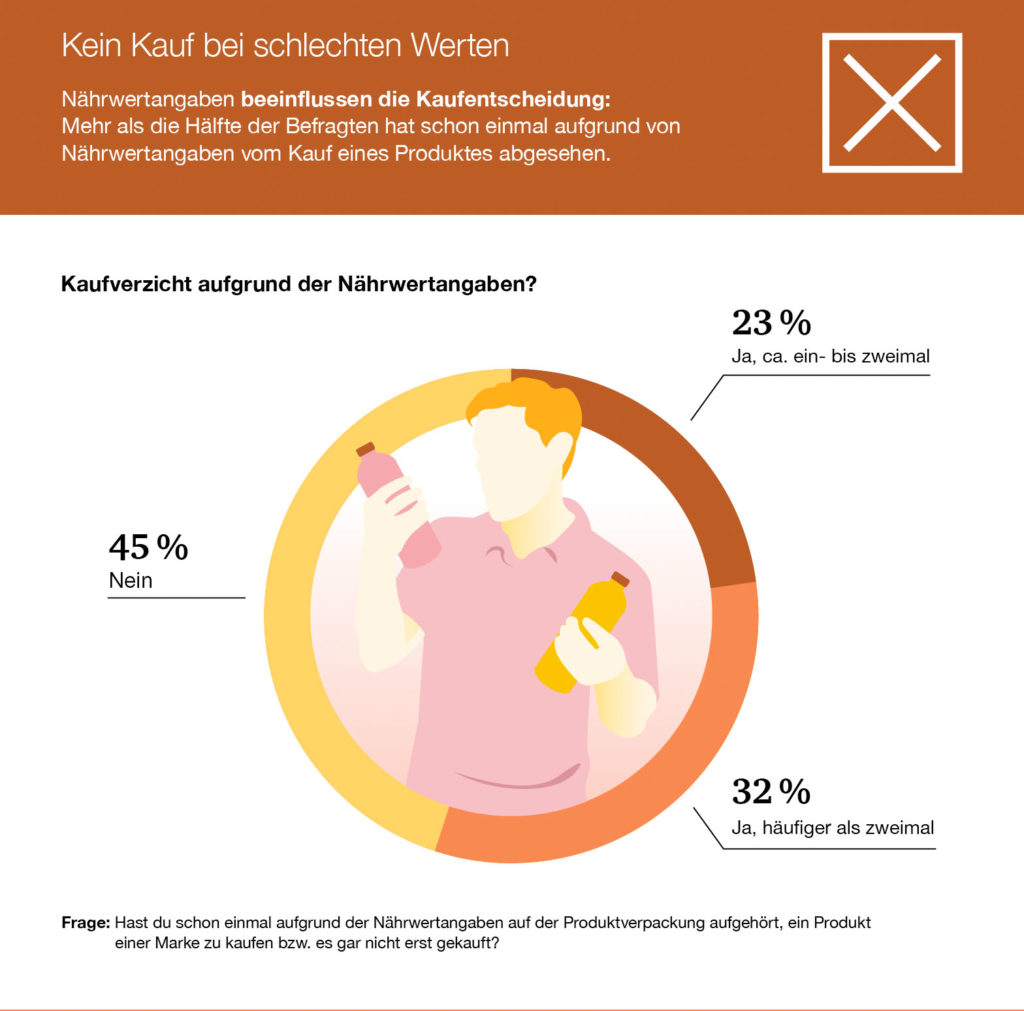
Nutritional information also has a direct impact on consumers' purchasing decisions: More than half of those surveyed (55 per cent) have not (or no longer) bought a product because of the nutritional information on the product packaging. With regard to the Nutri-Score The survey shows that 36 per cent of respondents would not buy a product with an orange label (D) and 22 per cent would refrain from buying a product with a yellow label (C).
„This is particularly true for the 18 to 25 age group, where awareness of health and nutrition is high. The young generation is increasingly basing their purchasing decisions on such aspects. Manufacturers must take this change in awareness into account. The Nutri-Score will therefore become a driver of innovation for new recipes and products,“ says Christian Wulff.
Nutri-Score enjoys a leap of faith
The Nutri-Score is popular, although it is new, it enjoys a high level of trust among consumers: Two out of three consumers would be unsettled if a manufacturer did not use the Nutri-Score, but would not yet stop buying the products because of this. However, a good third would go one step further: 37 per cent of respondents stated that they would no longer want to buy products without a food traffic light in future. „Even if labelling is only voluntary, there is no way around the Nutri-Score for food manufacturers. Anyone who manufactures products in the green traffic light area will also advertise with it. Consumers will then automatically equate products without a Nutri-Score with a red traffic light“, predicts Christian Wulff.