To meet the global challenges of mechanical engineering, SEW relies on innovative automation solutions that increase both the efficiency and sustainability of the machine by intelligently linking resource-saving hardware and intelligent software.
The mechanical engineering industry faces a number of challenges that need to be overcome in order to remain competitive and sustainable in the long term. Key issues include sustainability, economic efficiency and productivity. The pressure to develop environmentally friendly and resource-saving solutions is constantly growing. Machine manufacturers must find ways to reduce energy consumption and minimise their ecological footprint. At the same time, the cost of energy and raw materials is constantly rising.
Efficient machines that use fewer resources are crucial for reducing operating costs and increasing profitability. In a globalised world, it is also important to optimise production processes and maximise machine availability while constantly bringing new and innovative solutions to market quickly.

Optimally harmonised solution package
Faster, more customised and more flexible to the finished machine: True to this motto, SEW's StarterSet offers a complete and fully coordinated solution „made by SEW-Eurodrive“ for a wide range of machines. Directly customisable as a basic package, flexible to use and individually expandable, the various starter sets are available in compact and performance versions.
The StarterSet compact is designed as an economical machine automation solution for compact applications with up to six axes. The StarterSet performance can be used as a powerful machine automation solution for complex applications with up to 32 axes. Both packages contain pre-selected drive and automation components such as operating panels (HMI), control units, inverters, servo geared motors and necessary accessories such as cables, connectors and terminals.
A key advantage of the basic package for the user is that it can be continuously expanded and customised to the respective target application. This includes technologies such as safety engineering, intelligent energy management systems and IoT applications for early fault detection and simulation, which increase the efficiency, safety and reliability of the machine.
Software bundle as the centrepiece
„The MoviKit software bundle forms the core of the packages: it includes application-specific software functionalities for parameterising and operating the user's drive technology,“ emphasises Jonas Schmitt, Solution Architect for Machine Automation at SEW Eurodrive.
The MoviKit software modules provide application-specific functionalities. In addition to movement profiles, standardised communication solutions or visualisations of machine-relevant data can also be provided. MoviKit bundles comprise extensive predefined software modules that contain several MoviKit software modules. The bundles are optimally matched to each other specifically for the technical programming implementation of functions typical of target machines.
Cooperation with packaging machine manufacturer
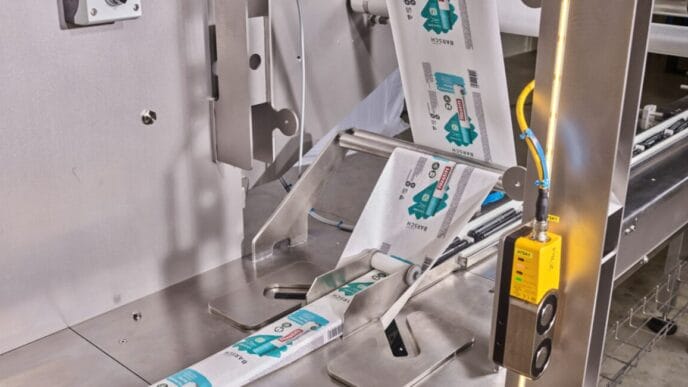
One example of the successful implementation of this automation strategy is The co-operation with the machine manufacturer Hugo Beck. The compact Flowpack R horizontal flow-wrapping machine was developed together. The challenge for the machine manufacturer was to realise an economical, efficient and compact packaging machine within a very short space of time at the request of an end customer, which at the same time conserves resources and produces with a high machine output.
In the first step, the for compact flow-wrapping machines preassembled StarterSet compact 512. This complete and harmonised solution package enabled a quick selection of hardware and a complete software package that offers all the essential functions for implementing the machine from a single source.
All StarterSet solution packages are integrated both in the CRM system and in the SEW-Workbench planning and project planning tool. The application-specific customisation of the drives and gear units with regard to the torque and speed requirements is carried out with just a few clicks and a final check of the solution and identification of combination errors. In this context, the StarterSet compact 512 has been expanded to include inverters, safety technology and stepper motors.
Dispensing with pneumatics
„Previously, movements such as cutting and clamping in the packaging machine at Hugo Beck were traditionally realised with compressed air. The adjustment drive system with stepper motors is now used for this purpose. They enable pneumatics to be dispensed with completely. By replacing the compressed air-operated actuators, the provision and maintenance of the compressed air components is no longer necessary. In addition, the machine can now be integrated more easily and flexibly into the production environment, which also reduces energy costs,“ explains Jonas Schmitt.
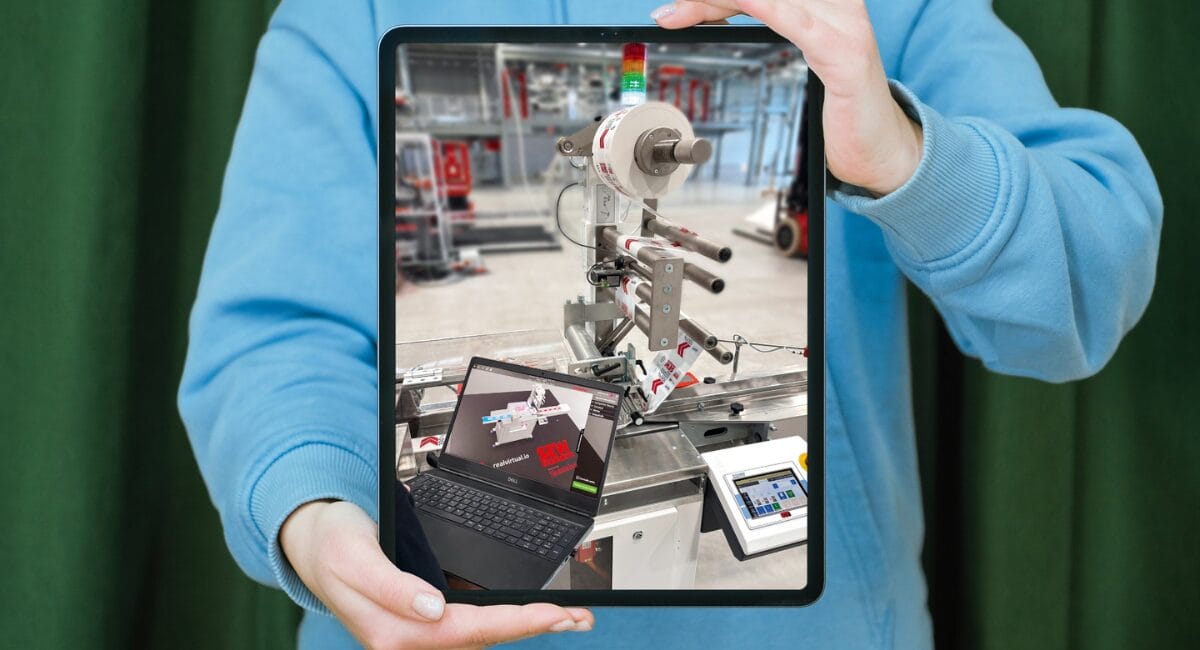
The preliminary simulation of the production process was based on the CAD data of the flow-wrapping machine and the selected components from the StarterSet. The virtual commissioning, which was carried out in parallel with the mechanical realisation of the machine, brought several decisive advantages. On the one hand, it enabled errors to be recognised early on in the design process. In the case of the Flowpack R, mechanical adjustments could be made on the basis of the virtual data from the simulation. For example, the carriers, mould shoulders and the position of the packaging material were adjusted to avoid possible collisions on the real machine.
The simulation also led to an optimisation of the production process during operation. For Flowpack R, for example, cycle rates, synchronisation times, sealing times and the user interface (HMI) were adjusted, resulting in a significant increase in machine output.
The finished machine in three months
The final commissioning was carried out by the machine manufacturer before acceptance by the end customer, supported by SEW Service. This phase benefited from the fast delivery time of just a few weeks and the comprehensive support. The compact Flowpack R horizontal flow-wrapping machine developed in collaboration with Hugo Beck operates 100 per cent without compressed air and instead relies on electric adjustment drives. This has enabled energy consumption to be reduced and productivity to be increased at the same time. The integration of new functions such as „No product-no bag“ was also possible with little effort. This function on the flow-wrapping machine ensures that no bags are produced if no product is present. This prevents unnecessary material consumption and also optimises the efficiency of the packaging machine.
The machine operates at 230 V AC and does not require any power connections, which simplifies installation. The MoviLink DDI digital motor interface with robust single-cable technology transmits power, brake and diagnostic data from the inverter to the motor, making a significant contribution to monitoring the production process. With a capacity of 150 paper packs per minute, the machine offers a high output.
All automation solutions come from a single source, which further increases the reliability and efficiency of the machine. It only took three months from the enquiry to the solution, which corresponds to an outstanding TTM (time-to-market). By reducing the time required within the project duration, the overall costs were significantly reduced.
„Less is sometimes more: this machine impressively demonstrates how modern automation technologies can increase efficiency and sustainability. It is the answer to current challenges without neglecting the wishes of the end customer,“ summarises Jonas Schmitt.