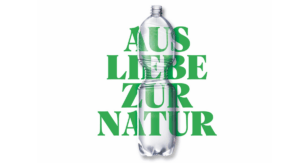
Lidl in Germany is launching a campaign about the ecological strengths of the recyclable bottle, the body of which is made from 100 per cent recycled PET plastic (rPET). A study by the Institute for Energy and Environmental Research (Ifeu) has shown that good single-use systems with a deposit can be just as climate-friendly as good reusable systems.
The bottle-to-bottle system of the closed-loop bottle contributes to climate protection by producing new drinks bottles from old bottles. In this cycle, the material of the bottle body is reused and recycled. the use of virgin PET material is excluded. Thanks to the one-way deposit system, the PET material remains in food-grade quality for drinks bottles.
Thanks to this and other properties such as its low weight, the 1.5-litre reusable bottle has a smaller CO2 footprint: according to the Ifeu study, around 20 per cent lower than the average PET reusable systems investigated and almost 50 per cent less than the 0.7-litre returnable glass bottle (standard returnable glass 0.7-litre and returnable PET 1.0-litre bottles from the Genossenschaft Deutscher Brunnen).

Apart from the use of recycled material (rPET), the closed-loop bottle is particularly climate-friendly during transport. One lorry can transport up to 400,000 pressed recycled bottles. In contrast, with a reusable system, whether empty or full, only the same quantity of around 15,000 bottles fits on one lorry. This means that around 26 lorry journeys are avoided for each return transport of recycled bottles compared to reusable bottles.
The new life cycle assessment by the environmental experts at the Ifeu Institute shows that bottles with a high proportion of recycled material and low material input and standard reusable systems can be equivalent in terms of their climate impact.
„These new findings, which we have also published on the website diekreislaufflasche.de show that good one-way systems with a deposit can be just as climate-friendly as good reusable systems, when they circulate the material and new bottles are made from old bottles. That's why we chose the campaign claim ‘For the love of nature“. The campaign also fits seamlessly into the REset Plastic strategy developed by the Schwarz Group companies."
Wolf Tiedemann, Member of the Management Board of Lidl Stiftung & Co. KG
The ecological assessment of beverage packaging is also a priority for consumers in Germany. This was the result of a representative survey conducted by the opinion research institute Forsa. 55 per cent of respondents stated that the overall ecological balance was more important to them than the blanket promotion of reusable drinks packaging.
SourceLidl
Lidl - More news


German Environmental Aid carries out packaging check

Partnership for more resource conservation

Legal dispute between Lidl and German Environmental Aid

DUH criticises Lidl's single-use plastic campaign