The Linhardt Group develops and produces plastic tubes, among other things. The company has now launched a new material-reduced monomaterial tube made of PP and a standard PE tube with a flip-top closure made of PE.
Linhardt is also currently investing in the Hambrücken site, just under 30 kilometres north of Karlsruhe, around 4.5 million euros in the expansion of extrusion and printing technology. A new plant is expected to go into operation in April 2021, with which the company will then be able to HD printing capacity increased from 55 million to 120 million units per year. HD-Print is a high-resolution offset printing process specially developed by Linhardt for tubes, which enables smooth gradients and a sharp, clean print quality.
„With HD printing, we were able to increase the resolution by 30 per cent and make photorealistic printing possible. This means that our mono-material tubes are now a real alternative to laminate tubes.“ August Wanninger, Innovation & Product Development at Linhardt
Linhardt produces around 200 million plastic tubes per year in Hambrücken with 270 employees. „We can decorate tubes here with various coatings, apply membranes for tamper-evident protection, finish, hot-stamp and print using screen, offset and HD printing,“ says Plant manager Michael Ring. „We also want to increase the proportion of PCR in production and will soon be commissioning a 6-layer extruder for this purpose."

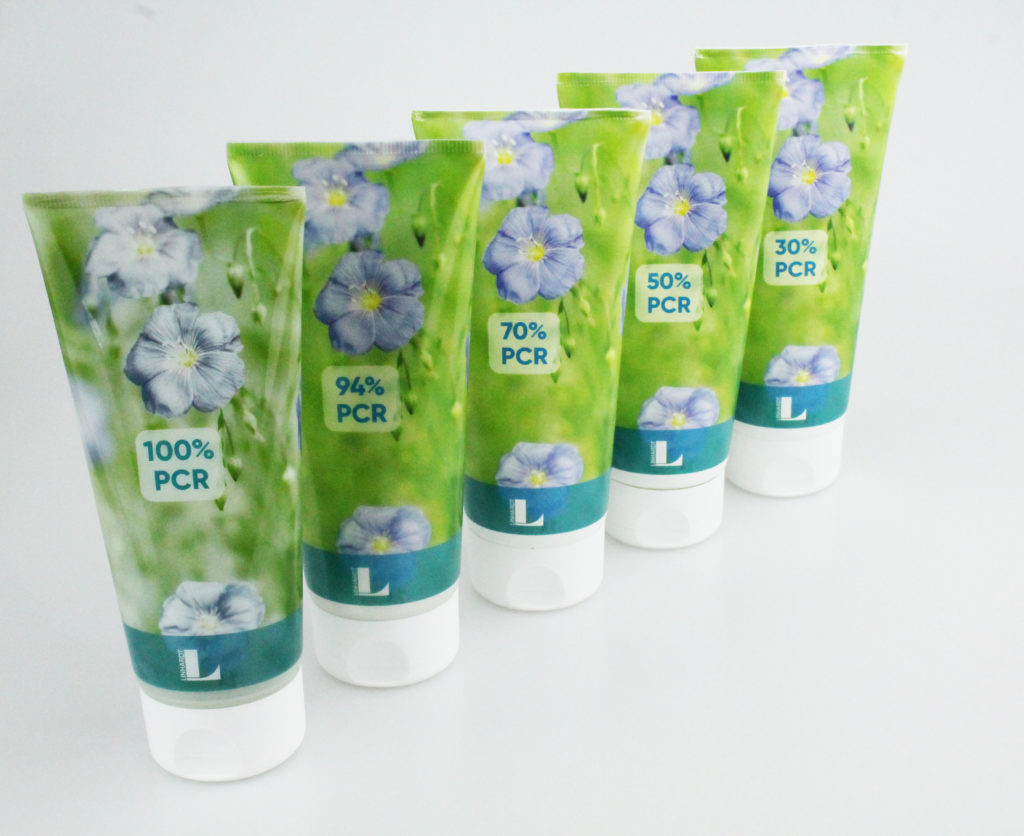
The use of post-consumer recyclate is already strong, adds August Wanninger: „We can already offer PCR plastic tubes with a proportion of 50 to 70 per cent PCR material. A six-layer structure - five layers of PCR and a thin inner layer of virgin material for direct contact with the product - will soon be available. one tube with up to 100 per cent recyclate make it possible.“
Real cycle with short transport routes
Linhardt manufactures two types of plastic tubes from PCR material. In the first variant the rHDPE comes from sorted milk bottles, which are recycled in England. The second variant was developed in collaboration with corporate partners. For this regionally collected waste from the „Yellow Bag“ is sorted, into new material and processed into tubes at Linhardt in Germany. This creates a genuine cycle with short transport routes.
Sustainability is one of the Group's declared corporate goals. It is not only the use of recycled material that contributes to this. Wanninger: „We are already using 20 per cent less material in tube production, for example, but the most sustainable material is, of course, the one we don't use in the first place. Renewable raw materials, sugar or wood-based, are also an issue for us. And I am convinced that we will also have to think about reusable packaging for tubes in the future.“
[infotext icon] LINHARDT is a family-run, medium-sized company with around 1,300 employees. The company produces aluminium and plastic tubes, aerosol cans and packaging made of aluminium and plastic such as tubes, cans and cigar tubes. LINHARDT exports to 70 countries and produces more than one billion packaging units per year. With 600 million aluminium tubes per year, the medium-sized company is one of the three largest players in Europe. [/infotext]„The triumph of the laminate tube is not compatible with the idea of sustainability. A switch to monomaterial tubes is possible in most cases today, for example in the beauty or oral care sector. And we want to create a real alternative with the PCR tube. However, consumers must also be prepared to accept compromises in terms of appearance and do without bright white packaging.“ Johannes Schick, CEO of the Linhardt Group