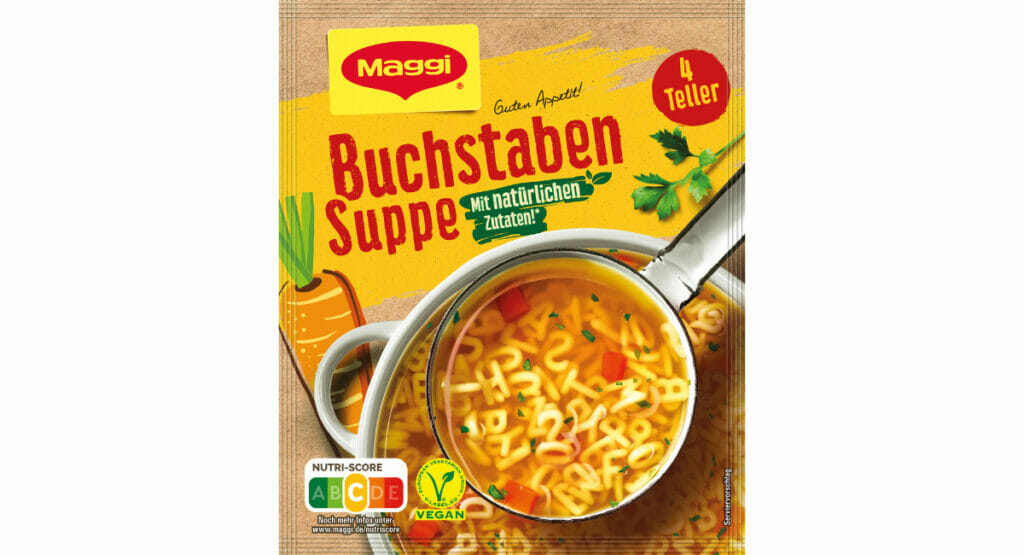
125 years ago, Julius Maggi laid the foundations for a flavourful success story. Today, almost 30 million German households use Maggi products at least once a year. Maggi seasoning and ravioli are particularly popular. To mark the anniversary, the brand's packet soups will be available in new and more sustainable packaging from autumn.
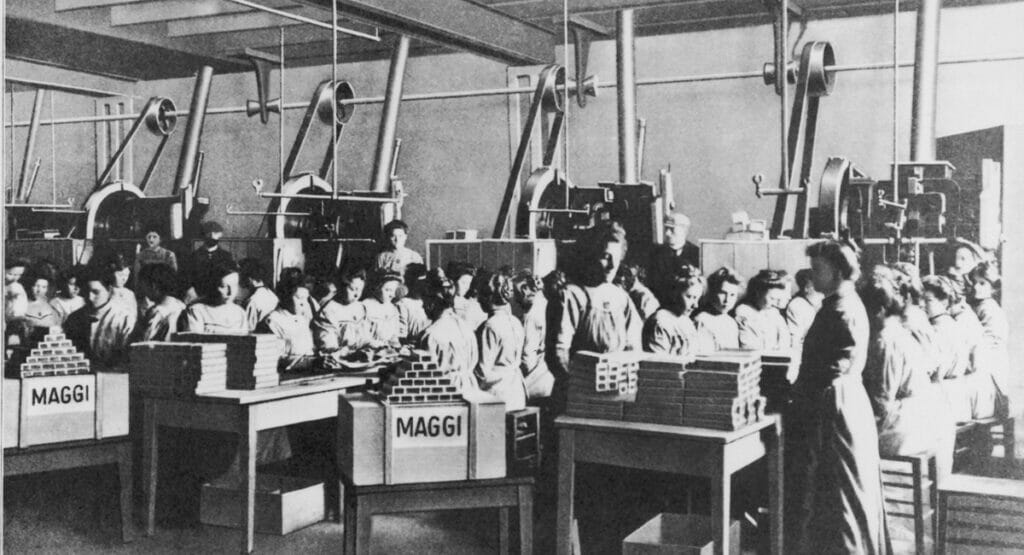
On 17 August 1897, Julius Maggi had his company entered in the commercial register in Singen - a small step for him, but a big step for the brand. Maggi the cornerstone of a rapid development. Because Julius Maggi was a visionary. With his product ideas, he found a The answer to one of the biggest problems of the industrialisation era: malnutrition. After the first, nutritious legume flour, he launched a ready-to-cook Maggi soup made from pea and bean flour, as well as soup seasoning and soup, sauce and meat stock cubes.
Success story in Germany
Julius Maggi made his start in Germany back in 1887 with a handful of employees in Singen on Lake Constance. The pioneering team filled the Maggi seasoning initially only in bottles and sent them by rail to all regions of Germany. Soon, bottling alone in Singen was no longer enough for Maggi. So he finally turned his branch into a factory plant was built and produced the Seasoning from now on completely in Singen. In 1900, the Maggi plant already employed around 450 people. Today, the site is the largest German plant with a workforce of around 550.

To this day, the Maggi seasoning has become an integral part of many German kitchens. On average, fans of the seasoning sauce drizzle more than half a litre on boiled eggs, soups and the like every year. The Saarlanders are at the forefront. The Maggi seasoning is produced by the factory team in Singen. The Seasoning sauce travels from Lake Constance to over 20 countries worldwide. Today's fixes, soups and sauces are available on the shelves in a revised form. This is how Maggi increasingly on natural ingredients, such as vegetables or herbs, and ingredients that consumers know from the kitchen cupboard. Depending on the recipe Maggi for example, modified starch, yeast extract, maltodextrin or glucose syrup. In addition, the coloured Nutri-Score nutritional labelling appears on all product packaging.
Soups in new packaging
Maggi is also tackling the packaging. From autumn, the Maggi For Gourmets Soups and Maggi Guten Appetit soups in a better guise from the conveyor belt. The soup bags dispense with the previous composite film made from different materials. The new bags are made from one material, which makes them recyclable via the yellow bin. In the coming year, the remaining products in the bag, such as the Maggi Fixe on it.
The Singen plant team has Maggi seasoning on a "glass diet" and the Weight of the 1,000 gram bottle reduced. Less packaging reduces CO2 emissions during production and transport. The Singen factory team packs finished pallets with a Shrink film that consists of half recycled material - a joint development with Der Grüne Punkt.

Maggi also wants to take on more responsibility outside the factory halls. The food brand supports farmers on their way to regenerative agriculture in vegetable growing. Farmers plant flower strips, hedges and trees in their fields, for example, which provide a home for animals and thus help to maintain biodiversity around the fields. Overwintering catch crops or break periods without cultivation, for example, ensure healthier soils. Humus-rich soils, trees and the like are also good for the climate, as they act as natural reservoirs for greenhouse gases.
In Germany, around 40 farmers are already growing carrots and leeks for Maggi products in this way. The food manufacturer is gradually adding more and more suppliers to its vegetable programme.
Source: Nestlé
More news on food packaging


Dry forming goes industrial: Yangi starts fibre tray production

Printing inks for packaging hold their own in a weak market environment

One.five supplies high-barrier paper for vegan cheese

EPA tightens PFAS regulation for packaging