Highly developed security technology from Mesutronic Gerätebau GmbH, Kirchberg i. W., ensures foreign object-free end products at Otto Beier Waffelfabrik GmbH in Miltach, Upper Palatinate. Modern metal detectors and X-ray scanners check around one million muesli bars per week before they are delivered and placed on the shelves.
An aromatic fragrance fills the air in the production hall: up to 100 different types of raw materials such as dried fruit, nuts and cereals are used as ingredients in the muesli bars. „And to ensure that only pure products are delivered to the end consumer, we have a double safety lock We have made provisions for this,“ says Markus Beier (43), Commercial Director of Otto Beier Waffelfabrik, which applies strict criteria to its own quality.
The company is committed to over 80 years of tradition. Today more than ever, because in addition to the wafer products and marshmallow confectionery sold under its own name in contract manufacturing fruit and muesli bars for other well-known manufacturers. As a specialist, Beier is particularly in demand when it comes to organic, baby quality and sustainable products.

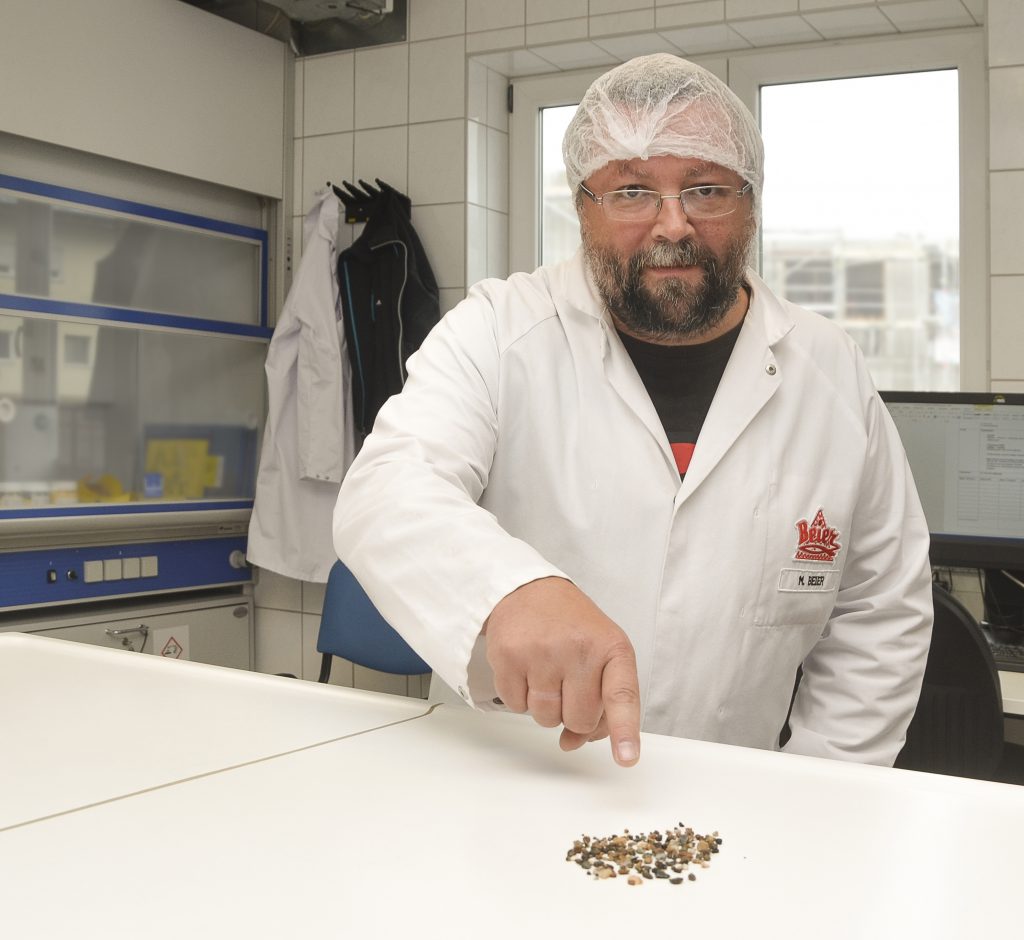
Hazards due to the introduction of foreign substances
The Beier company uses only the best raw materials. But where natural products are processed, there is always a risk, Contamination of various kinds into the production process. Among other things, Beier sources 3,000 tonnes of fruit a year: „It is a normal process during harvesting that stones, metal particles or shot from hunters get into the raw product,“ says Markus Beier. The shells of nuts are also an unavoidable source of danger in the raw product. For Beier, the question now arose as to how the protection of end consumers could be further improved. In principle, it would be possible to use two established methods to analyse the end products: the X-ray inspection and the Inductive metal detection.
X-ray inspection systems - versatile and innovative
X-ray detection is an imaging process. The radiation generated by the X-ray generator is converted into an image by means of a diode arrangement in the receiver and a computer unit. The product to be examined blocks part of the radiation and is thus displayed in different shades of grey. Increasing density, thickness and atomic mass intensify this effect and the image becomes darker and darker.
Various contaminants, such as most metals, glass, high-density plastics or stones, have a high density and atomic mass. This is why they stand out clearly from the surrounding product, even if they are relatively thin, and can be easily recognised. However, very thin metallic contaminants, such as fine shear-offs or metallised foils, are problematic. If not enough radiation is absorbed, the contamination is invisible to the scanner's image-processing algorithms.
Inductive metal detectors - tried and tested specialists
Metal detectors that work according to the balanced coil principle analyse products by means of an alternating magnetic field that induces a voltage in the receiver windings of the coil. They only recognise metallic contaminants on the basis of electrical conductivity and magnetic penetrability. Contaminants with a low thickness or density can also be easily detected here. However, thinly metallised packaging components also result in a reduction in the general detection performance.
Particularly with Beier products, which are easy to analyse, the Recognition accuracy of the metal detector in the area of ferrous and aluminium parts is better than the results of the X-ray scanner. The situation becomes more difficult when metallised packaging components are used. With these products, the X-ray scanner is almost always superior in the area of metals.
Risk assessment and search for solutions
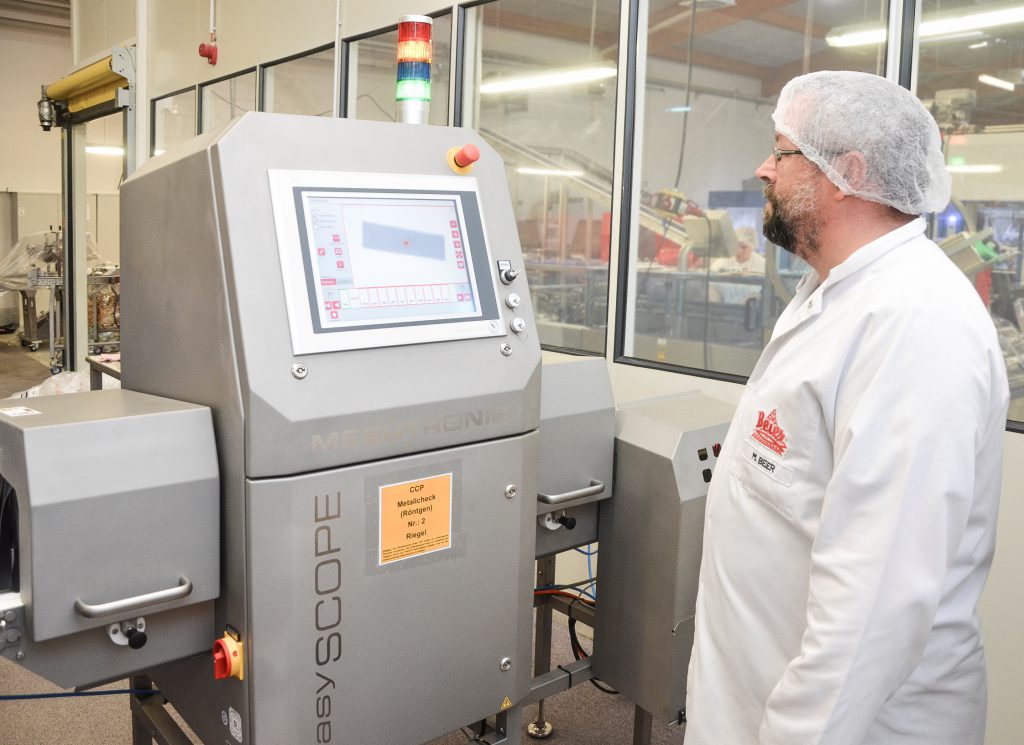
Due to the diverse, unavoidable sources of danger that result from the raw materials, the HACCP-compliant risk assessment In principle, only X-ray technology is an appropriate tool for checking for foreign bodies. This recognises the widest range of contaminants in the finished product. The technology also offers other quality assurance tools, such as counting functions or breakage control. Once this had been determined, a suitable partner had to be found. „The decision was made in favour of the easySCOPE X-ray inspection systems from Mesutronic Gerätebau GmbH. It provided an optimum compromise between user-friendliness and detection accuracy, and project planning and commissioning went smoothly,“ says Alexander Beier (45), Technical Managing Director of Otto Beier Waffelfabrik.

„At the Bavarian confectionery manufacturer Otto Beier Waffelfabrik GmbH, we achieve comprehensive security at the Miltach plant by using a combination of metal detectors and X-ray scanners,“ explains Georg Hübner to the point. He has been working for Mesutronic Gerätebau GmbH for 13 years in various areas of responsibility and is responsible for market communication, technical documentation and product management.
Quality by tradition
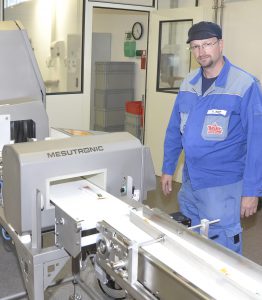
In order to protect the consumer in the best possible way, Beier decided not only to invest in modern X-ray systems, but also to combine both methods. Metron 07 CI tunnel metal detectors were also installed on all lines. The metal detection systems are the specialists for all types of metal contamination. In the first step, they remove as many bars as possible that are contaminated with shot pellets, shear-offs, pieces of wire or similar.
In return, the X-ray systems are specially optimised for non-metallic contaminants such as stones, pieces of peel or broken glass, and they also improve the detection performance of products with metallised outer packaging. Up to 600 bars per minute per line are forwarded to the secondary packaging and delivered to the retailer and ultimately to the end consumer. All this with that certain plus in quality that both those responsible at Otto Beier Waffelfabrik and the specialists at Mesutronic vouch for.