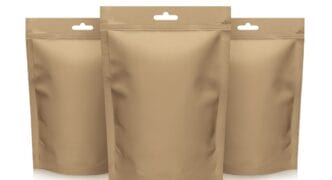
Metsä Board, European manufacturer of premium fresh fibre paperboard, produces folding boxboard, food service grades and white kraftliner. The range specifically includes qualities that have been developed for use in food, chocolate and confectionery.
Safe food and confectionery packaging is not just a question of packaging shape and stability, but also of the material. On the one hand, this is about protecting the contents from breakage or changes caused by external influences, but also about ensuring that the packaging material itself Safe for product and consumer is. Fresh fibre cartonboard is naturally characterised by a very high purity and whiteness, is tasteless and odourless and is therefore suitable for hygienic, safe packaging with direct food contact.
Wood for one tonne of cardboard grows back in one second
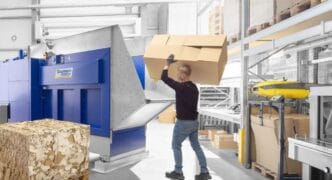
All of the Finnish company's cartonboard qualities are based on virgin fibres that come from sustainably managed northern European forests. In Finnish forests, the wood needed to produce one tonne of cartonboard grows back in less than a second. Another important aspect is the traceability of the raw materials. Metsä Board can provide 100 per cent proof of origin for the wood fibres used. No wood from endangered rainforests or primeval forests is used and all production sites have PEFC and FSC Chain of Custody certification as well as other environmental and quality certificates. The products can be recycled at a high rate depending on the municipal recycling offer. Eco-efficiency recycle, thus reducing the volume of waste and making an important contribution to the environment. Circular economyt.

Less material is more for the product
A further plus point on the sustainability account comes from the Lightweighting concept, which reduces the amount of wood required for virgin fibre cartonboard qualities without compromising their properties. The lower wood requirement means that less raw materials, energy and water are used in production overall. The lighter cartonboard qualities also have a lower transport weight and therefore ensure lower emissions. This also reduces the impact of packaging disposal and the recycling process, meaning that lightweight cartonboard qualities help to minimise CO2-footprint.
Efficient production thanks to the circular economy
Establishing the circular economy at production level ensures efficient production processes. Resource utilisation. Metsä Fibre, for example, a leading global manufacturer of long-fibre pulp and, like Metsä Board, also part of the Metsä Group, has opened a new bioproduct plant in Äänekoski and is thus making an important contribution.
„The plant uses 100 per cent of its secondary materials from production for the manufacture of new bioproducts and renewable energy,“ explains Riikka Joukio, Senior Vice President of Sustainability and Corporate Affairs at Metsä Group. „No fossil fuels are used there at all and 2.4 times as much renewable electricity is generated as is needed.“