The largest investment in the Finnish forest industry - the new bioproduct mill in Kemi and the expansion of the board mill - commenced operations in September as planned. Pulp deliveries from the new mill to customers will begin in October.
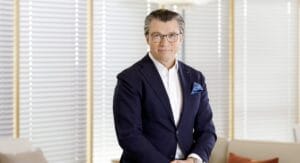
„Metsä Group's products replace fossil-based materials in people's daily lives. Pulp and paperboard are used as raw materials for many consumer goods, and we can produce them in Kemi with significantly lower emissions. Finland needs sustainable investments that create jobs, income and a strong belief in the future.“
Ilkka Hämälä, President and CEO of Metsä Group
The new plant in Kemi produces 1.5 million tonnes of softwood and hardwood pulp every year. It uses no fossil fuels and is expected to be completely waste-free by 2030. The plant is equipped with state-of-the-art technology and operates according to the principles of the circular economy, as All wood raw materials and by-products of production efficiently utilised for various bioproducts and bioenergy are produced. For example, the plant produces tall oil and turpentine as well as two terawatt hours of renewable electricity per year, which corresponds to the annual consumption of 100,000 electrically heated single-family homes.

This corresponds to around 2.5 per cent of Finland's total electricity production. Thanks to efficient chemical cycles and other environmentally friendly solutions lemissions from the new plant are below the limit values, The current environmental licence for the decommissioned pulp mill in Kemi stipulates that the production capacity has been significantly increased.
The bioproduct factory will process 7.6 million cubic metres of wood per year, 4.5 million cubic metres more than the old factory. The wood will be supplied on the basis of regenerative forestry with the aim of achieving a demonstrable improvement in the state of nature by 2030.
The modernisation investments at the Kemi board mill will also increase the annual production capacity of white top kraftliner by around 40,000 tonnes to 465,000 tonnes. This increase will strengthen the position of the Kemi as the world's largest manufacturer of coated white-top kraftliner, whose products are used worldwide as a surface material for corrugated cardboard packaging. The integration of the bioproduct mill and the board mill as well as the modernisation of the board mill's production line will significantly improve the water and energy efficiency of the board mill. The investments will reduce the mill's water consumption by 40 per cent and energy consumption by five per cent per tonne of cardboard produced.
Metsä Group's completed, ongoing and planned investments since 2015 have totalled around seven billion euros. The investments enable the company to better fulfil the needs of forest owners and customers throughout the forest industry value chain and contribute to climate protection. Energy efficiency, reduced environmental impact and fossil-free operation of the bioproduct mill support the sustainability goals of Metsä Group and its customers.
Source: Metsä Group
Metsä Board plans Packaging Design Studio in Milan
Metsä Board takes over Winschoten site
Metsä Board starts modernisation of board machine in Simpele

Metsä Board presents sustainable paperboard solutions and mill modernisation
Metsä Board stops production at Tako mill