To protect customers from cross-contamination from the big bags on the bulk goods, the French manufacturer So Bag checks all FIBCs produced for metal contamination using a Mettler-Toledo Profile Advantage metal detector.
30. July 2020
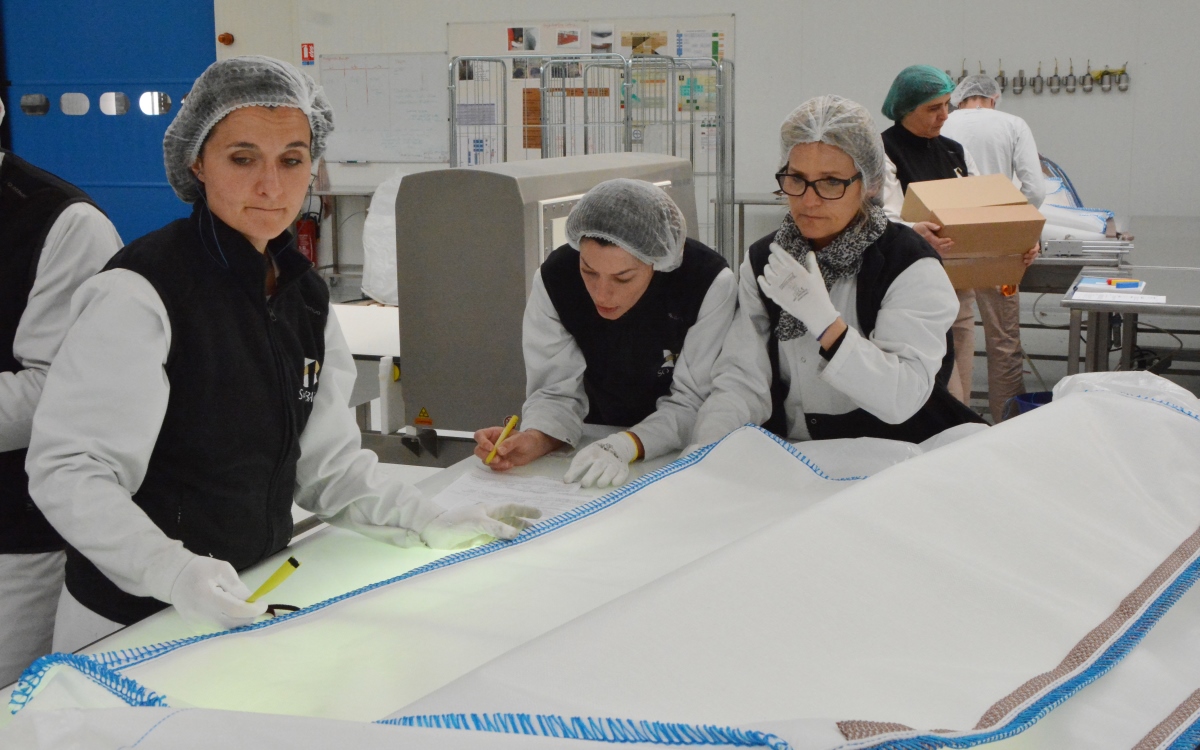
The metal detectors work with MSF technology and a software algorithm that suppresses the product signal from the big bags. (Image: So Bag)
The French manufacturer So Bag supplies customised flexible bulk containers (FIBCs), known as big bags, primarily to the food, chemical and pharmaceutical industries. The company checks all the packaging it produces for metal contamination using technology from Mettler-Toledo Product Inspection Germany.
Big bags have long been standard packaging for the storage and transport of granulates and powders across all industries. Far less standard is what the Burgundy-based FIBC manufacturer So Bag scores points with its customers: the company, which was only founded in 2013, pays attention to this in the production of its big bags, Customers from cross-contamination with the bulk material to protect them. A concept that works: the company now produces more than 100,000 big bags every year, which are customised to the customer's application requirements.
FIBC type C: Challenge product effect
The big bags are made of woven tape fabric made of coated or uncoated polyethylene or polypropylene. These are materials that High electrical insulation capacity and an exact match between the FIBC type and the later deployment scenario to prevent electrostatic ignition hazards during filling and discharging.
So Bag produces FIBCs of types A to D in accordance with IEC 61340-4-4. Type C FIBCs are particularly demanding when it comes to detecting metallic foreign bodies. These FIBCs have a conductive structure that allows them to be filled and emptied in all potentially explosive atmospheres while being earthed. For this purpose Conductive carbon fabric incorporated into the FIBC.
Display
Conventional metal detectors therefore reach their limits when checking for foreign objects. The carbon fabric interferes with the electromagnetic field of the metal detector to such an extent that an inspection not or only with low detection accuracy would be possible. The devices are not able to suppress this so-called product effect and reliably detect metal contaminants under these difficult conditions.
Cutting and manual sewing work harbour risks of metallic contamination of the big bags. (Image: So Bag)
Protection against cross-contamination
Testing bulk goods for metallic foreign bodies using a free-fall metal detection system is a widely used method in industrial applications when filling FIBCs. The process promises downstream safety in the production line for the bulk material transported further in the FIBC - but only if Cross-contamination from the container to the bulk material is reliably excluded can be realised.
However, both cutting and sewing operations harbour risks of metallic contamination of the big bags during production. Broken needle tips can get caught in the fabric of the FIBC and later cause cross-contamination with the bulk material. The same applies to small metal parts such as threading aids and thimbles, which are used by employees during manual processing of the big bags.
MSF technology plus software in use
So Bag therefore decided in favour of a Profile Advantage metal detection system from Mettler-Toledo and uses it to check its big bags for metallic foreign bodies during the final product inspection.
Rainer Mundt, Head of Marketing at Mettler-Toledo Product Inspection Germany (Image: Mettler-Toledo)
„For products with a product effect or conductive materials, other manufacturers are trying to enable metal detection of such products by adjusting the frequency,“ explains Rainer Mundt, Head of Marketing at Mettler-Toledo Product Inspection Germany. „This means that the number of ‚False Positives’ can be reduced. However, this also reduces the overall detection performance and increases the risk of unrecognised metal contamination in the product. We take a different approach with our Profile Advantage solutions: to put it simply, we teach the system so that we can then analyse the product. ‚Factoring out‘ the product effect‘ to be able to. As a result, we recognise Up to 50 per cent smaller metal foreign bodies compared to other technology approaches."
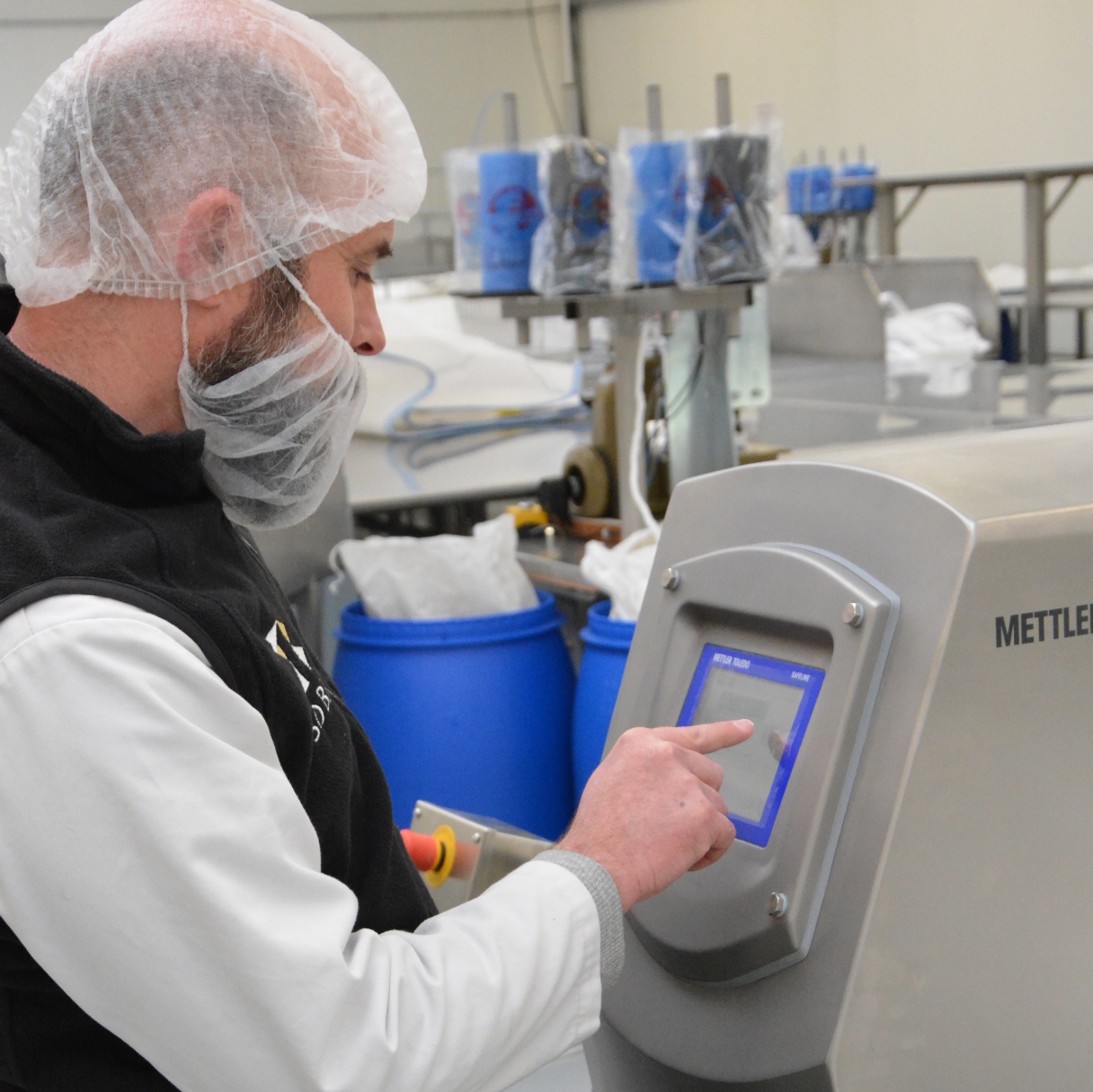
These metal detection systems utilise the so-called MSF technology (Multi Simultaneous Frequency) and a special software algorithm that suppresses the product signal emitted by the FIBC. During the inspection, the metal detector uses Different, flexibly customisable operating frequencies. During setup, a test product is passed through the metal detection system several times beforehand in order to determine the properties of the product signal and transfer them to the software algorithm.
Combined Final product inspection
In its final product inspection, So Bag combines the Profile Advantage metal detector with a Stop-on-detect ejection mechanism. Thanks to the large opening of the metal detection system, the folded FIBCs can be fed to the metal detector quickly and easily via the conveyor belt.
If the detector is triggered, the conveyor belt stops immediately and an employee removes the suspect FIBC. This is examined for metallic foreign bodies in the rework and checked again after any foreign bodies have been removed.
The 100 per cent inspection of each individual product is a key component of the company's internal quality management and its quality promise to its customers.
Thanks to the evaluation of performance data and key figures collected by the metal detector, production output and product quality can be further improved. (Image: So Bag)
Preventive quality assurance
In addition to the reliability and precision of the metal detector, condition monitoring functions were also important in the investment decision. The Profile Advantage metal detection system continuously analyses the System performance and sounds the alarm if problems such as an accumulation of foreign body findings occur or the performance level falls below a certain value. So Bag can thus reduce the number of daily performance tests, which leads to the Increase in system availability contributes.
Production managers also analyse performance data and relevant key figures collected by the metal detection system at regular intervals. This provides them with important insights into the production process and indications of how the Production output and product quality further improved can be analysed. The type and frequency of errors that occur, for example, allow conclusions to be drawn about weak points or particularly critical points in production.