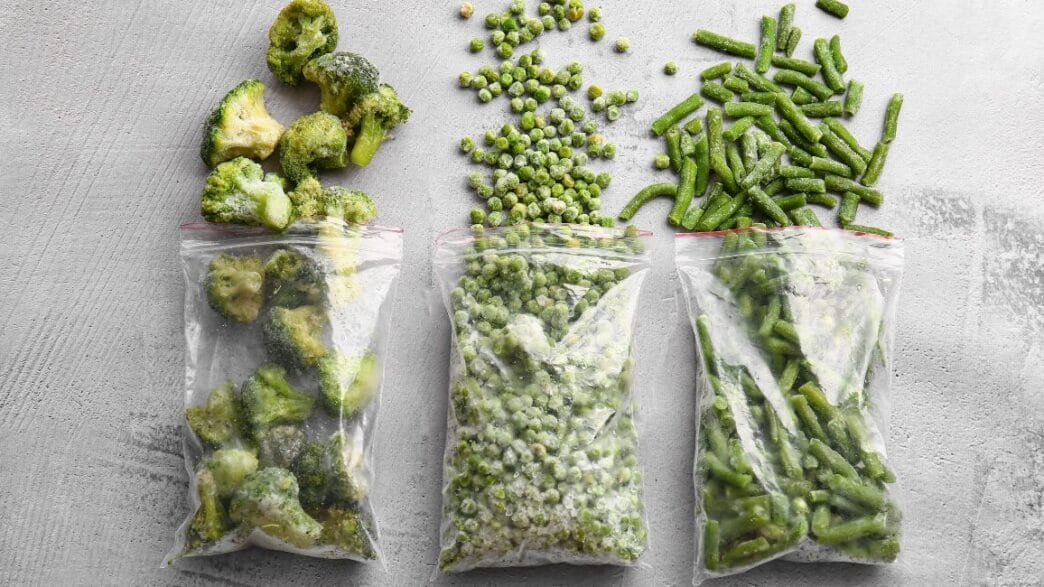
Greenyard Frozen Belgium is one of the leading suppliers of frozen fruit and vegetable products in Europe. For the company, packaging is not only the last step in the process chain, but also a potential source of savings in view of product overfilling. Greenyard has recognised this lever and equipped its high-speed lines with intelligent weighing technology from Mettler-Toledo.
From its site in Westrozebeke, Greenyard supplies millions of consumers at home and abroad with high-quality food every year. When packing loose vegetables such as peas, beans, cauliflower florets and the like, the producer previously relied on tried-and-tested checkweighers and metal detection systems. However, the fight against underfilling had the opposite effect over the years: in order to guarantee legal minimum weights, an additional safety margin of up to 40 grams per one-kilogram bag was usually filled - this quickly added up to several tonnes of excess weight per year. Manual corrections were attempted, but these proved to be time-consuming, error-prone and inefficient.
Intelligent checkweighers with trend control
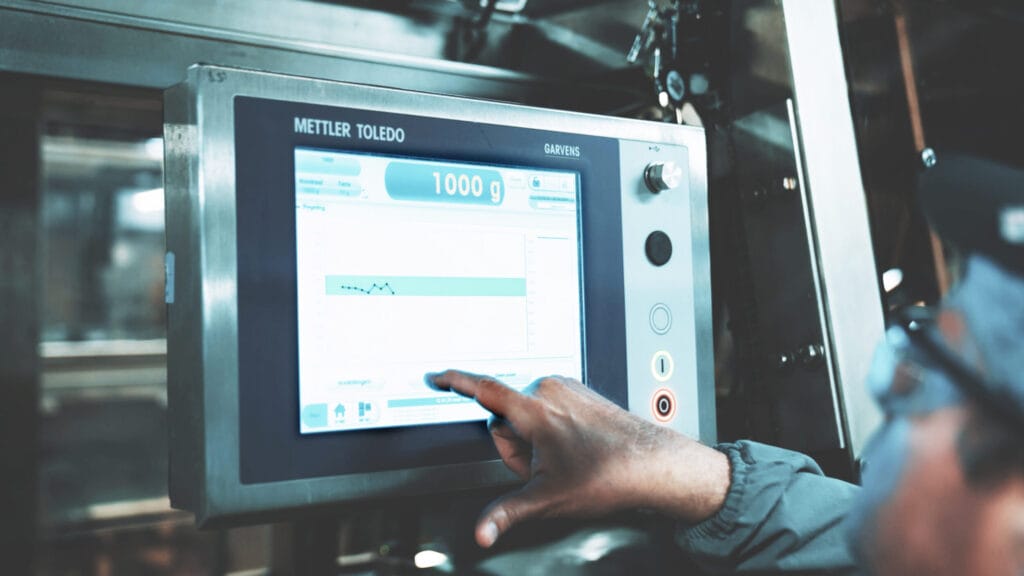
Greenyard decided on a change of strategy: in collaboration with Mettler-Toledo, a pilot test was launched with the C33 PlusLine checkweigher. The system is more than just a classic scale - it recognises the average filling quantity in real time and actively adjusts it. The aim is to get as close as possible to the nominal weight without falling below it.

The software automatically corrects the control of the upstream multihead weighers. Instead of a flat 40 gram safety surcharge, only ten grams were now sufficient - a massive reduction that was directly reflected in product savings.
Following the successful test run, Greenyard integrated the intelligent weighing technology into four existing packaging lines. One year later, all six lines for small packs were equipped with the solution. Mettler-Toledo closely supported the process: from the configuration of the product types to training and fine-tuning during commissioning.
The user interface allows employees to monitor and analyse weight trends live. The initial set-up required the manual input of individual target weight margins for different product types such as loose peas or cauliflower florets. A certain amount of coordination and testing was required to configure products with different shapes and weights, but this quickly paid off with greater accuracy and less waste.
Savings, efficiency and sustainability
The results speak for themselves. On one line, the excess weight fell from 0.69 per cent to 0.14 per cent, on another from 0.3 per cent to 0.11 per cent. This equates to savings of up to 1.8 kilograms per minute at a cycle rate of 60 packs - a significant reduction. „Calculated over a year and for large volumes, this means that we save considerable amounts of product during packaging,“ says Dominiek Vierstraete, Technical Manager in the packaging department at Greenyard.
The solution was also convincing in terms of process reliability and sustainability: fewer manual interventions mean less potential for errors and consistently high quality. The use of raw materials is optimised and the environment is protected - a plus point in times of increasing regulatory requirements and growing sustainability targets.
„If I had known this five years earlier, we would have done it then,“ says Dominiek Vierstraete. For him, one thing is certain: the investment has not only paid off - it is a future-proof foundation for further automation. „We can now control the overweight much better and stay closer to the desired filling weight. This leads to product savings, avoids waste and makes the process more efficient. This not only saves us money, but also resources.“
„Every gram counts in food production. With intelligent technology, companies can realise significant savings. Depending on the product and production line, the investment is amortised within a few months on average.“
Mari Bögels, Account Manager at Mettler-Toledo
A model for other locations
The technology is scalable and will also be rolled out at other Greenyard production sites and for other product types. Especially in the context of rising energy and raw material costs, digital weighing solutions offer a welcome efficiency lever - and at the same time contribute to a more sustainable approach to food.
A key success factor was the close cooperation between the manufacturer and the solution provider. Janus Dumelie, field service technician at Mettler-Toledo Benelux, emphasises: „Our role does not end with the installation. We provide the customer with continuous support and help them to get the most out of their intelligent checkweigher solutions.“ Service contracts, maintenance packages and training are also part of the portfolio - an all-round service.
The partnership between Greenyard and Mettler-Toledo shows how digitalisation and intelligent automation can solve real challenges in the food industry. Smart checkweighers, consistent training and close collaboration have turned a chronic efficiency leak into a clear competitive advantage - sustainable, economical and transferable to other industries and products.