Mobile transport robots - when does autonomous navigation make sense?

Anyone who wants to automate intralogistics processes is faced with a choice: autonomous mobile robot (AMR) or automated guided vehicle (AGV)? According to intralogistics expert Safelog, the distinction is irrelevant due to the lack of technological differences and a high degree of autonomy often makes no sense at all.
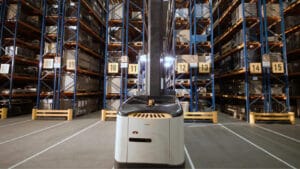
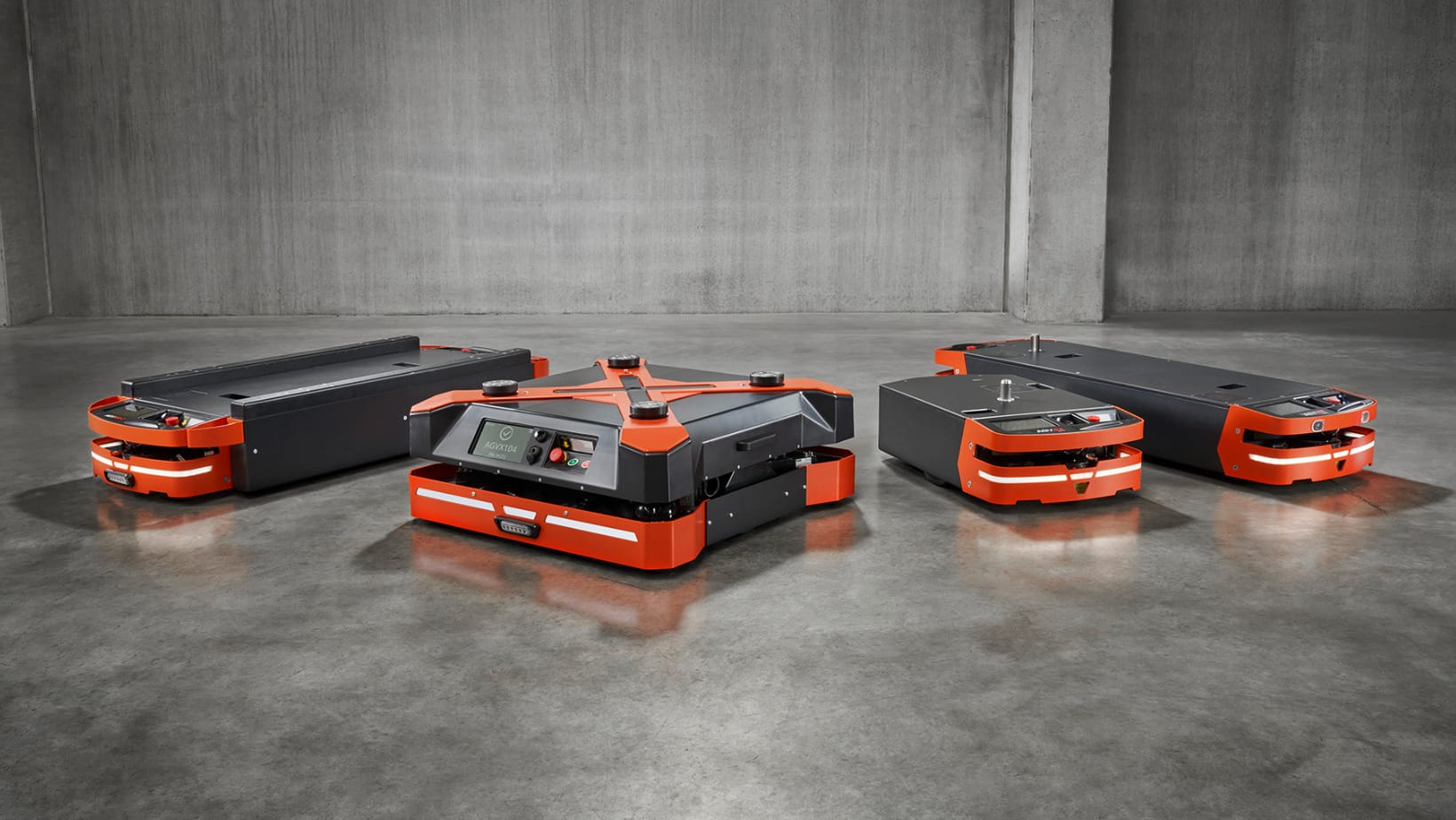
With complex traffic volumes, a low degree of autonomy is efficient, safe and reliable thanks to fixed lane guidance. (Image: Safelog)

Mobile transport robots are becoming increasingly popular in intralogistics. But anyone who wants to automate their intralogistics processes is faced with a choice: autonomous mobile robot (AMR) or driverless transport system (AGV)? However, the distinction between AMRs and AGVs is irrelevant due to the lack of technological differences and a high degree of autonomy often makes no sense at all, says intralogistics expert Safelog.

Numerous providers of so-called autonomous mobile robots have been springing up over the past few years. They are all united by the promise of being able to automate intralogistics processes quickly and easily through autonomous robot navigation. The term „AMR“ for autonomous mobile robot is often used to distinguish it from the established driverless transport system. There is no technological justification for this distinction. Whether in terms of drive, battery, control or safety technology the hardware of the robots is almost identical. And the often cited superior sensor technology such as 3D cameras for capturing the environment can be used in almost all mobile robots if required.

They even have a lot in common when it comes to navigation. Many modern AGVs have the ability to navigate freely. It therefore makes no sense to differentiate between AMRs and AGVs. Both are mobile transport robots (MTR) that perform specific transport tasks and may or may not have to fulfil certain autonomous functions depending on the application in question.

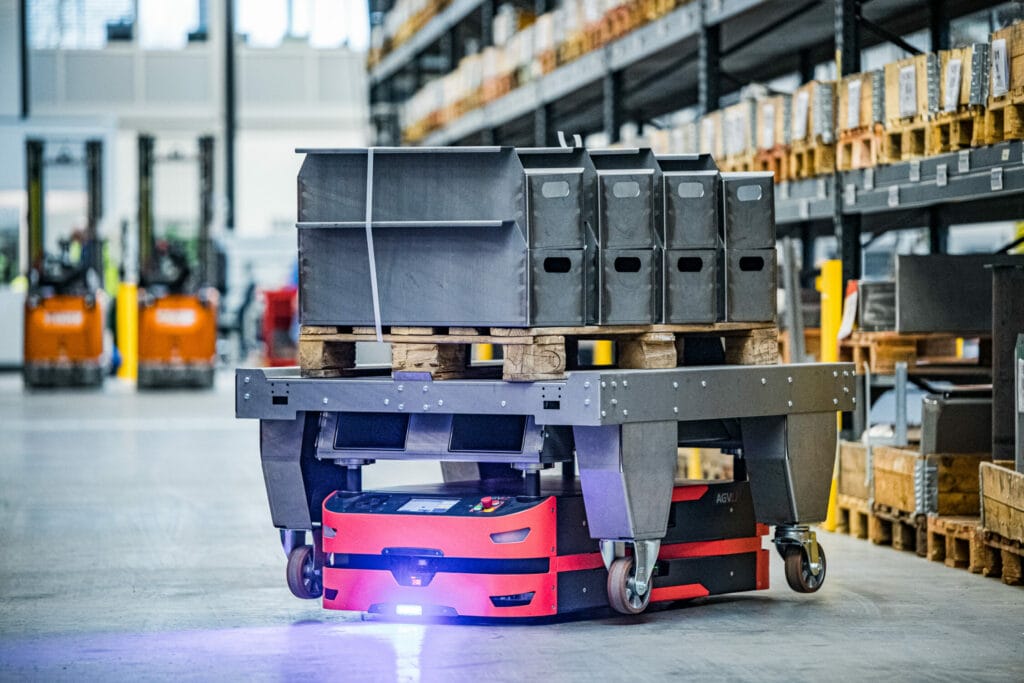
Especially in production environments with just-in-time cycles, a low degree of autonomy ensures high process reliability. (Image: Knoll Maschinenbau)

Autonomy only makes sense in niche applications

AMR is often used to describe mobile robots that have a high degree of autonomy and can move freely in space, adapt their respective route to the current spatial conditions and obstacles independently - or because the manufacturer simply names them as such for marketing reasons. However, this often leads to problems. Autonomous navigation and the resulting unpredictable behaviour of the robots jeopardise process reliability, particularly in production environments where high temporal precision is required due to a just-in-time cycle. This is because an evasive movement causes a time delay or obstructs other process participants.

Display

If there are other (manual) vehicles on the shop floor or complex traffic regulations to be complied with, the a predictable workflow is difficult to guarantee with autonomous systems. If, on the other hand, a robot navigates along a defined route with little autonomy, it performs its tasks efficiently, safely and reliably, which is a decisive advantage when many transport robots have to interact with each other as well as with other vehicles or peripheral systems.

The situation is different in applications where delivery time and sequence play only a subordinate or no role. A high degree of autonomy also makes sense, when interaction or even collaboration with employees is required. In a picking warehouse, for example, it can be an advantage if the robot has to avoid other vehicles in mixed traffic or has to react to a large number of employees in the area.

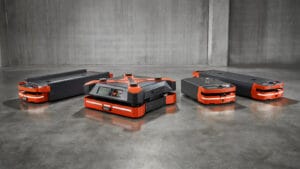
With the swarm approach, only the affected robot fails in the event of a malfunction, while the swarm continues to carry out its tasks. (Image: Safelog)

Robots communicate with each other in a decentralised swarm

Ultimately, the success of a project is not determined by the degree of autonomy, but by cost efficiency and stable, high technical availability. And, in particular, that the company's own staff are able to get the system up and running again in the event of a malfunction. The following applies: The less technology is installed in a robot, the fewer potential sources of error and technological dependencies there are. This makes the system very robust. Another sticking point is that the systems usually require a control centre to control the robots. This is cost-intensive to purchase, programme and maintain and is particularly uneconomical for smaller automation projects with just a few robots.

What's more, if the control centre malfunctions, the entire fleet is out of action. Modern mobile transport robots therefore have agent-based control. The robots communicate decentrally with each other in the swarm, inform each other of their position and speed and exchange information about disruptions on the route. Route planning and approvals for route sections are also based on the swarm's internal communication. The agent-based control system enables the efficient operation of a few robots up to several hundred vehicles without the need for increased effort as the number of robots increases. This makes it possible to implement profitable automation for small companies, even with a small number of robots.

Decentralised control not only increases efficiency, but also process reliability. In the event of a malfunction, only the affected vehicle comes to a standstill, while the swarm continues to go about its business. The cost-intensive standstill of entire fleets, as with the control centre approach, is therefore ruled out. The technical availability of the solution can reach a value of more than 99 per cent.

Conclusion

The distinction between AMR and AGV is irrelevant. Both terms describe mobile transport robots with more or less autonomous functions. Whether autonomous navigation makes sense depends on the respective application. The decisive factors for the success of automation with transport robots are the stability of the system, the cost efficiency and the availability of the fleet. Agent-based robots have a clear advantage here.

from the magazine - More news

The electronic high-speed switch in AcoposTrak makes it possible to manufacture products individually with a completely flexible layout for customised production in batch size 1. (Pictures: B&R Industrial Automation)

Adaptive solutions for the packaging sector

B&R offers end-to-end automation solutions for many areas of the packaging sector and supports its customers with adaptive solutions. Where do the experts see the current challenges today, and what developments are the current and future focus?
Read more "
Dunkermotoren drive solutions for food packaging

Fresh food on the shelf

In order to get fresh food onto the shelves as quickly as possible, it must be processed and packaged quickly. Innovative drive solutions in hygienic design enable packaging machines to offer maximum flexibility for all applications.
Read more "