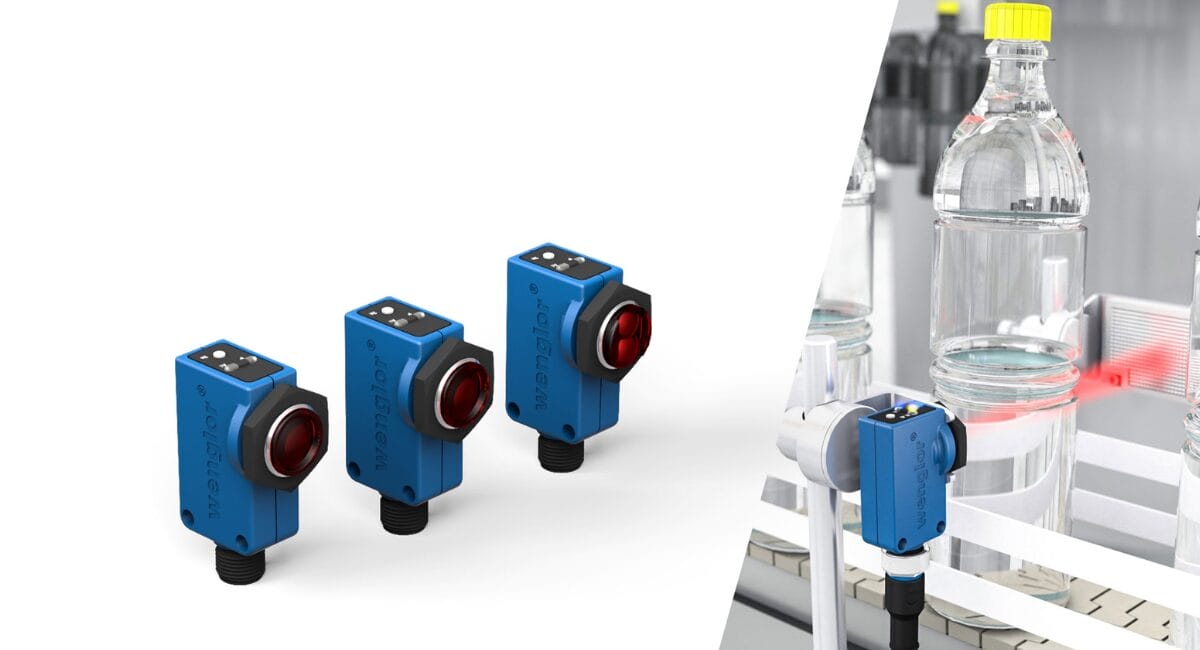
wenglor offers new optoelectronic sensors for reliable object detection. The sensors are equipped with modernised electronics including an IO-Link interface. The updated products include reflex barriers and diffuse reflection sensors.
The latest generation of optoelectronic sensors in R-design from wenglor sets new standards with its proven performance features and simple installation options for reliable object recognition. The updated product portfolio includes reflex barriers and reflex scanners. In addition to a new teach-in control panel, the new P1RH diffuse reflection sensor with background suppression, P1RK reflex barriers for transparent objects and P1RL universal reflex barriers with a modernised electronics including IO-Link interface equipped.
This communication interface allows a Simple configuration of parameters, output of signal values, condition monitoring as well as the setting of pick-up and drop-out time delays. The technology is integrated into wenglor's tried-and-tested R design (56.5 × 26 × 24 mm). This is characterised by an integrated M18 thread, which enables simple installation.

Mirror reflex barriers universal have a range of up to 12,000 mm and mirror reflex barriers for transparent objects reach distances of up to 4,000 mm. The reflex barriers have integrated single-lens optics and enable a switching frequency of up to 2,000 Hz. In contrast to this Reflective scanner with background suppression combined with twin-lens optics and a scanning range of up to 120 mm. The diffuse sensors achieve a switching frequency of up to 1,000 Hz.
Reflective scanners with background suppression use red light for contactless and reliable object detection against any defined background. Through the Principle of angle measurement the colour, shape and surface of the object have no influence on the switching behaviour of the sensors. Retro-reflective sensors work with different types of light, whereby the transmitter and receiver are integrated in one housing. If the light beam between the sensor and reflector is interrupted, this generates a switching signal.
Source: wenglor