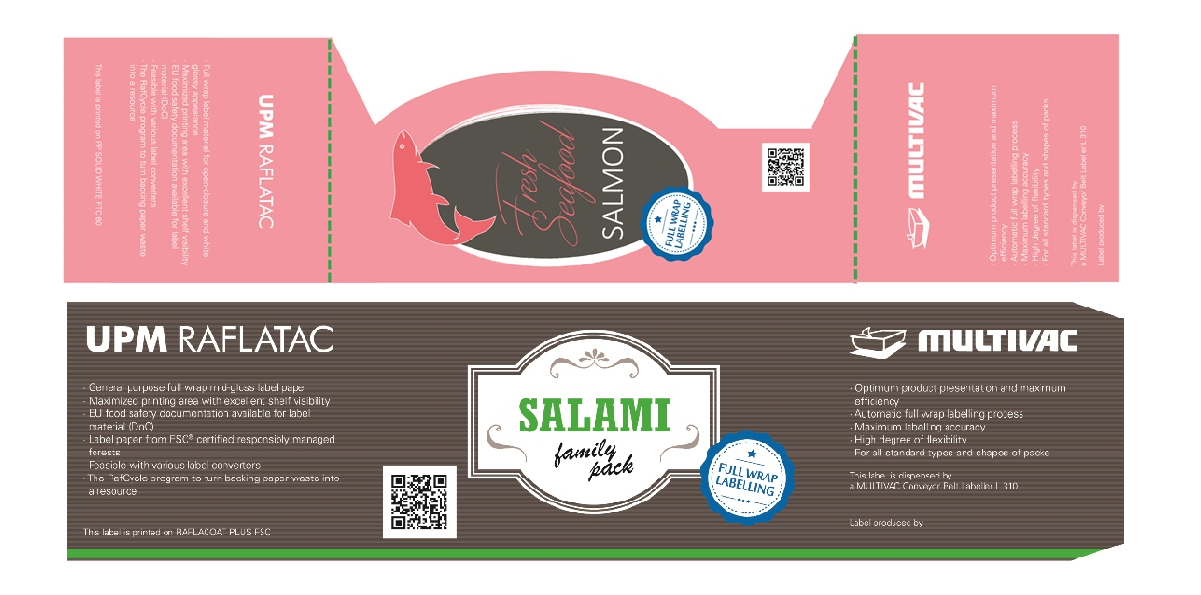
Full-wrap labels, which enclose all four sides of a pack like a banderole, offer a whole range of advantages over other labelling solutions. In addition to their function as an information carrier, they are also a key design element that increases the attractiveness of the packs on the shelf. They help manufacturers to optimise the presentation of their brand.
Looking at the range of label materials that can be processed, there are virtually no limits to the labellers from Multivac in terms of the quality and thickness of the material. The standard programme includes paper and film labels in various qualities produced using standard printing machines. As the labels are stabilised by the backing material, they are Almost all forms conceivable. For example, labels with curves or cut-outs that can be adapted to the shape of the respective products and packs are possible.
Various types and forms of packaging
The labelling solutions are flexibly designed for a wide range of pack shapes and materials so that optimum labelling results can always be achieved. Typical applications include Skin packs with different product protrusions or those in which the product is below the tray height. As unprinted top films are usually used for the production of skin packs, the label for the skin pack is of particular importance. Product labelling of these packs plays an important role. However, full-wrap labelling is also used for MAP thermoformed packs or Trays with a wide variety of shapes. The flat surface of these packs offers a wide range of labelling options.

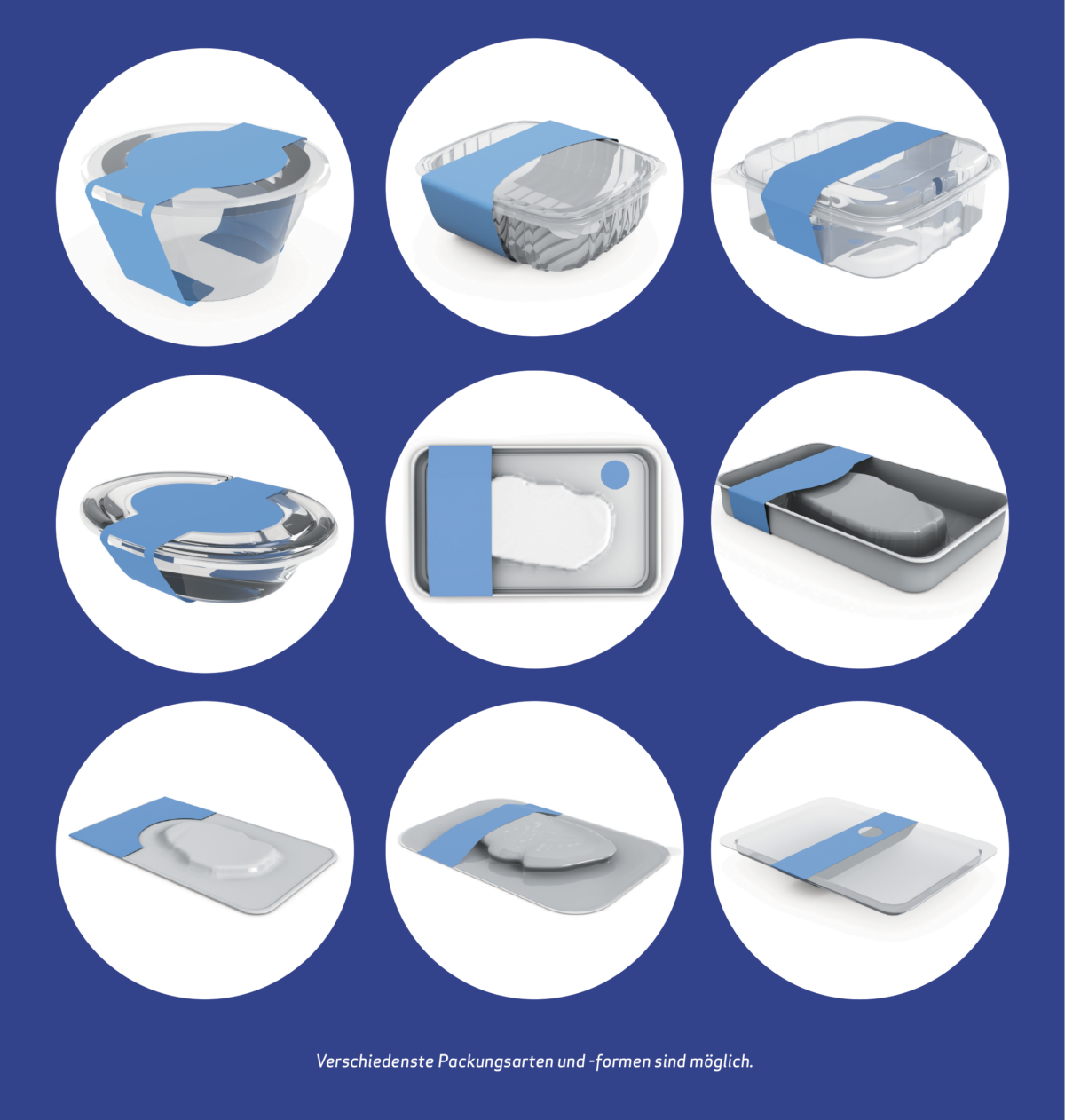
Even with Folding blisters or Clamshell containers, For products such as ready-made salads, fruit or baked goods, full-wrap labelling can make a significant contribution to increasing the attractiveness at the PoS. In this case, the label also prevents unintentional opening of the packs.
Product communication and differentiation
Due to their size and shape, full-wrap labels offer a lot of space for communication and product information while leaving the product visible. As food packs are often stacked in supermarkets, full-wrap labelling increases the shelf life. Visibility of the product on the shelf. Transparent labels can also be used to present the product as fully as possible in the pack.
[infotext icon]Together with UPM Raflatac, Multivac has defined a standard range of label materials that can be printed and processed into full-wrap labels for the Multivac L 310 conveyor belt labeller[/infotext].
Contribution to consumer friendliness
These labels can be designed to offer additional functionalities and increase consumer convenience. For example, adhesive-free areas and perforations can make it easier to remove the label and open the pack. Additional information such as recipes, preparation instructions and promotional content can be placed on the back of the label. Full-wrap labels also fulfil a Tamper-evident function, because the customer will immediately recognise a tampered or already opened pack.
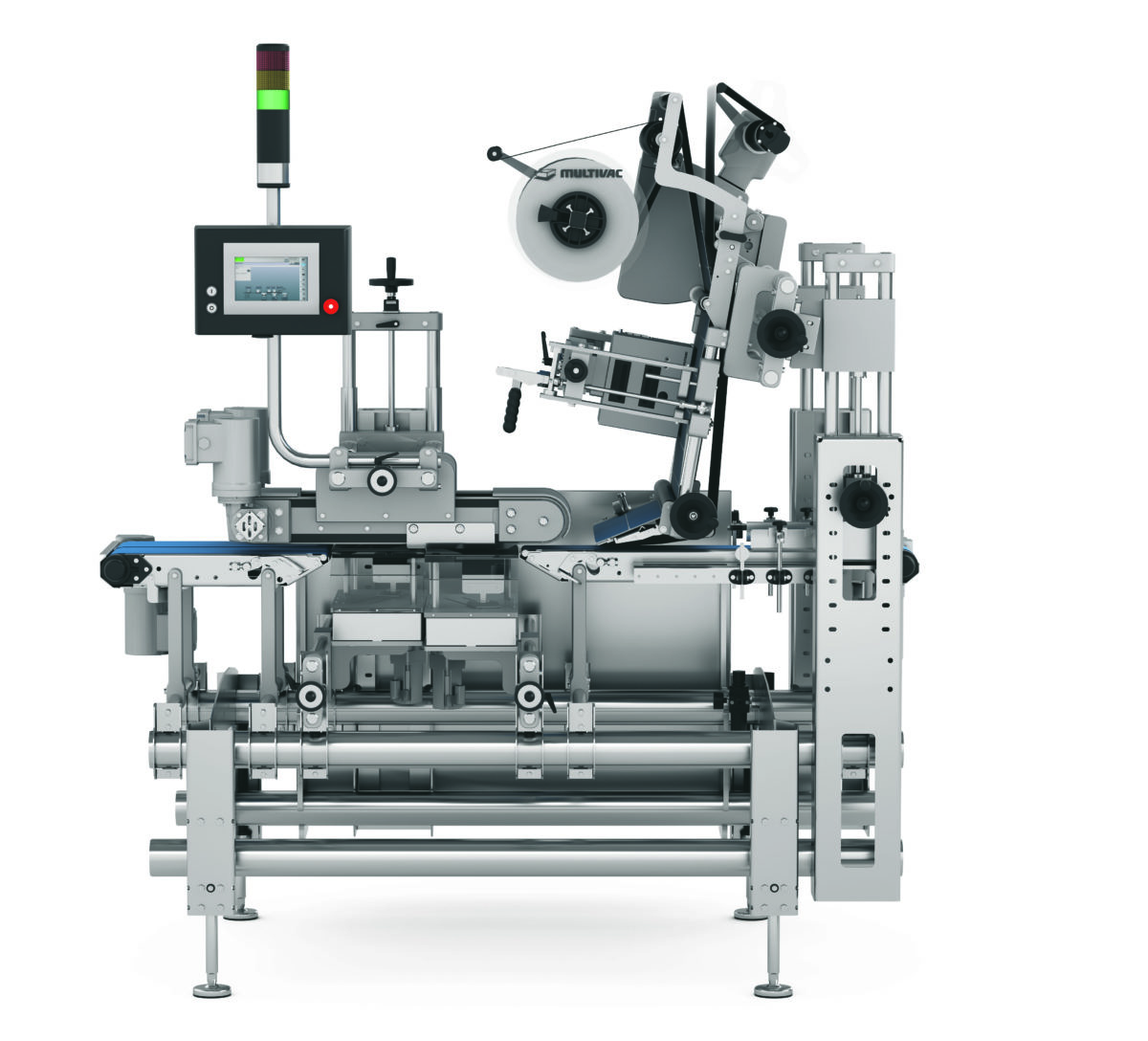
Labelling with maximum precision
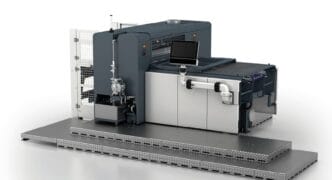
Full-wrap labelling with Multivac conveyor belt labellers is characterised by a high degree of automation and a Maximum labelling accuracy off. If required, the conveyor belt labellers can also be equipped with additional label dispensers to apply additional labels to the pack alongside the full-wrap label. Examples of this are Promotional labels, which are increasingly being used on packs on fresh food shelves.
Advantages over other solutions
More efficient than card sleeves. Although card sleeves give a high-quality impression, they are typically slid manually over a pack and fixed on the back with an additional label. This is why automatic full-wrap labelling with paper labels with a higher grammage is also an attractive alternative in this area. The targeted integration of typical paper creases and folds into the label design means that the High-quality impression could even be increased.
In addition to the high level of automation, full-wrap labelling also offers Security benefits. This means that self-adhesive labels adhere much better to the packs and remain securely in place even during subsequent logistical processes such as cartoning, transporting and filling shelves. The customer also has no opportunity to swap the labels of high-quality and cheaper products.
More attractive than linerless labels. Self-adhesive labels offer a Greater flexibility with regard to their Designs and their Shaping. While linerless labels can only be produced in rectangular format, all shapes are possible for self-adhesive labels as they are fixed in place by the backing paper.
For example, labels with Rounding or Recesses, which can be customised to the shape of the respective products and packaging. The same applies to the range of materials that can be used for the production of self-adhesive labels.
Another aspect that limits the efficiency of linerless labelling systems is the fact that processing these materials requires more cleaning of the machine. Labelling machines for processing linerless labels are equipped with knives to cut the labels, which are rolled up as continuous material. Residue from the adhesive or silicone layer of the labels builds up on these knives, which is why they need to be cleaned regularly to ensure optimum labelling. This significantly reduces the machine running time.