
The packaging industry faces the challenge of finding sustainable solutions while maintaining the functionality and attractiveness of its products. Renewable raw materials for plastics and new recycling technologies can offer one possibility. The Finnish company Neste is exploring both routes.
Sustainability in plastic packaging has to deal with two issues: On the one hand, there is the pollution of the environment caused by plastic waste, and on the other hand, the use of fossil raw materials still forms the basis for 90 per cent of global plastic production despite increasing sustainability efforts. This high proportion is not only a burden on the planet due to the associated greenhouse gas emissions, but also represents a dependency on finite resources.
Chemical recycling: the path to reuse
A core element of the industry's sustainability efforts is the circular economy: the more plastic waste can be recycled, the less ends up in the environment, while at the same time fewer fossil raw materials are required. However, (mechanical) recycling has its limits in some cases - both in terms of waste streams and the quality of the recyclate and the recycled products. Chemical recycling can complement existing recycling technologiesThis makes it possible to recycle plastic waste that cannot be mechanically recycled, such as coloured and multi-layer plastics or packaging and films made from several materials. At the same time, chemical recycling enables products with the quality of virgin material and therefore also recycled solutions for packaging with high quality and safety requirements.

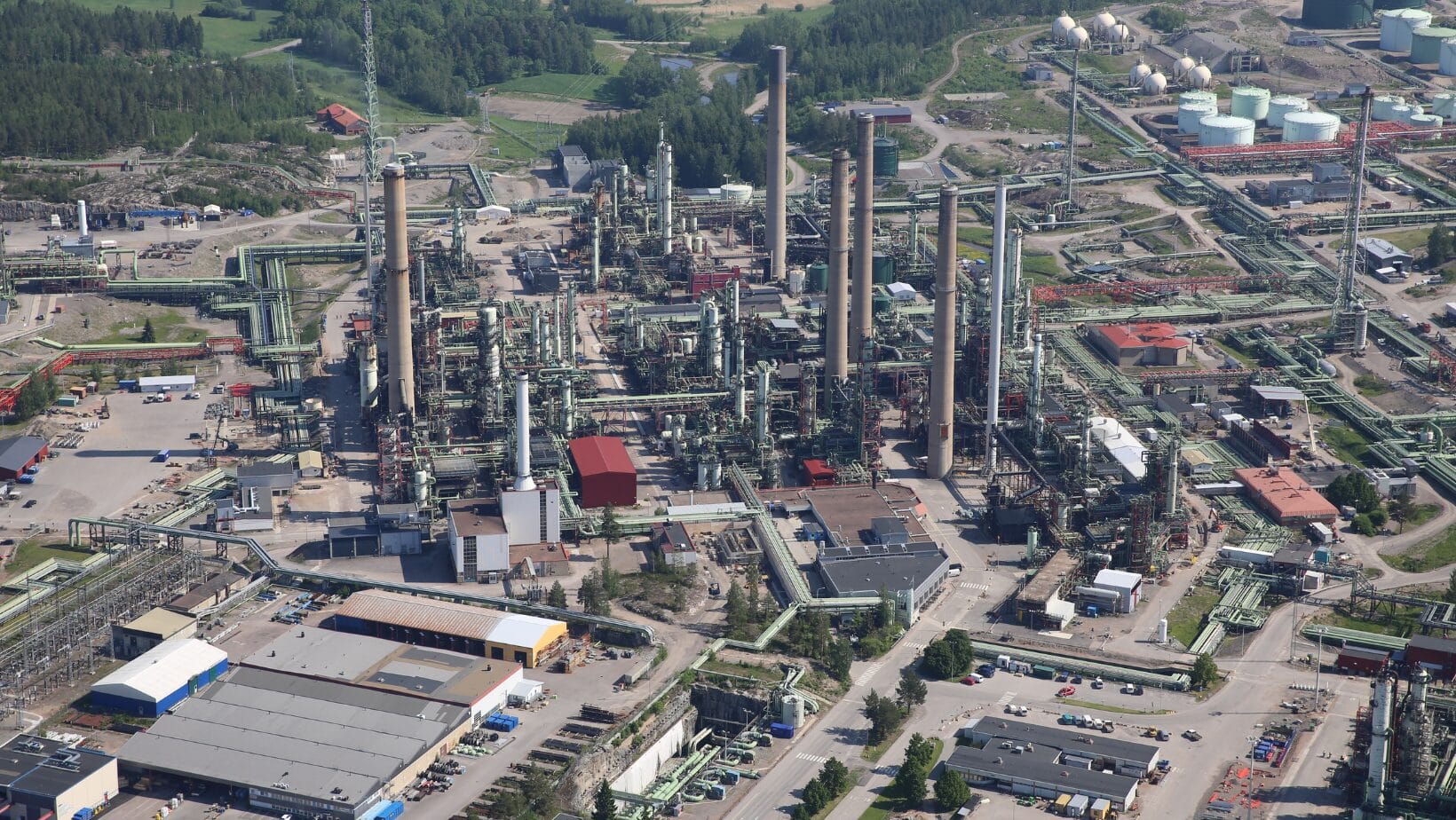
One of the companies driving forward chemical recycling is Neste from Finland. The principle: plastic waste liquefied by pyrolysis, for example, is processed into raw materials for new plastics in the company's refinery. One of the company's projects (“PULSE”) in Porvoo, Finland, is being funded by the European Union with 135 million euros and aims to process 400,000 tonnes of liquefied plastic waste per year.
„We are pursuing a clear goal: to develop chemical recycling into a pillar of the circular economy. In the future, we want to process over one million tonnes of plastic waste per year.“
Jeroen Verhoeven, Vice President Value Chain Development at Neste Renewable Polymers and Chemicals
In addition to recycled materials, Neste also uses renewable and bio-based raw materials to create more sustainable plastics for packaging. The company primarily processes oils and fats from waste and residues, used cooking oil or waste and residues from vegetable oil production. This results in renewable raw materials for the plastics industry, which can replace fossil raw materials on a one-to-one basis. „Exactly the same products can be manufactured as from conventional raw materials,“ explains Jeroen Verhoeven. „Our renewable raw materials are already being used to make packaging for bento boxes in Japan, coffee capsules in Europe and drinking cups in the USA.“
The main difference compared to fossil raw materials can be found in the carbon footprint: when using bio-based oils and fats, carbon is utilised that comes from the natural carbon cycle. The plants that were originally used to produce cooking oil, for example, absorbed carbon from the atmosphere as they grew. Even if a plastic product based on renewable raw materials is incinerated at the end of its life, no more carbon is released into the atmosphere than was previously absorbed. The total amount of carbon in the system remains unchanged. According to a life cycle analysis (LCA) by Neste, the use of renewable raw materials can reduce greenhouse gas emissions by over 85 per cent if they replace fossil raw materials in plastics production.
Advantage for existing supply chains: The „drop-in“ character
Both the route via chemical recycling and the route via renewable raw materials offer a major advantage for existing supply chains: In both cases, so-called „drop-in“ solutions are created. In other words, that fossil raw materials are replaced one-to-one in existing infrastructure can. There is no need to invest in new plants or change the end products. The recycled or renewable raw materials can also be mixed with fossil raw materials to enable a gradual introduction into the value chains.
The packaging of the future can not only be consistently functional, but also more environmentally friendly, and it doesn't take much effort to get started. With its solutions for renewable and recycled raw materials, Neste wants to show that this is already possible today.