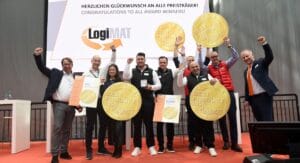
LogiMAT 2026 showcases current trends and future-proof solutions
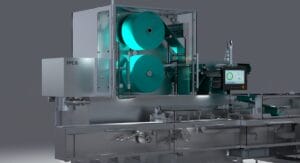
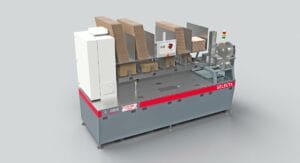
With over 1,600 exhibitors, LogiMAT 2026 will showcase the latest intralogistics solutions for automation, AI, robotics, software and packaging.
The trade magazine for the packaging industry
At the Nestlé Health Science plant in Osthofen, coloured spoons are being replaced by transparent PP spoons. These are difficult for the human eye to recognise at high filling speeds. The company is therefore now relying on artificial intelligence and camera technology from Sick for automated process control and improved recyclability.
A new technology has recently been Nestlé Health Science plant in Osthofen in action: A Camera linked to artificial intelligence, The transparent spoon is used to check whether or not a spoon is included in various products for portioning. The transparent spoon is difficult to distinguish from the reflective, metallic surface of the packaging cans.
Coloured trays have been replaced by transparent trays, as polypropylene (PP) without colour pigments is easier to sort and can be recycled more easily. Through the use of transparent PP spoon increases sortability and recyclability. A goal to which the company has committed itself.
„With just one can, the human eye can recognise relatively easily whether a spoon has been added. At a filling speed of 80 cans per minute, this is no longer possible without errors. However, an individual inspection is mandatory in order to comply with our quality standards.“
Marcus Kauf, Automation engineer at the Nestlé plant in Osthofen
Together with the company Sick, a manufacturer of intelligent sensor technology, has developed a new Automated process control developed for the plant in Osthofen. Whereas with coloured spoons, a camera was able to deduce the presence of a spoon based on the number of colour pixels, transparent spoons require new camera technology linked to artificial intelligence for reliable detection.
„The camera technology was „learnt“ using stored sample images that show the end product with spoons and different positions in the packaging. A neural network is trained with these images in a cloud application. This decision algorithm is then transferred to the camera system. It is then able to recognise the key image differences independently.“
Klaus Keitel, Strategic Account Manager at the company Sick
The camera learns with every new image of every new product. At the Osthofen plant, up to 45,000 spoons are packed every day and the use of deep learning in the inspection process means that any missing spoons are noticed immediately. In this way, artificial intelligence can be used to reduce the error rate in the production process.
Source: Nestlé

With over 1,600 exhibitors, LogiMAT 2026 will showcase the latest intralogistics solutions for automation, AI, robotics, software and packaging.

Packaging machine manufacturer Meypack relies on Schmersal's Safety Fieldbox for safety-related signal processing. This concept benefits not only the designers, but also the users of the machines.

Steriline has finalised the acquisition of ISS srl (Innovative Security Solutions), thereby strengthening its research and development division.

On 1 January 2026, Philipp Venjakob will become the new Vice President European Sales at Packsize and will be responsible for market development and the expansion of customer relationships in Europe.

Schreiner Group is expanding its plant in Dorfen, Upper Bavaria, by around 40 per cent with a large-scale extension.

Ishida acquires RobotGrader, strengthening its position as a provider of automated packaging solutions for protein products.