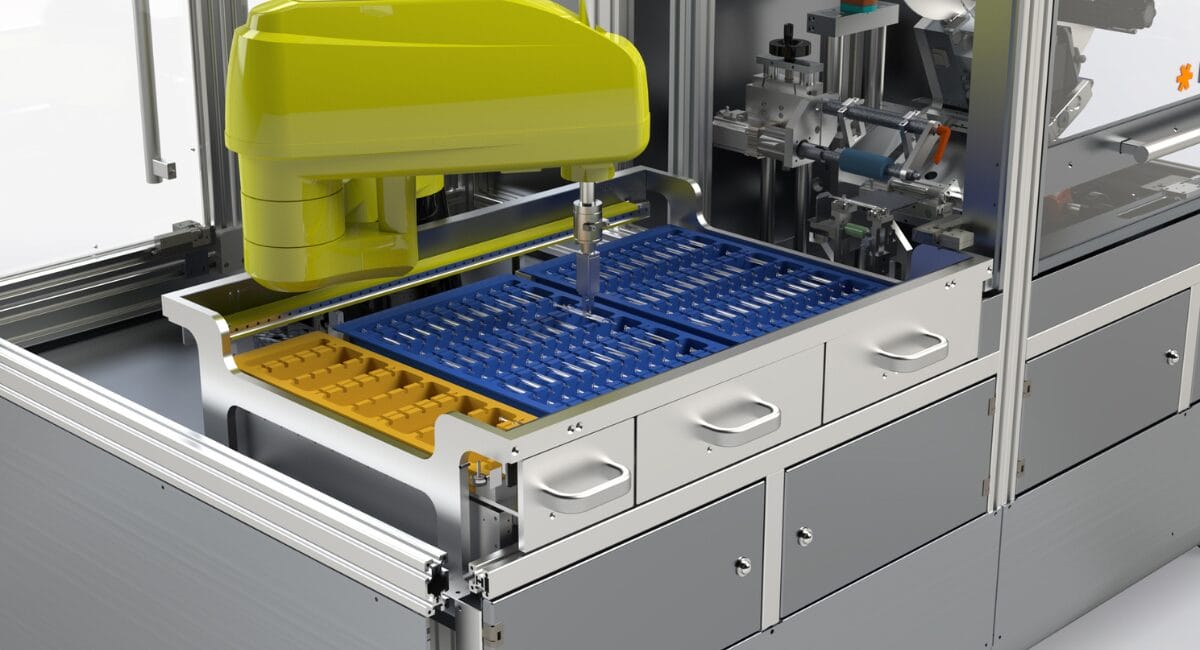
Herma GmbH, Filderstadt, shows how robotics can make sophisticated labelling processes more reliable, more cost-effective and faster. The specialist for packaging and product labelling will be presenting the 211 HC RC, the first robotics-supported labelling cell for wrap-around labelling.
The labelling cell is specially designed for pharmaceutical products such as small vials, pens, syringes and cartridges. In the past, these products were usually labelled in semi-automatic labelling machines for small batch sizes. This required labour-intensive, manual feeding and removal of individual products, which is often associated with a certain susceptibility to errors. Even pharmaceutical and healthcare products that are irregularly shaped or not stable can be efficiently labelled automatically.
The robot removes the products from the tray and places them precisely in the labelling station, which is equipped with a Herma 500 labeller. After the labelling process, the robot places the products under a Image processing system or a sensor, to check the presence of the labels and variable data.

Entry into continuous production
The 211 HC RC labels around 20 products per minute, making it approximately 25 per cent faster than a comparable semi-automatic labeller without the use of robotics, without loss of concentration over a longer period of time, even with continuous production. In addition to the increase in performance, another advantage here is the reduced risk of human error.
Another important compliance aspect is that the robotic labelling cell can be programmed in such a way that it can Automatically complies with labelling regulations and standards. A wide range of possible configurations makes this labelling cell highly flexible for applying different types of labels and printing variable data in the form of barcodes, serial numbers and expiry dates. The 211 HC RC can also be optionally equipped with standard hot foil, thermal transfer and laser printers.
„With the increasing shortage of skilled labour and rising labour costs, integrating robots into machines is becoming a cost-effective solution to maintain or even increase productivity.“
Gary Hopkins, the robotics specialist responsible at Herma
Source: Herma
Herma at the Achema: Hall 4.1, Stand B 20