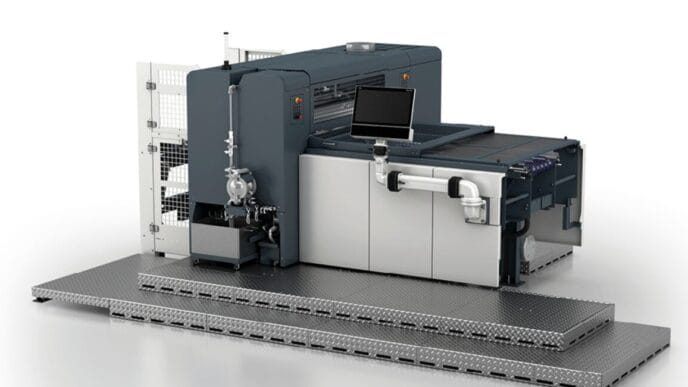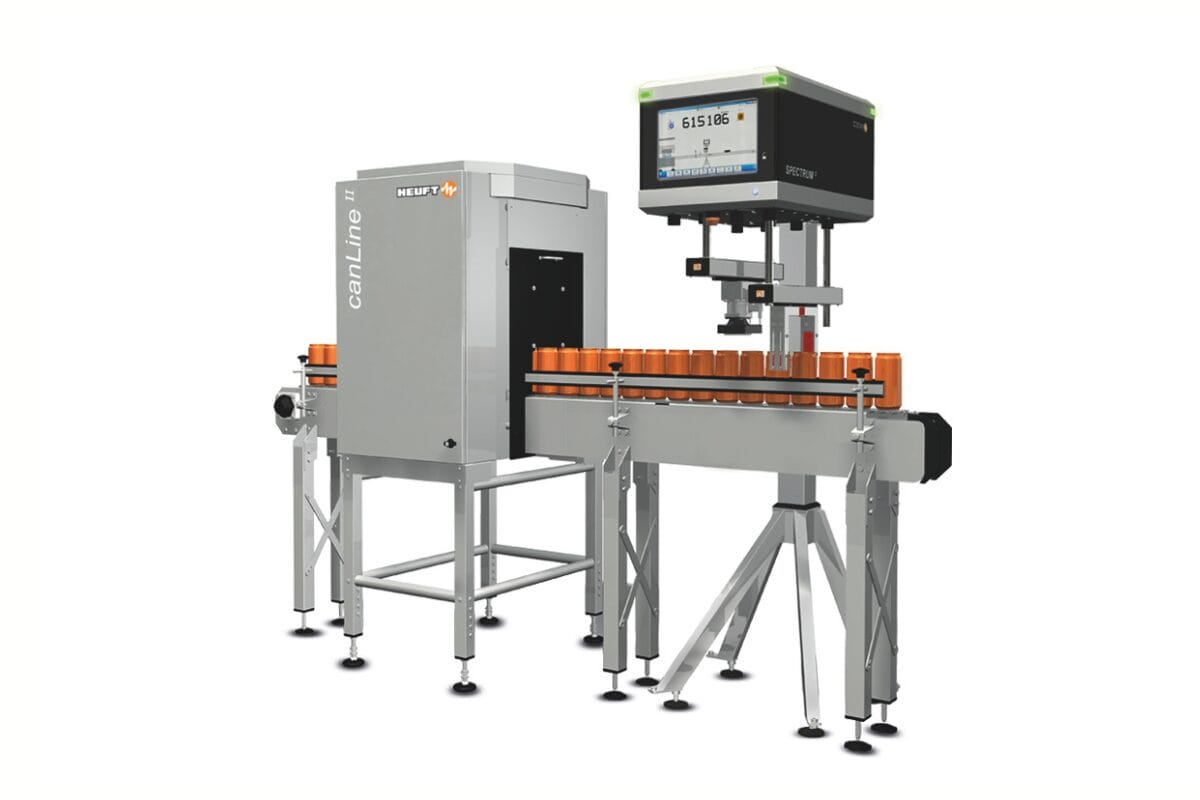
Heuft has now further developed its canLine II for improved quality inspection of empty beverage cans and equipped it with new HDR technology and deep-learning-capable optical character recognition.
The compact Heuft canLine II already achieves with its top-down inspection that oval deformations and indentations on the rim are just as clearly visible with a single camera as dents and soiling on the inner side wall and foreign objects on the can base. Now their resolution has quadrupled. And the newly integrated HDR technology additionally optimises the illumination of all these areas, so that the complete inspection can now also be carried out in Output ranges of up to 144,000 empty cans per hour even more reliably.
High Dynamic Range Images (HDRI) compensate for any light reflections and shadows on the flange or inner walls. Even in absolute high-speed operation, not only is the necessary image sharpness everywhere, but also a truly homogeneous illumination for full coverage and a clear view during empty can inspection. This ensures that containers that cannot be safely filled and sealed are recognised by the Heuft reflexx A.I. camera in good time and rejected before the safety and quality of the end product is jeopardised, as is the efficiency and productivity of entire filling lines.

More intelligence at OCV
Keeping output high and avoiding unwanted line stoppages is also helped by a Innovative technology for intelligent optical character verification (OCV), which can now be connected to canLine II empty can inspectors. It was recently presented to the public for the first time at BrauBeviale 2024. The best-before date (BBD), for example, which is applied to the outside of the base of each individual empty can by inkjet, recognises and verifies a Intelligent bottom-up camera developed and manufactured in-house - thanks to self-programmed deep learning AI, even if the typeface is not optimal.
Every single character applied by inkjet printer consists of a collection of individual ink dots, which are then combined to form numbers or letters. Depending on the configuration and operating status of the inkjet system, this results in to creeping display problems: Individual dots slip and no longer land exactly where they should. Letters and lines of text become distorted, blurred and blurred. The entire typeface becomes less precise and increasingly difficult to read. Text recognition with the naked eye is already difficult - and becomes practically impossible even at low container transport speeds. With the Heuft reflexx A.I. camera, intelligent image processing and deep learning during image analysis, however, it can be reliably achieved even with decreasing coding quality. And that in Output ranges of up to 72,000 empty cans per hour.
More detection reliability
Just like the quadrupled resolution of the reflexx A.I. cameras used and the newly integrated HDR technology, deep learning-capable image processing increases detection and rejection reliability during empty can inspection and OCV. The full This also ensures the integrity of the packaging as the desired quality of the final bottled product.
Both processes help to prevent unwanted production downtime: Blockages of the filler-capper block due to deformed, non-cappable cans are avoided. The false rejection rate, i.e. the proportion of faultless empty containers mistakenly removed from circulation, is also continuing to fall. And inkjet codes that are difficult to read, such as distorted BBDs, are recognised and verified so reliably, even in difficult cases, that unplanned line stops, for example for maintenance and recalibration of the inkjet printer, are no longer an issue. Even if the print quality is suboptimal, ongoing production does not have to be interrupted immediately. The availability and efficiency of the entire can filling line remains at the highest level, and so does the output.
Source: Heuft