The Laser Centre at Münster University of Applied Sciences has developed a new process for manufacturing conductive multilayer films together with „EMPAC“ from Emsdetten. Instead of the conventional hot needle perforation process, the holes on the aluminium composite films are drilled using a CO2 laser.
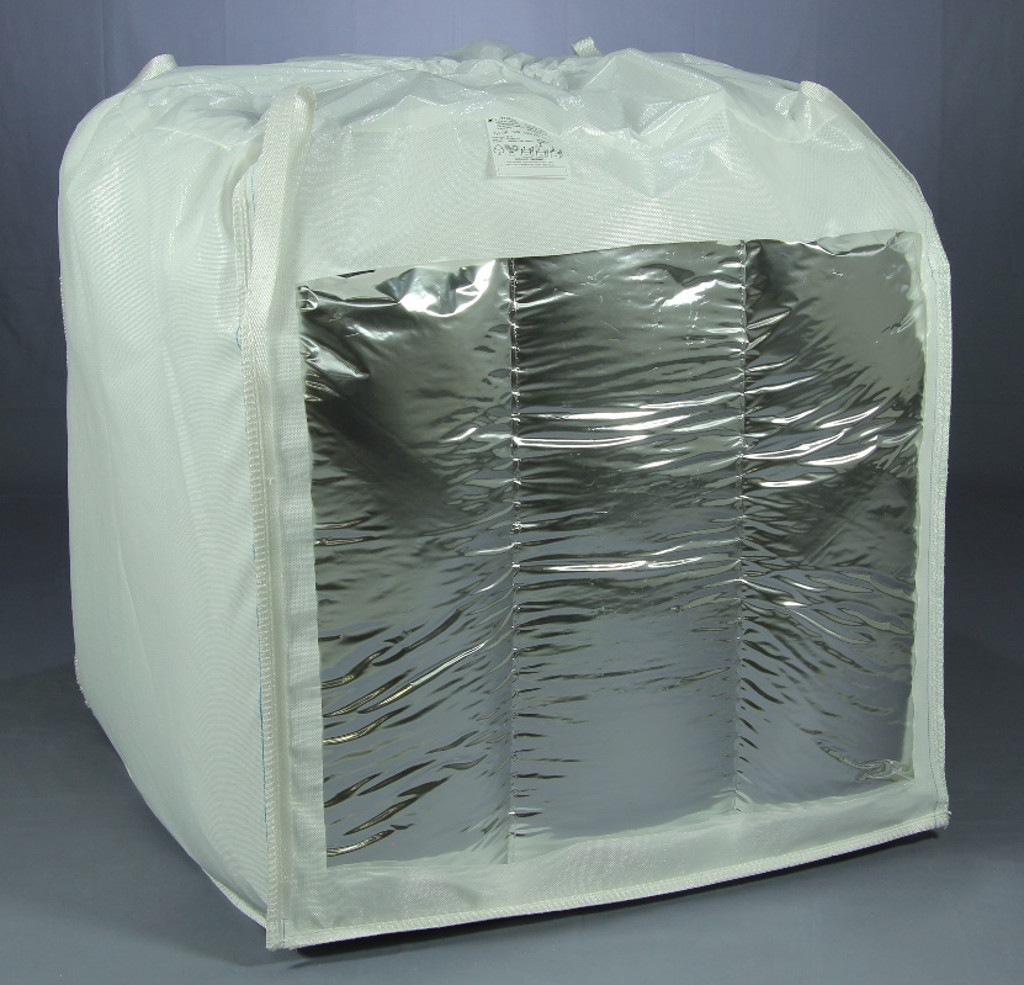
Bulk goods can soon be transported more safely and economically in Foil bags be bottled. One of the Laser centre The new packaging technology developed at the Department of Physical Engineering at Münster University of Applied Sciences enables the production of more efficient and larger bulk goods packaging with dissipative multilayer films. The industrial partner in a publicly funded development project is „EMPAC“ from Emsdetten. The packaging company specialises in pouch packaging, among other things. Contact with the industrial partner was established by the transfer agency at Münster University of Applied Sciences. EMPAC development manager Siegfried Hartmann contributed his market knowledge and quickly recognised the potential of the new solution.
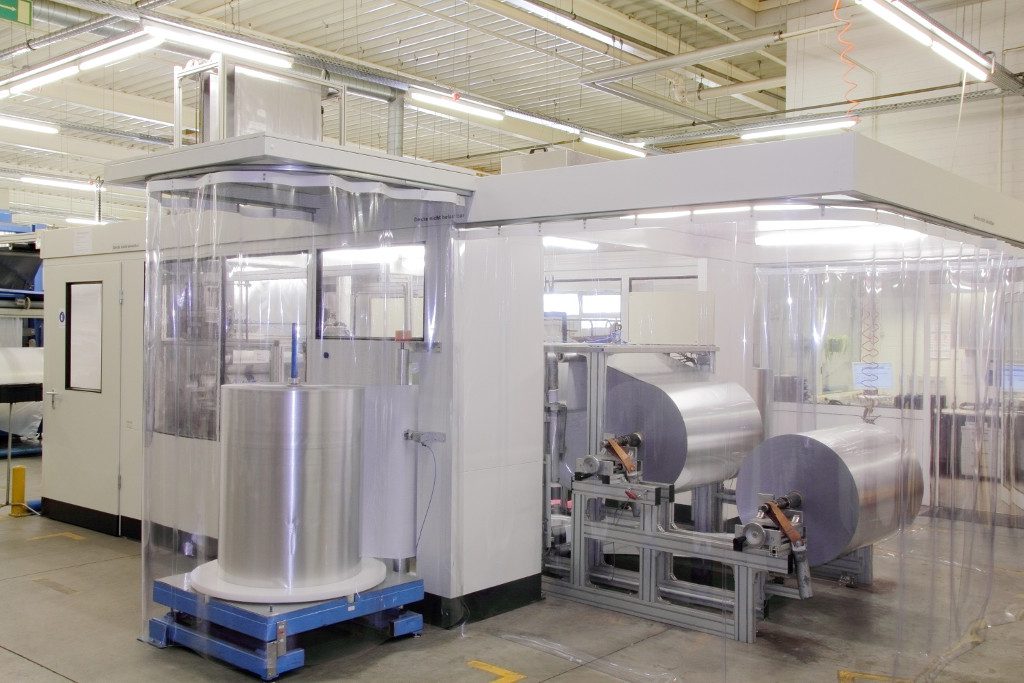
In July 2017 - one year after the start of the project funded by the Central Innovation Programme for SMEs (ZIM) of the Federal Ministry for Economic Affairs and Energy - Münster University of Applied Sciences went public with the significant further development. At that time, not all patents had been registered. It is now clear that the pilot system is working, the patent issues have been resolved and the solution found by EMPAC and the Laser Centre is approaching market maturity. At present, the Integration of automated film loading and unwinding on. An external company has been commissioned to do this.

Aluminium composite films should reduce the risk of explosion
EMPAC and the Laser Centre solve a well-known problem when packaging bulk goods in film bags: dust explosions can occur. During filling and emptying, the packaged material rubs against the inner walls, which become electrostatically charged. A single spark can have dramatic consequences. This danger is countered by the Packaging industry already using multilayer films. In the middle of the three-layer films is conductive aluminium, which enables the charge carriers to be dissipated. However, the previous production method in the Hot needle perforation process is very complex and only partially reliable. In the worst case, it can Risk of dust explosions even increase, explains Jürgen Gröninger, project manager at the Laser Centre.
In an interview with „packaging journal“, Gröninger describes the current procedure as follows: „In this process, the polymer film is rolled between two rolls, the upper one of which is equipped with hot needles. These needles pierce the film and make the holes. Then, in a further process, the perforated film is applied to the Aluminium layer laminated. The adhesion promoter used here settles into the previously drilled holes so that there is subsequently no access to the aluminium. The multilayer film is therefore subjected to high voltage in a final process step, which breaks through the bonding agent in the area of the drill holes and thus restores the accessibility of the aluminium layer.“
Less effort and risks for perforation with CO2 laser
According to Gröninger, the technical and logistical effort involved in this process is considerable. It also harbours risks on two levels because the Subsequent exposure of the drill holes This is because, on the one hand, holes can remain sealed and the risk of explosion increases, and on the other hand, the high voltage can perforate the entire multilayer film. Jürgen Gröninger warns: „If this happens, the film is no longer diffusion-tight and the sensitive filling material can come into contact with harmful environmental influences such as humidity.“ But that's not all: hot needle perforation is also not suitable for modern multilayer films. Films with a higher load-bearing capacity, which are made up of four materials, cannot be processed at all.
The new process developed by the Laser Centre and EMPAC eliminates all of these limitations. The required holes are no longer drilled at the start of film production, but in the final step on the finished multilayer film. This involves the use of a CO2 laser. This means that the holes are drilled with pinpoint accuracy in the truest sense of the word. There is no risk of other film layers being destroyed.
Setting up the CO2 laser was particularly challenging, reports Jürgen Gröninger to packaging journal. The duration and power peaks of the laser pulse had to be configured in such a way that only the approximately 150 micrometre-thin film layer was actually perforated down to the aluminium layer. In addition to focussing the laser, particular care had to be taken to ensure that the film was guided past the laser at a constant voltage and at an unchanged distance. This type of Laser perforation for films with a thickness of up to 0.4 millimetres.
New process is more flexible and also suitable for other areas of application
What are the advantages of the new perforation process? Jürgen Gröninger's main answer to this question is greater flexibility. Previously, the holes were drilled at the start of the production process. Now, aluminium composite films can be produced according to a common standard. The decision as to whether or not it should become a conductive film is only made before use.
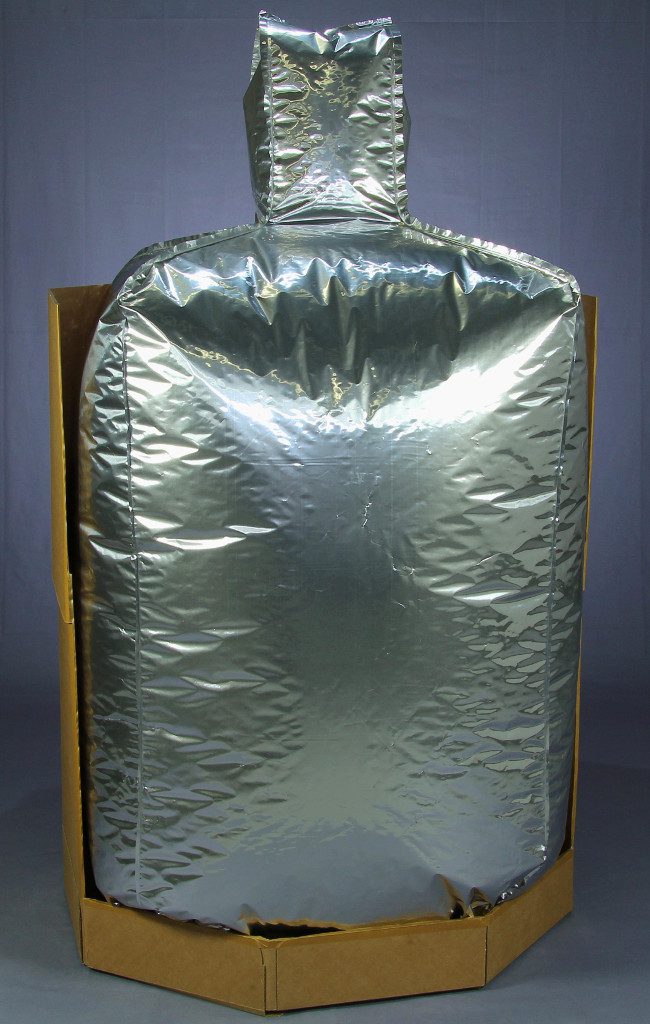
Overall, the production of the conductive multilayer film is faster, as many work steps are saved, some of which have to be carried out by suppliers. This naturally leads to significant cost savings.
„The new process opens up additional applications and completely new horizons for us as a packaging manufacturer,“ says EMPAC Head of Development Siegfried Hartmann. „This means that new products and a Significant increase in quality possible.“ In principle, the jointly developed process is suitable for packaging all types of bulk goods. But also for Packaging of substances with flammable solvent residues, as they occur in the chemical industry.
In addition to the increased process reliability, the product developers from Münsterland consider the load-bearing capacity of the new, conductive multilayer films to be particularly interesting. Packaging made from these films could withstand twice the load-bearing capacity of conventional products. Also Dimensionally stable packaging with a filling weight of up to 1.5 tonnes can now be produced. Jürgen Gröninger describes the appearance of this packaging as follows: „The outer shape then resembles a large vacuum coffee pack.“