The new „OK Recycled“ seal from TÜV Austria is intended to support the environmentally friendly use of plastic materials, lend credibility to companies' sustainability promises and promote products in an ecologically aware market environment.
Suppliers, manufacturers and retailers are increasingly concerned with satisfying the growing market demand for environmentally friendly products and services. The strict EU environmental legislation and the growing awareness of consumers concerns about the environmental impact of consumption are increasingly taking centre stage.
TÜV Austria supports environmentally friendly consumption
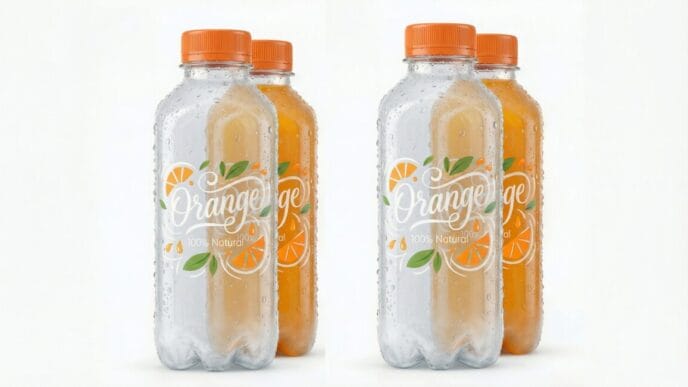
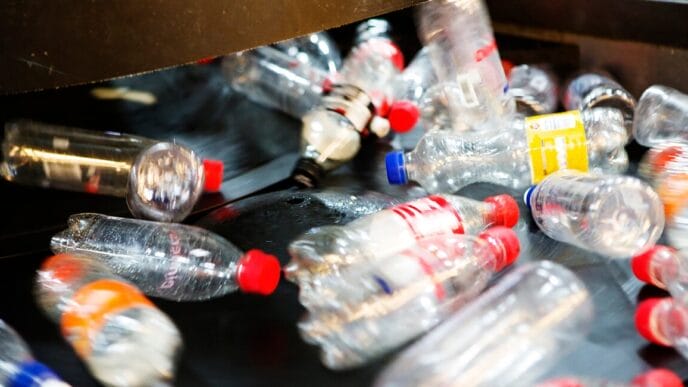
TÜV Austria's OK Recycled certification system addresses the requirements of Directive (EU) 2019/904 on the reduction of the impact of certain plastic products on the environment. The directive stipulates, for example, PET bottles to consist of at least 25 per cent recycled plastic by 2025 and all plastic bottles must have a recycled content of at least 30 per cent by 2030.

Aim of OK Recycled is to environmentally friendly use of plastic materials to lend credibility to companies' sustainability promises and to promote products in an ecologically aware market environment.
The OK Recycled certification system is based on the EN 15343:2007 and ISO 14021:2016 standards and specifies in particular the requirements according to which the Recycled content of plastic products calculated on the basis of a coordinated traceability system.
Mass balances and traceability
As the system is based on a Quantification of mass balances and coordinated traceability of the recycled content it can also be used to determine the recycled content of any other material (e.g. aluminium, textiles or paper).
With easily identifiable and easily accessible information, TÜV Austria's OK Recycled certification system enables reliable and objective categorisation at a glance. In this sense, the „OK Recycled“ certification mark strengthens both brand value and consumer trust.
The OK Recycled certification system covers the entire plastics value chain up to the point at which the finished product reaches the end consumer.
Source: TÜV Austria