




A lot is happening in the world of packaging. An expert's view can help provide the necessary overview. US packaging specialist Tom Newmaster takes a look at the plastic in the Great Pacific Garbage Patch and asks what the packaging industry needs to do for the next generation.

Tom Newmaster knows a thing or two about packaging. The US designer has more than 30 years of experience in the industry and has worked with companies such as The Hershey Company, Pfizer and Zippo. In 2017, he founded the design agency FORCEpkg. He regularly shares his thoughts on the packaging market for packaging journal.
Children think in pictures - and are fixated on change. When 10-year-old Everleigh, a friend's daughter, engaged me in a conversation about what plastic is doing to the oceans, I gave her my full attention. „I'll show you,“ she said. She called out a TikTok video and I watched as a huge crane tipped thousands upon thousands of large plastic containers and other waste onto the deck of a ship. This waste, which is part of the infamous Great Pacific Garbage Patch (GPGP), was successfully scooped out of the sea. Everleigh's excitement at the progress this video shows is why so many leading brands are committing to ridding the planet of waste. She is their future customer - or maybe not.

The Great Pacific Garbage Patch
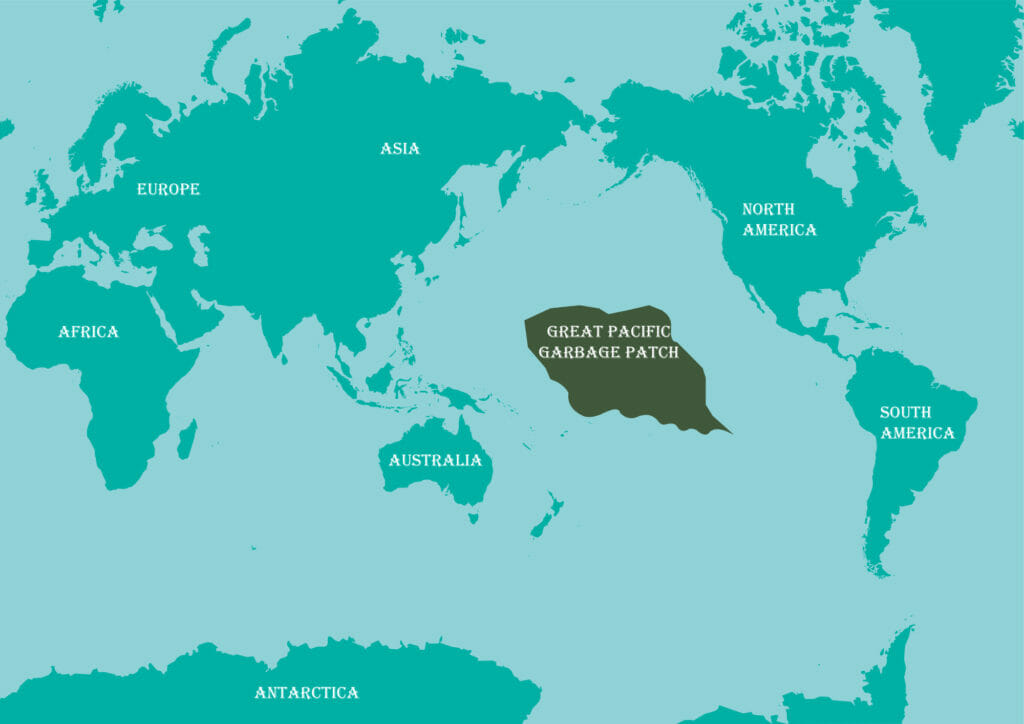
The Great Pacific Garbage Patch is a gigantic carpet of ocean plastic that floats in the North Pacific and is constantly growing. Most of the rubbish comes from North and South America and East Asia. The patch now covers an area roughly the size of Central Europe.
What we know about it:
- 92 per cent of the GPGP consists of large-format waste, which contain almost 1.8 trillion plastic parts.
- 8 per cent of GPGP consists of single-use plastic packaging, but a larger proportion is thrown into rivers, where the waste flows downstream, breaks apart and ends up on the seabed.
- This problem is exacerbated by the fact that, that large pieces of waste eventually break down into pieces no larger than one centimetre and labelled as „microplastics“.
- Over time, microplastics sink to the seabed, where it is impossible to remove them. It is mistaken for food by sea creatures.
- Discarded fishing nets - also known as ghost nets together with other waste from the fishing industry, make up 46 per cent of the mass of GPGP. Marine life often gets caught in the nets.
Reality check no. 1
According to the National Geographic Society As of 2018, it would have taken 67 ships operating every day for a year to remove just one per cent of the waste from the GPGP.
While the outlook may seem bleak, there are advances that are using science and technology to clean up the GPGP. The Ocean Clean-Up project announced in October 2021 that its experimental clean-up fleet will be able to clean up more than 63,000 pounds of plastic waste successfully eliminated.
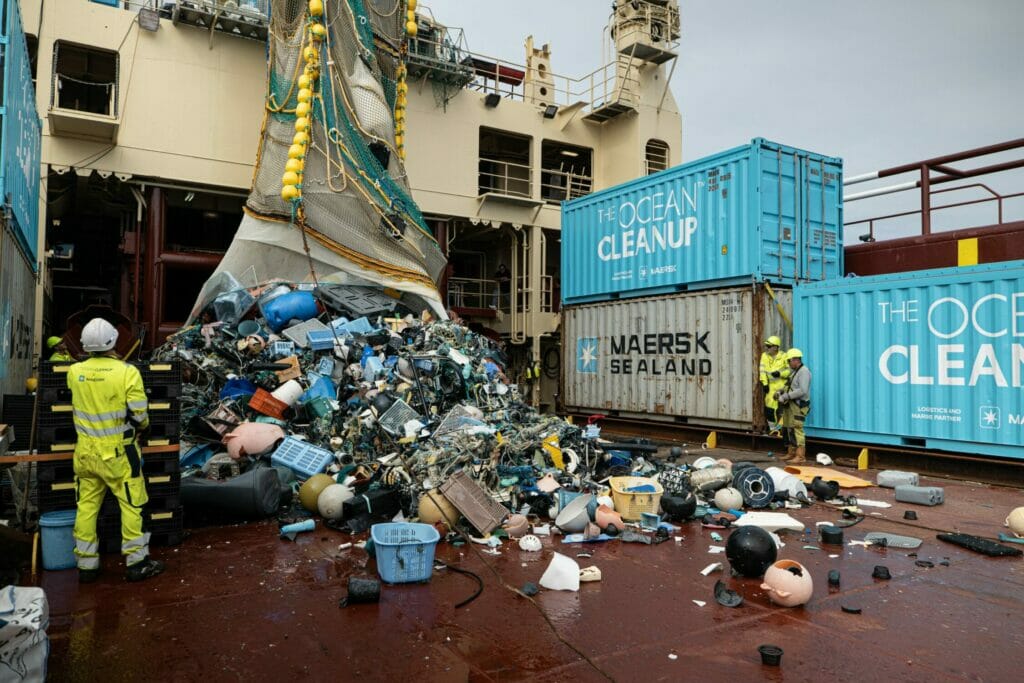
On the basis of these results, the organisation is expanding its fleet and is confident, that it can reduce up to 50 per cent of the stain every five years, with the aim of completely eliminating the GPGP by 2040. It should be noted that these forecasts also include the deposits that are added over this period.
Reality check no. 2
According to Covestro, a global supplier of high-tech polymer materials, waste management and collection infrastructure systems have failed to keep pace with the dramatic increase in single-use plastics in circulation, resulting in a sharp rise in plastic pollution in recent years, particularly in developing countries.
Design could provide a remedy
As a packaging designer, I have long been of the opinion that it is not only the GPGP itself that is the problem, but also the process that generates it. In other words: We are responsible for accelerating packaging innovation to prevent the GPGP from adding fuel to the fire. We need smarter ways to design reusable and biodegradable packaging and become real players in the circular economy.
The next generation takes a closer look
Children not only see the turtle in distress with the straw in its nose; they also learn about the dangers of plastic at school. Brands that take this seriously will not only deliver on their promises, but also strengthen their appeal to the next generation and outperform their competitors. So who's doing it right?
Closing the cycle
Loop is a subscription service for groceries and household goods launched by Terracycle and now available in the USA, Canada, the UK, France, Japan and Australia. The Loop services are offered by large retail chains such as Walgreens and Kroeger. The service, whose concept is currently being trialled across the USA, delivers products in reusable packaging, such as shampoo bottles and ice cream containers.
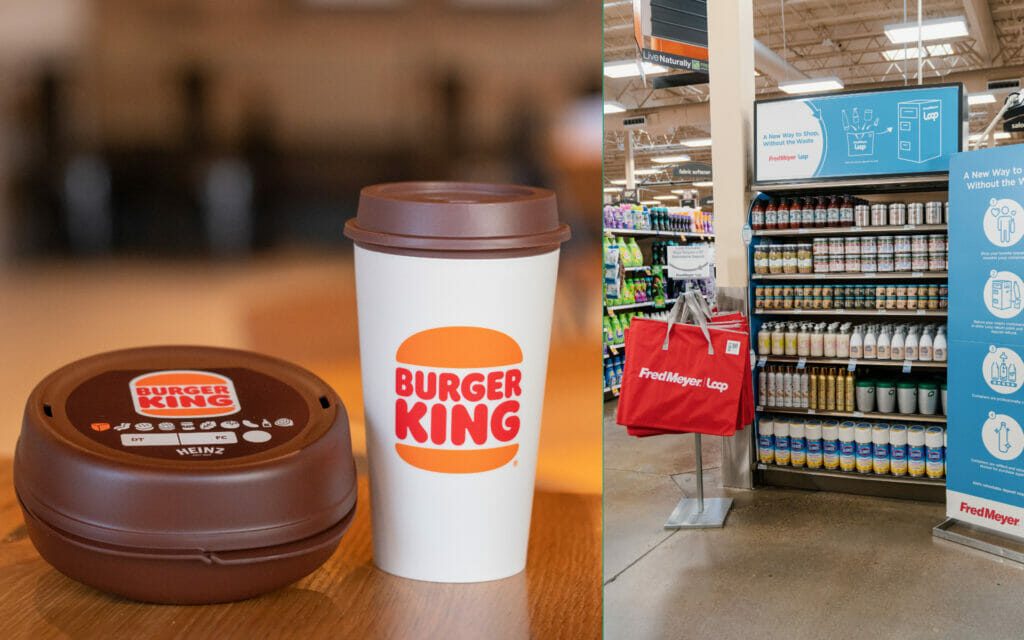
As soon as the packaging is empty, it is collected, refilled and reused. Loop has also partnered with Ulta Beauty, a US personal care brand, to offer their portfolio of sustainable products. As the name suggests, Loop is a prime example of the emerging circular economy.
Reinventing reusable products
Just take a look at what Häagen-Dazs offers via Loop. As part of a strategy for reusable products, the brand has developed an attractive stainless steel canister. The design is ideal for a premium brand. The containers offer a new canvas for packaging ingenuity.
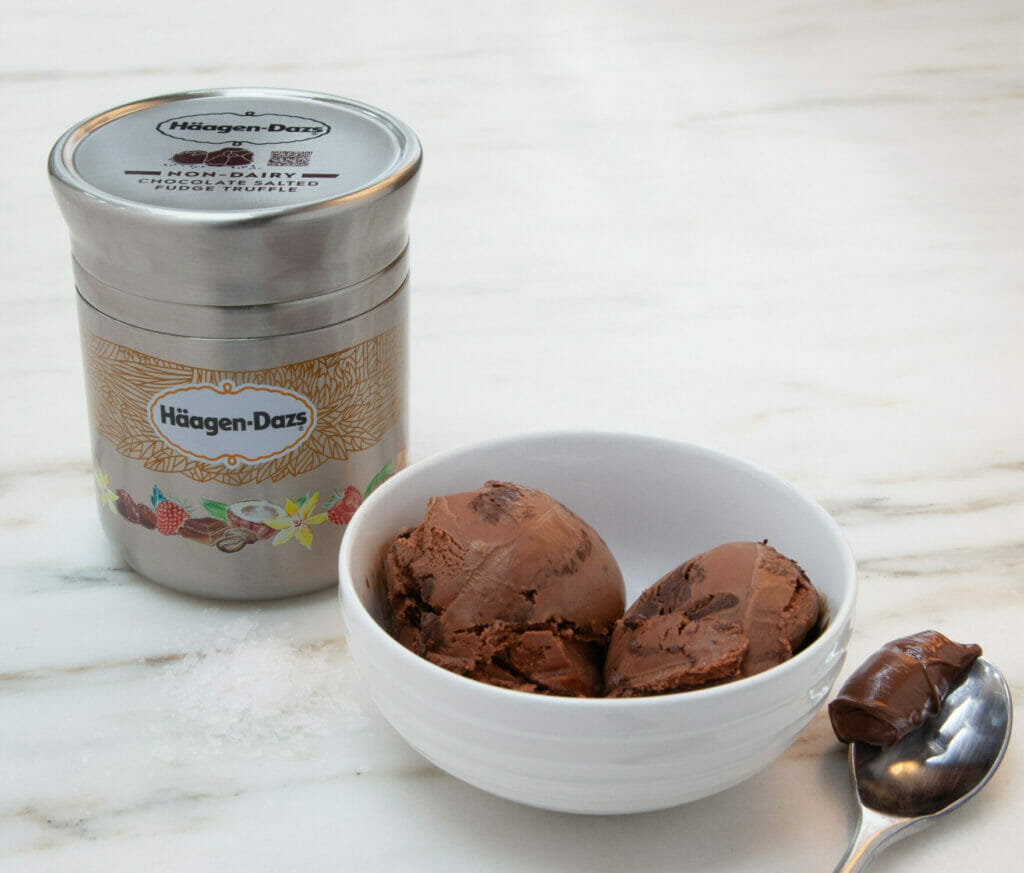
The images and graphics on the silver background are reminiscent of the old-fashioned metal lunch containers. Häagen-Dazs stands out from other premium ice creams with such an upgrade, which is essential in a highly competitive category.
Thanks to this packaging, eating ice cream is even more fun and even tastier. The double-walled container allows the ice cream to melt faster at the top than at the bottom. This allows you to enjoy a balanced degree of density. The ice cream retains its consistency even when you reach the bottom. The container also protects the product during transport. This is more than just sustainable packaging: it is packaging that enhances the consumer experience.
The recyclable toothpaste tube
Demonstrable more than a billion toothpaste tubes end up in landfill sites in the USA alone. No doubt many of these end up in the oceans. One reason for this is that the packaging consists of several layers and is therefore not suitable for recycling. Colgate Palmolive has spent five years developing a new recyclable tube made of hard polyethylene (High Density Poly Ethylene/HDPE), the same plastic used for common milk bottles in the US, and promises that it will be compatible with the current US recycling infrastructure. This is undoubtedly a breakthrough for this category.
Reality check no. 3
Whilst this is indeed a great concept, we know that a large proportion of recyclable packaging still ends up in the bin. This is because our recycling industry (the people who collect and sort our rubbish) is in desperate need of an overhaul. How does the recycling plant know the difference between this tube and any other?
Sugar cane - not only good for sweets
The use of sugar cane as a packaging material is currently experiencing an upswing. Plant-based material offers the three key benefits of ethical packaging: it is renewable, biodegradable AND compostable. Everything made from sugar cane degrades within 60 to 90 days. We see it everywhere: coffee cups, utensils, disposable plates, to-go boxes, bags, lids, pizza boxes, straws and much more.
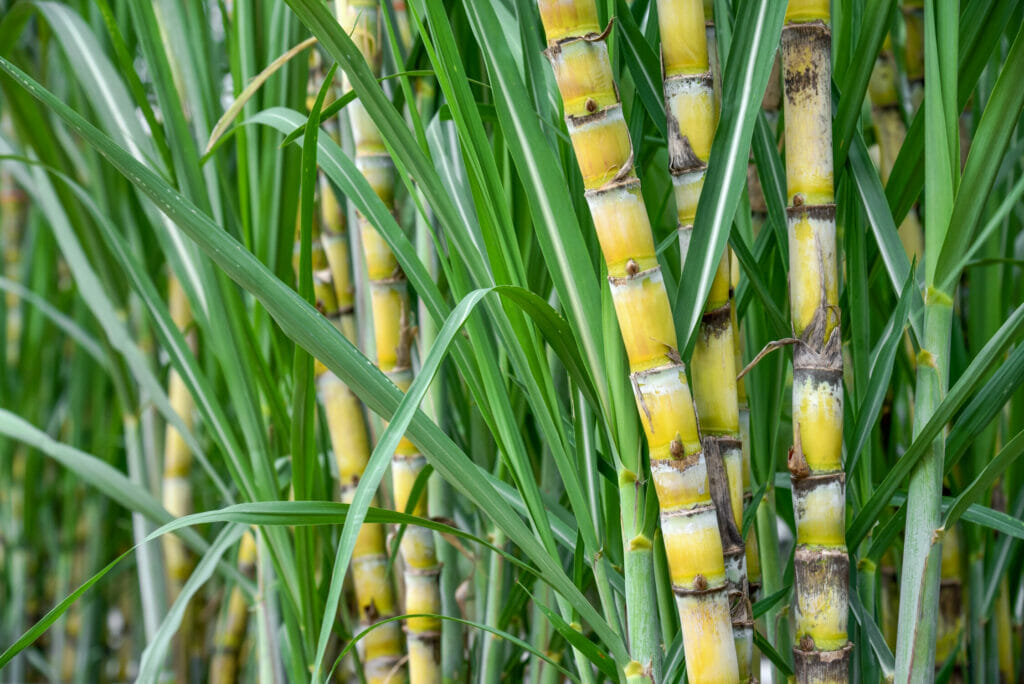
Companies like Good Start Packaging - a leading supplier of sugar cane packaging - are also a real threat to polystyrene. This material takes 500 years to decompose and takes up 30 per cent of the space in any landfill. When it gets into the sea, polystyrene inevitably breaks down into microplastics. And we all know what that means for marine life.
A parting word from Everleigh
I mentioned my friend's daughter, Everleigh, who at the age of 10 is passionate about preserving our oceans. So what can we do to reassure their generation that they will be heard? We can start by taking responsibility for the role our industry plays in tackling the problems. I've talked about some of the innovations and new materials that packaging manufacturers are bringing to the table. I've also reported on what activists are doing to clean up the GPGP. But here's the final reality check.
Reality check no. 4
We can fix the mistakes of past generations, but it takes more forward thinking to make our sustainability efforts „sustainable“.
Four questions we need to ask ourselves in order to really bring about change:
- How can we improve the recycling infrastructure so that the degradable toothpaste tube ends up in the right place? According to Unilever, „it is technically possible to recycle around 70 per cent of our product portfolio. However, the proportion of products actually recycled is lower because the infrastructure in the municipalities is not sufficient.“
- How can we ensure that new materials, whether sugar cane or innovative plastics, are sorted correctly and do not end up in the sea?
- How do we promote the use of products that really fit into the circular economy, such as reusable, compostable and post-consumer plastics (PCR)?
- How can we work with our customers to develop packaging that inspires the Everleigh generation? This starts with avoiding new plastics and only using recycled options instead.
As a packaging designer, I realise that this is no small task, but a necessary one, when you consider the influence each generation has on the way we live our lives, We have to manage our business and deal with change.
If we want to create a loyal customer base, we have to accept that the „miracle material“ plastic has to adapt to our new circular economy.
About Tom Newmaster
Tom Newmaster has more than 30 years of experience in CPG branding and packaging design. From 1998 to 2016, he headed up creative departments at and won awards at for The Hershey Company, Pfizer, Stoner Car Care and Zippo. He has launched new products for Fresh Solutions Network, Koch's Turkey, Klamath Basin Fresh Organics and Wolfgang Candy, to name a few. In 2017, Tom founded FORCEpkg and has since developed into a leading voice in the packaging industry and written for leading trade and mainstream business publications.