OFI research project Food packaging: thinner, lighter and recyclable
A current research project from Austria shows how food packaging can be made more environmentally friendly. The researchers also investigated solutions that combine material reduction and recyclability.
4 June 2021
The target of a ten per cent reduction in material was achieved by all the packaging tested. (Image: OFI)
A current research project from Austria shows how food packaging can be made more environmentally friendly. The researchers also investigated solutions that combine material reduction and recyclability.
The food industry is constantly working on new packaging solutions. Until now, the focus has often been on either material reduction or recyclability. In the Research project Re(d)source the Austrian Research Institute for Chemistry and Technology (OFI) combined these aspects and developed customised, recyclable packaging solutions for and with the project partners involved.
„Among other things, we wanted to find out which material reductions can still be made in food packaging without jeopardising product protection.“ Michael Krainz from the Austrian Research Institute for Chemistry and Technology (OFI) in Vienna
The institute is a member of ACR (Austrian Cooperative Research), a network of cooperative research organisations, and has been working on the following topics since 2014 projects to minimise packaging. At the same time, it was also about the Use of recyclable packaging films. „In the EU, more than half of all food packaging should be recyclable by 2030. Some retailers want this as early as 2022, which has put a lot of pressure on packaging companies. There are fears that recyclable packaging will no longer offer the necessary product protection - that would indeed be very counterproductive.“
Display
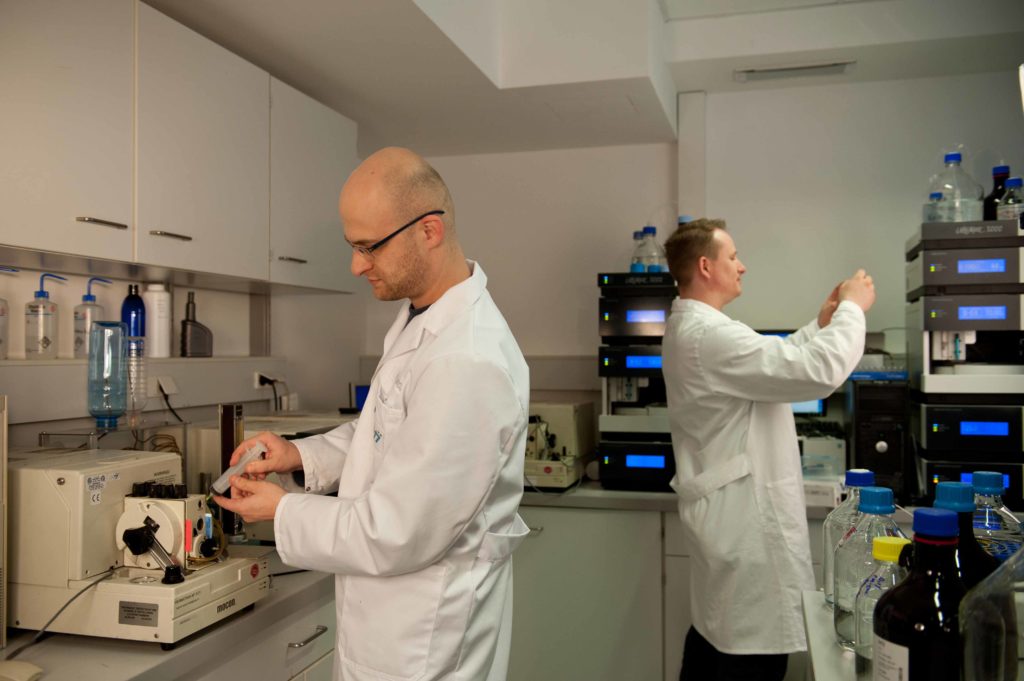
In the laboratory, OFI experts analyse existing packaging and look for optimisation potential. (Image: OFI)
In consultation with the project partners - three Austrian meat-processing companies - the research project focussed on the Examination of tubular, vacuum and shrink bags as well as protective gas packaging for sausage, ham, poultry and fish products. The OFI project was co-financed by the Austrian Waste Prevention Promotion Programme of the Collection and Recycling Systems for Packaging (VKS).
OFI research project tests different packaging variants
The reduction of packaging material was at the centre of the research. The target: save at least ten per cent of packaging material per type of packaging. Different packaging variants were tested and compared with each other in controlled storage trials at the OFI. The result: all the packaging tested achieved the target of a ten per cent reduction in material. In addition, both the material-reduced variants and the recyclable solutions performed well in the tests.
However, the storage trials not only looked at packaging solutions with reduced material requirements and alternatives made from recyclable material, but also at Packaging variants that combine both aspects.
(Image: OFI)
„This was an innovative approach that has hardly been considered in optimisation efforts to date. But our results show that it is worth thinking about material reduction and recyclability together when optimising packaging: a combination of these two aspects is not only theoretically possible, it is already feasible for some applications today.“ Michael Krainz
Sausage products are usually packaged in Film composites that are almost impossible to recycle The packaging is often made of polyethylene terephthalate (PET), which gives the film the necessary strength, and polyethylene (PE), in which ethylene vinyl alcohol (EVOH) is embedded as an oxygen barrier. „Mono-PET would be recyclable, but the required oxygen barrier cannot currently be integrated into it.“
An alternative would be a Polypropylene monofilm with EVOH, which, due to its lower density and the same film thickness, enables material savings of up to 36 per cent in the tested case. This means that these sausage packaging films are lighter and recyclable, although they are not as highly transparent as PET films.
Reducing materials too much or even doing without packaging is not a solution, especially when it comes to sausage products, and usually has a negative impact on the eco-balance. „It's all about putting a stop to food waste. Studies have shown that most food is thrown away in households today,“ explains Krainz. „Protecting the packaged food always takes priority, even with recyclable packaging. But Food packaging that is newly developed today should always be designed for recycling. However, the requirements for such packaging are determined by the product that is to be packaged.“
Low climate impact due to packaging
Reducing the amount of food waste with the right packaging and thus significantly reducing the overall climate footprint is also the focus of the guidelines of the industry research project Stop Waste - Save Food, OFI was involved in its creation as a scientific partner. On average, packaging only accounts for around three to three and a half per cent of climate impact, The rest is accounted for by the food itself - from cultivation to transport and processing, especially meat and dairy products.
Michael Krainz is convinced that plastic packaging enjoys far too poor a reputation. „Yet over 90 per cent of the crude oil extracted goes into energy production, Only around three per cent use the packaging industry and thus protects food. In our opinion, a lot of education is still needed here.“