Recycled glass is an important raw material for glass production. Every new glass bottle consists of 60 per cent „old“ cullet, and up to 90 per cent for the colour green. The majority of German consumers dispose of used glass in the appropriate containers for green, brown or white glass. But what to do with unusually coloured glass? The „Waste separation works“ initiative explains.
From empty champagne or wine bottles to empty jars of red cabbage, a lot of used glass traditionally accumulates during the Christmas period and after New Year's Eve parties. In order for this glass packaging to be recycled, it must be disposed of in glass containers - sorted into white, brown and green glass. But what to do with glass of other colours? According to a recent survey, only just under a quarter of consumers in Germany are aware of this. „Waste separation works“, an initiative of the dual systems in Germany, explains how the disposal of used glass works and why sorting by colour is essential.
Empty glass packaging belongs in the glass containers - unless a deposit is charged on it. This includes, for example, champagne, wine or juice bottles, bottles for vinegar, oil, ketchup or sauces as well as jars of red cabbage, gherkins or jam. This also applies to cosmetic and pharmaceutical glass packaging, such as perfume bottles or empty bottles for cough drops.

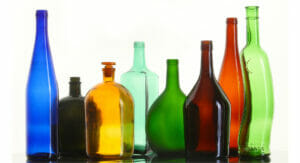
It is important to note that the used glass must be sorted by colour and thrown into the respective containers for green, brown or white glass. The Prosecco bottle is blue? Unusually coloured glass, such as blue or red bottles, should be placed in the containers for green glass, because, as a mixed colour, it tolerates most impurities in subsequent recycling. Lids do not need to be unscrewed as they can be separated in the glass sorting systems.
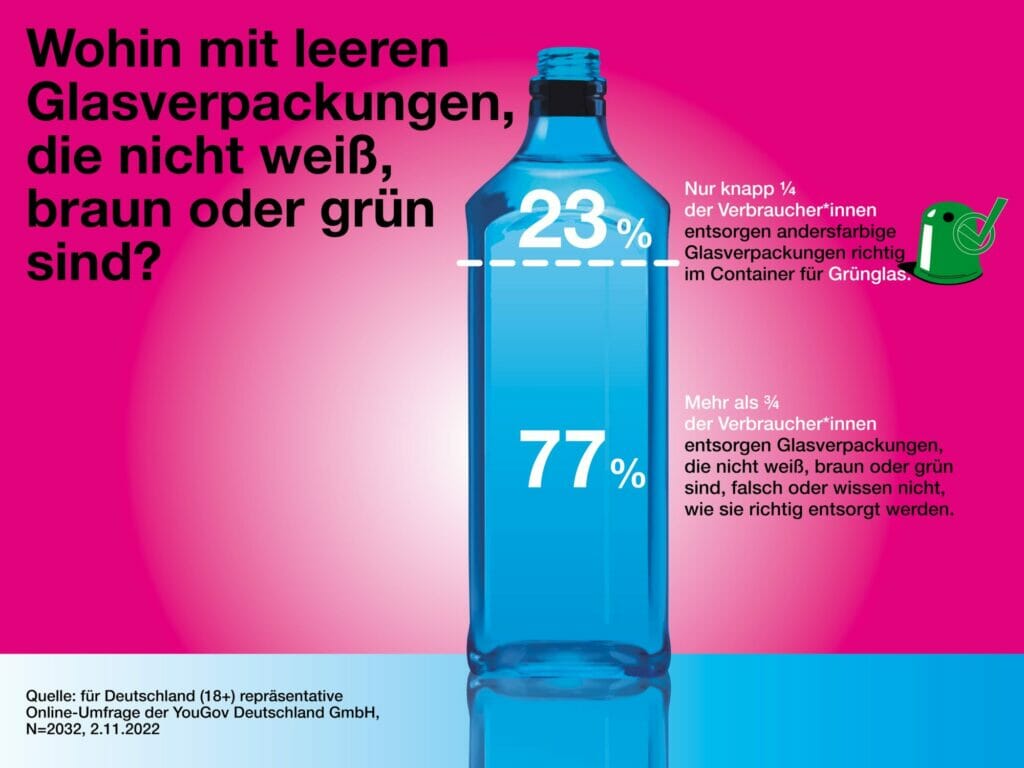
Glass recycling is generally recognised by the population: A good 80 percent of consumers in Germany dispose of used glass in glass containers, mostly sorted according to the colours white, brown and green. But when it comes to colour, many are apparently unsure. According to a recent YouGov survey Only just under a quarter of consumers (23 per cent) Glass packaging that is not white, green or brown should be placed in the green glass container.
„Glass packaging is a ‚recycling champion‘. They can be melted down any number of times to make new glass containers without any loss of quality. However, this requires correct pre-sorting according to colour. If, for example, coloured glass gets in between the white glass, the entire glass becomes discoloured when it is melted down and can only be reused to a very limited extent.“
Axel Subklew, Spokesman for the „Waste separation works“ initiative“
Recycled glass is the most important raw material for glass production. Every new glass bottle consists of 60 per cent „old“ cullet, and for the colour green it is even up to 90 per cent. The use of recycled glass saves energy and resources: Ten per cent use of cullet reduces the melting energy by three per cent and the CO2-emissions by 3.6 per cent.
Source: Waste separation works" initiative
Waste separation works" initiative - More news


The challenge of recyclability

World Recycling Day 2023: Waste separation is resource and climate protection

Alaaf and Helau: Carnival without a rubbish hangover

Used glass: where to go when it gets colourful?