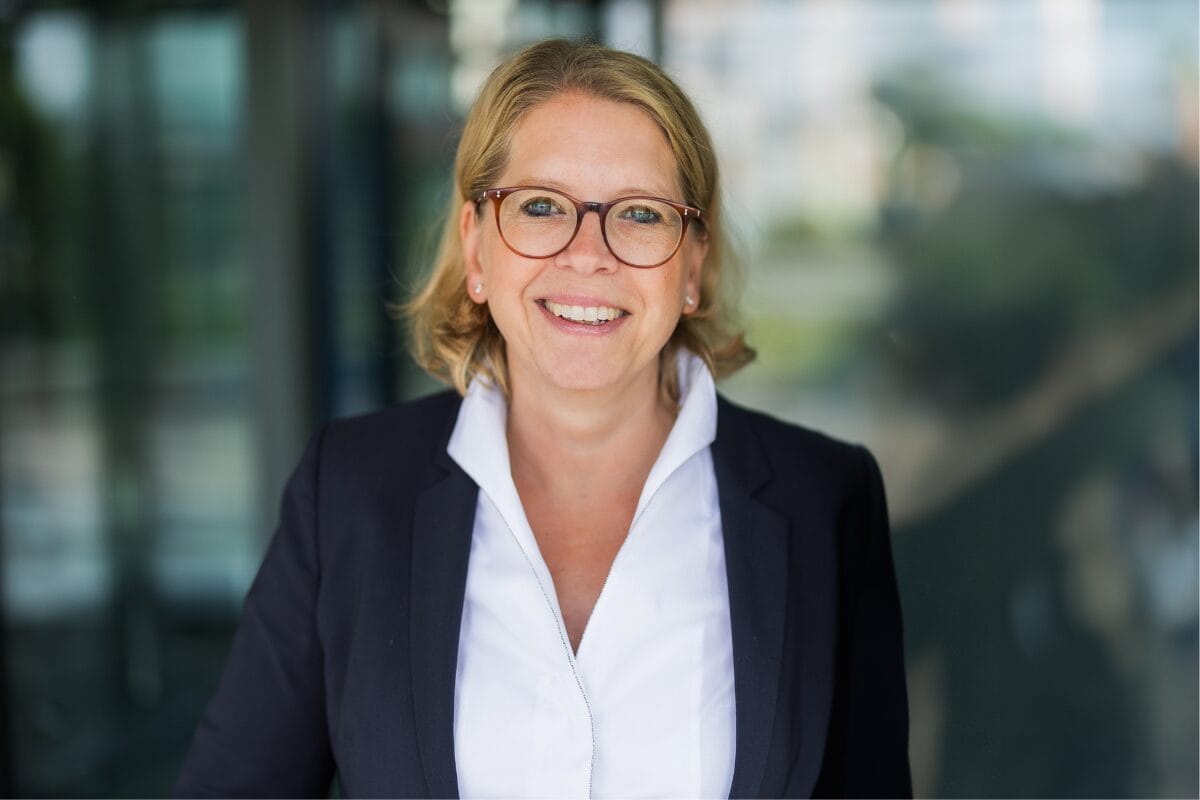
Andernach in Rhineland-Palatinate is home to the world's largest production site for packaging steel. thyssenkrupp Rasselstein manufactures tin-plated or special chrome-plated thin sheet - also known as tinplate - here, more than 90 per cent of which is used in the packaging sector. Clarissa Odewald has been Chief Sales Officer and Chairwoman of the Executive Board at Germany's only tinplate manufacturer since the middle of the year.
The business graduate knows the steel business well: she worked for the parent company thyssenkrupp Steel Europe AG in Duisburg for 14 years. Clarissa Odewald joined thyssenkrupp Steel immediately after completing her business administration studies and has worked for the company ever since. Various positions in the company since 2007 through her career. Among other things, she was responsible for the procurement of bulk raw materials and overseas logistics.
„In 2020, I then decided to broaden my horizons and gain experience on the sales side. I then moved internally at thyssenkrupp Steel to sales management for a year, which I managed for the entire Steel business segment.“
Clarissa Odewald
In 2021, she moved to thyssenkrupp Rasselstein. In her role as Head of Overseas Sales, Clarissa Odewald travelled a lot. „That's simply part of it, because the Regular personal dialogue with our customers around the world is particularly important to us - that's what makes Rasselstein special. That's why I've travelled everywhere overseas, from Ecuador to Australia.“ In her new role as Head of Sales, there are a number of new tasks, but she is also still travelling to visit customers. „At the moment, however, I'm just getting to know the various associations and our business partners better.“

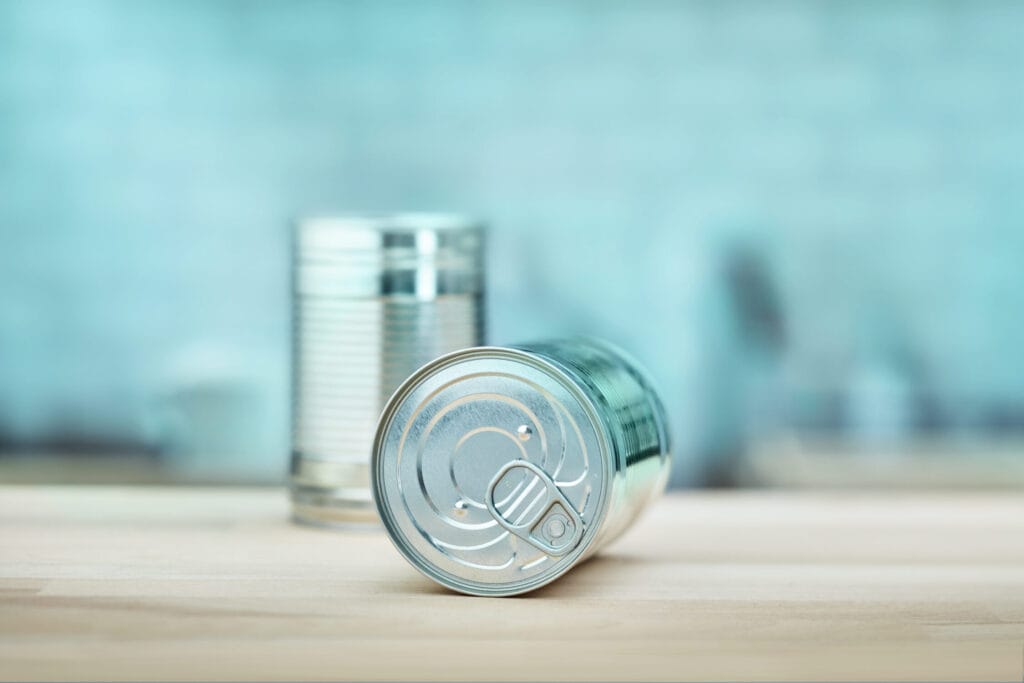
Packaging steel to become more sustainable
As one of the largest packaging steel manufacturers in Europe, thyssenkrupp Rasselstein supplies around 400 customers in 80 countries. The Andernach-based company produces packaging steel goods for various applications. And there packaging steel should also become increasingly sustainable, the Packaging Steel business unit is continuously working on reducing the thickness of the material, among other things. The packaging steel manufacturer is currently facing particular challenges: „We are currently in a very volatile market environment at Rasselstein. Demand is simply no longer as stable and predictable as it was before the coronavirus pandemic.“
And there is another challenge facing the industry: the steel industry is one of the biggest CO2-issuers. This is set to change, and so thyssenkrupp has already With bluemint Steel, we have developed a product that utilises CO2-emissions in steel production reduced and, thanks to alternative input materials, up to 70 per cent less CO2-footprint compared to conventional steel. Nevertheless, the production of steel - the starting product of tinplate - still generates CO2. In the long term, the Group therefore plans to Avoidance of CO2 through the use of green hydrogen.
„The green transformation has been on our minds for years. Our parent company thyssenkrupp Steel is currently transforming the entire steel production process. Materials such as coking coal and the corresponding processes will no longer exist in the future. To this end, thyssenkrupp Steel has been building the first direct reduction plant on the harbour site in Duisburg-Walsum since the beginning of the year.“
Clarissa Odewald
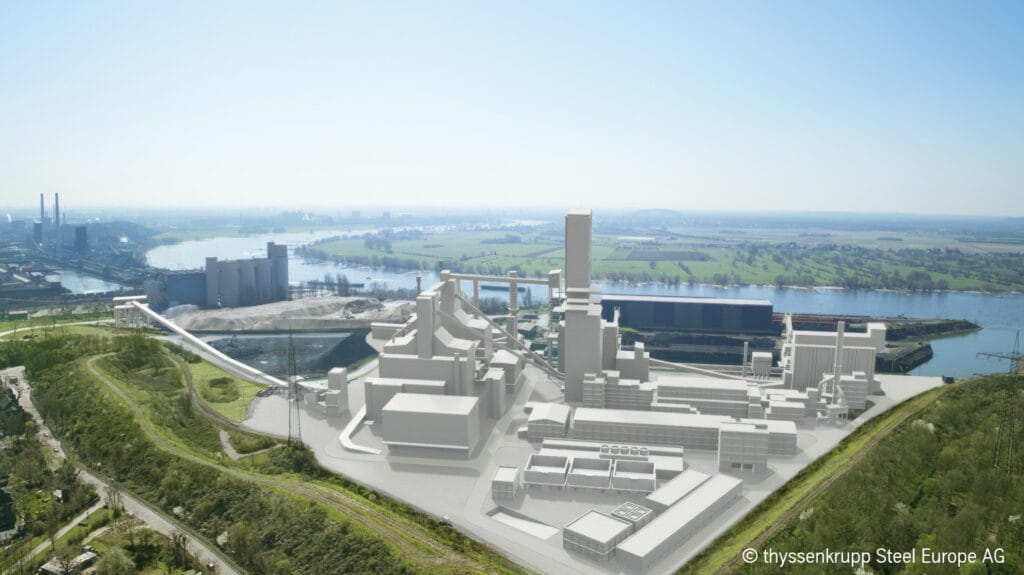
The long-term goal is to replace coal-based blast furnace technology so that steel production on the Rhine can become net-zero by 2045. „We at Rasselstein also want to reduce our Scope 1 to 3 emissions: We are therefore working on several projects, such as a new panel painting system that will enable us to reduce CO2-emissions as well as with environmentally friendly locomotives in our own rail transport between the parent company and Rasselstein.“
No longer a male domain
As Chief Sales Officer and Chairwoman of the Management Board, Clarissa Odewald holds two management positions at the same time. „When I started in Raw Materials Purchasing in 2007, it was still a male-dominated world. But that was also due to the fact that my training and job were very male-dominated at the time. However, I myself never had any difficulties developing in my job. I was always encouraged by my superiors, and that had nothing to do with the fact that I was a woman. It was always the performance that counted. At thyssenkrupp, this still applies equally to women and men. Anyone can develop if they have the will. I am very happy to support young people, whether women or men, and can only recommend young people: Raise your hand, take an interest in new topics and show that you want to develop further. Fortunately, more and more women have opted for a career in engineering over the last 20 years. And that's why women already hold many management positions at Rasselstein, so this is no longer a male domain.“