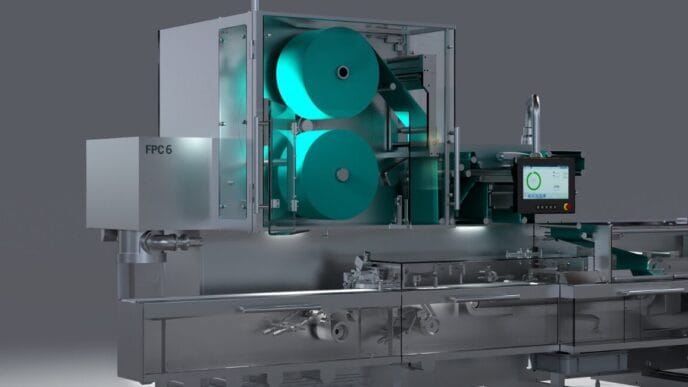
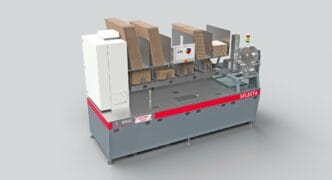
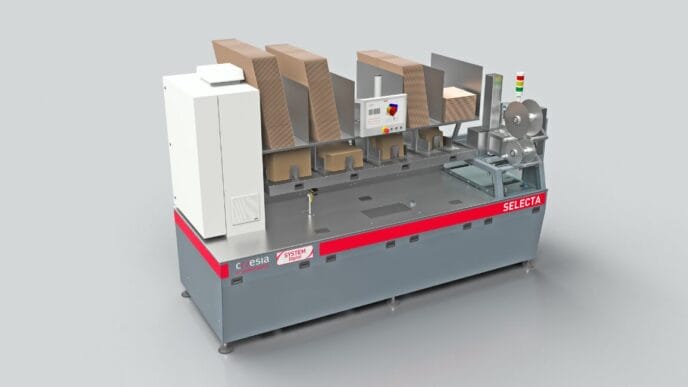
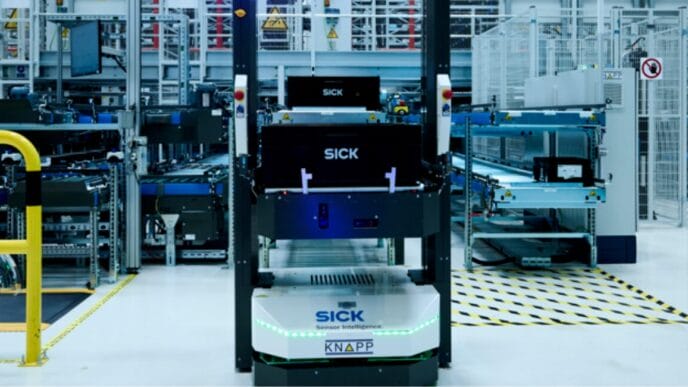
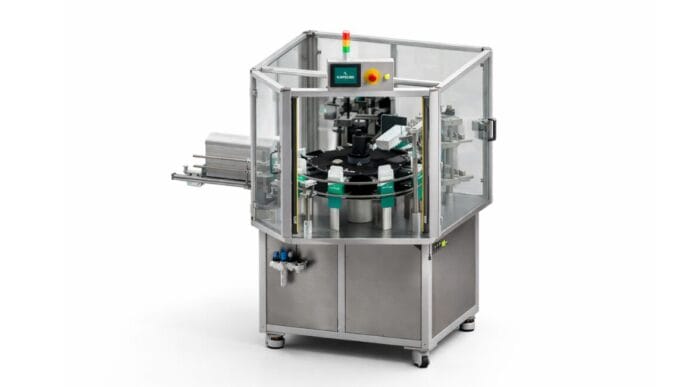
The digital twin will become a centrepiece of industrial production in the future. KHS is already using models to virtually depict the commissioning of machines and conveyor systems.
Assistance digital and smart technologies, KHS networks and automates production processes Step by step, so that machines, products and complete systems can communicate and work together more efficiently.
„The so-called digital twin in particular enables the shift into virtual space by tracking and modelling all phases of a machine's life cycle. This allows all production processes and products to be simulated virtually,“ says Stefan Diesner, Head of Product Center Palletising.
The following appear on the computer Alternative, optimised production processes. One of the most important prerequisites for this is the Consistency of engineering across the entire value chain, to avoid so-called data breaks at the interfaces between the engineering disciplines of mechanics, electrics and software. Unlike is often the case today, work is not carried out sequentially, i.e. one after the other and separately. Ideally, all departments work in parallel on the realisation of a project and use a common data model - the basis for the digital twin, which virtually depicts a system down to the last detail and enables precise simulations.

The challenge of shared data
For a plant engineering company like KHS, which not only has a enormous variety of different machines The fact that the company is not only a manufacturer of a wide range of products, but also one in which the development and design departments are geographically spread across several locations, poses a major challenge. For 13 years now, the KHS engineers at the Palletising Product Center in Worms with the virtual representation of machines and plant components and their simulation. Particularly in the area of Logistics systems such as palletisers or transporters offers the Carrying out a simulation or virtual commissioning to.
„Our goal with the expansion of virtual commissioning is to Further reduce throughput times and lower error costs“, explains Diesner. To estimate the extent of the savings, it helps to visualise the rule of ten. This states, that the costs for error correction increase by a factor of ten the later an error is discovered in the process. So if an error can only be found and rectified during factory commissioning, the financial outlay is ten times higher than if the correction is made during the software design phase during virtual commissioning.
Reduce effort
A further aim of the current work is to Reduce the effort required to realise virtual commissioning. A basic prerequisite for this is the Data consistency.
„During virtual commissioning, we have the issue of data consistency in your own hands. All data is generated and stored in our factory, but so far in different systems. Further steps are required here before this data is available efficiently and bidirectionally in a tool for virtual engineering, including simulation. Once this has been achieved, we can quickly and efficiently commission machine designs configured or customised according to customer requirements on the screen.‚
Stefan Diesner, Head of Product Center Palletising
In Worms, meanwhile, people are looking ahead: the Virtual commissioning is a first step towards digitalisation of systems in the beverage industry and a true digital twin. This will be able to do much more in the future. To achieve this, however, the digital twin must be supplied with additional information, such as data on conversions at KHS customers or operating data from production - an exciting challenge.
Source: KHS