According to a UBA study, up to three quarters of greenhouse gas emissions in the life cycle of a product are generated during its manufacture. Whether it is bought online or in a shop is therefore not decisive for the carbon footprint.
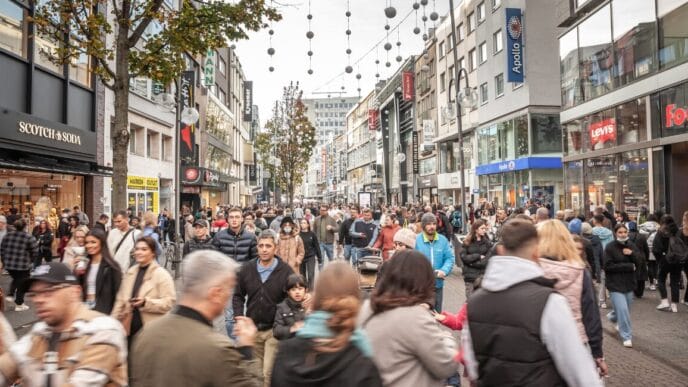
This was shown by a study for the Federal Environment Agency, which looked at greenhouse gas emissions from online retail. According to the study the share of trade and transport is only between one and ten per cent of total emissions.
„Whether we shop online or in-store is not so decisive for our carbon footprint. The biggest lever for ecological shopping is durable products that are manufactured in an environmentally friendly way. At best, I can also get them in the shop around the corner, which I can easily reach by bike or on foot.“ Dirk Messner, UBA President.
The Study compares different shopping options - stationary and online. A shopping trip of 5 kilometres in your own car, for example, generates 600 to 1,100 g of CO2 , while the shopping trip by bike does not emit any CO2 emitted. On average, between 200 and 400 g of CO2 on. The lower emissions compared to driving your own car are due, among other things, to better vehicle utilisation, the efficient design of delivery routes and the increasing use of electric vehicles.

The last mile burdens the environment
The most important climate protection levers in bricks-and-mortar retail are local energy consumption and the customer's choice of transport. The most environmentally damaging factors in online retail are shipping packaging waste and the delivery stage to the doorstep, the so-called „last mile“.
Another UBA study („Promotion of sustainable consumption through digital product information“) shows that environmental labels are not yet adequately represented in online retail. Existing labels such as the EU Ecolabel or the Blue Angel should be displayed directly with the product information, The company can also integrate this information into price comparison and sales platforms.
Reusable packaging improves the carbon footprint
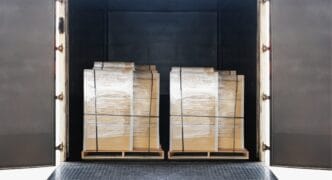
More environmental protection is also possible for shipping packaging. For example, many products can be shipped in their original packaging without damage - without additional shipping packaging. Reusable packaging that customers return empty also makes sense. According to the study, the total amount of mail-order packaging save between 180,000 and 370,000 tonnes of packaging waste per year. This corresponds to a reduction of 22 to 45 per cent.
In the area of logistics, the use of electric vehicles or bicycles for delivery harbours great potential, as does the use of packing stations for efficient delivery. Consumers can also improve their environmental footprint by buying environmentally friendly products, avoid frequent returns when shopping online and specifically ask for reusable systems or to do without shipping packaging.
These data are the first results of the research project Greening of online retail.
Source: UBA