EU packaging regulation: opportunity for recycling and traceability
Automated traceability and digital watermarks can help companies in the European food and consumer goods industry to comply with regulations more easily while contributing to the creation of a circular economy.
7 May 2025
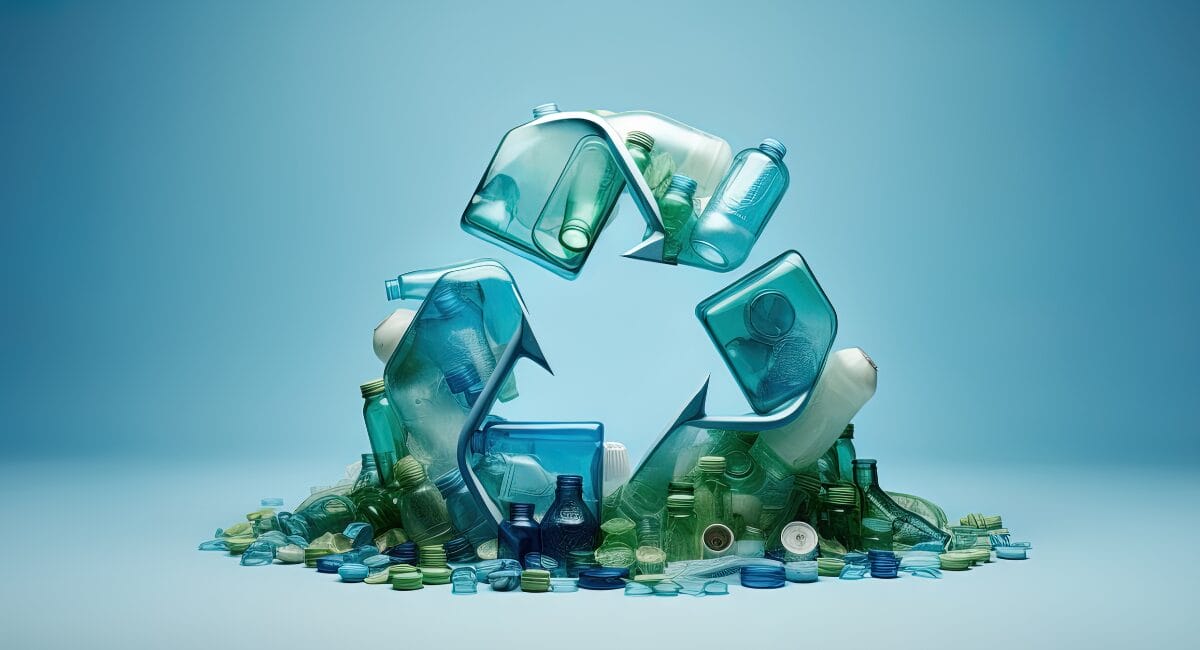
All packaging should be recyclable by 2030. The quantities of packaging used must be documented and reported. (Image: IonelV - stock.adobe.com)
Companies in the European food and consumer goods industry are facing radical changes to packaging regulations. Automated traceability and digital watermarks can help them comply with regulations more easily while contributing to the creation of a circular economy.
The new EU Packaging Regulation will fundamentally change the way packaging is designed, used and disposed of. The scope of the directive is broad, but its fundamental aims are to reduce packaging waste and improve the recyclability of packaging. But EU member states must not only fulfil strict packaging reduction targets, The aim is not only to create a recycling centre, but also to set up deposit return schemes (DRS) for plastic bottles and beverage cans and to create systems and infrastructure for the return and separate collection of all packaging waste from end consumers in order to enable high-quality recycling.
Responsibilities reorganised
Essentially, the PPWR (Packaging and Packaging Waste Regulation) promotes responsibility for packaging waste and helps to increase the pressure on players in the consumer goods industry: They must take responsibility for the packaging they place on the market throughout its life cycle. Whilst many of these obligations are set out in the text agreed by European legislators, there is also an „unwritten“ dimension of this Ordinance.
(Image: Omron)
„The various players in the value chain must realise that they will not be able to fulfil their obligations if they work alone. An unprecedented level of cross-line co-operation is required. Manufacturers can only design packaging that can be recycled at scale if they know what the waste collection and sorting infrastructures are and what sorting and recycling technologies should be used. Manufacturers need to have a holistic understanding of their packaging.“
Display
Patricia Torres, Sustainability expert at Omron Industrial Automation Europe
Essentially, the new regulation creates a framework for a circular packaging economy, which in practice requires traceability along the entire value chain.
Automated traceability
„Companies must increasingly take responsibility for packaging waste and the associated processes, while at the same time closing the packaging loop,“ explains Patricia Torres. „In this context traceability is becoming a cornerstone of supply chains. Smart packaging with digital watermarks, enabled by advanced automation and identification, is a powerful tool to recover valuable resources.“
The The key to the traceability of packaging is the corresponding data: This requires data carriers that remain legible for the entire life of the packaging, even if it is soiled or damaged. However, experience has shown that conventional data carriers usually only fulfil their task from the moment they are applied to the packaging until the moment they reach the consumer. However, they often perform less well when the product is consumed and the packaging is disposed of. This is one of the main problems that need to be tackled in order to realise the desired circular economy.
Potential of digital watermarks
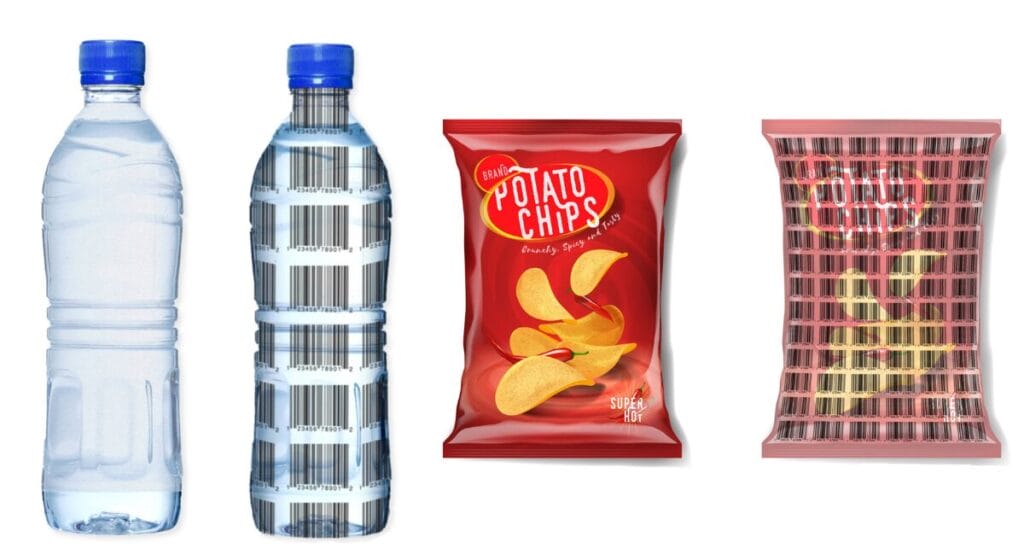
In this context, digital watermarks can offer various advantages over conventional data carriers. They remain legible even if they are exposed to difficult conditions such as higher tape speeds, heavy soiling or shredding. Digital watermarks are therefore a promising tool for increased recycling, because they can help to automate the identification of packaging in recycling plants. The data embedded in the watermark can be used to automatically feed packaging into the correct sorting stream, which will ultimately lead to more seamless, cleaner processes and higher quality recycled materials.
Omron has recognised this potential and has Digimarc, a leading provider of digital watermarking technologies, has joined forces to develop an innovative Industrial automation solution for traceability of packaging throughout its entire life cycle.
Thanks to repeated watermark patterns, the system recognises data even on broken, soiled or deformed packaging. (Image: Digimarc Corporation)
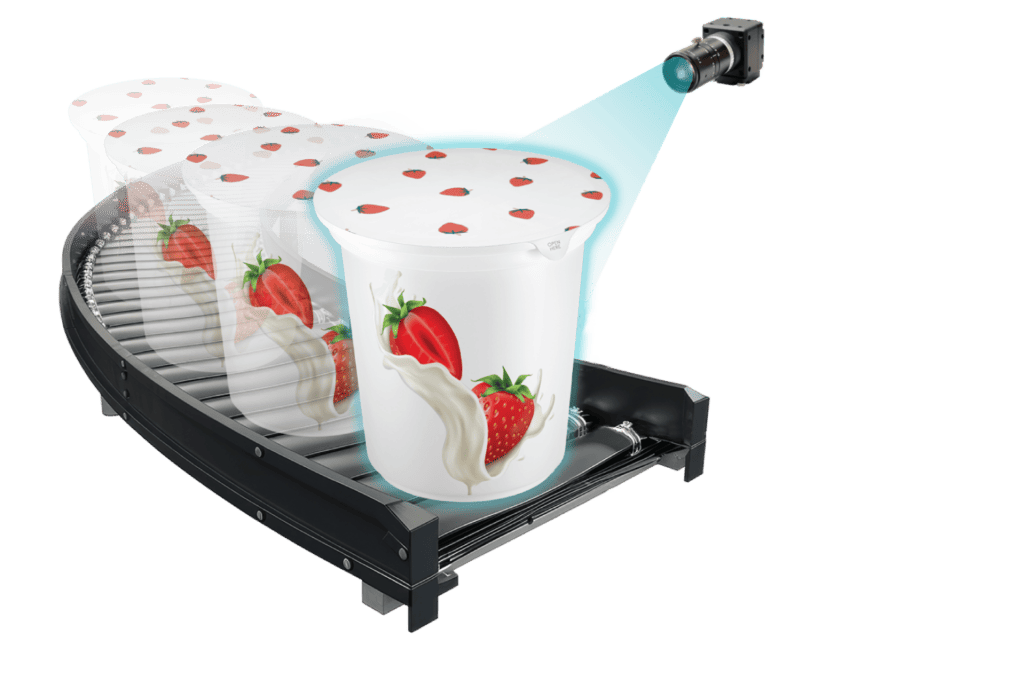
The technology is already being used in the production lines of leading food and beverage manufacturers. As part of a sustainability initiative, one company was able to save eight tonnes of single-use plastic per year by dispensing with an additional plastic sleeve. Product identification is carried out exclusively via digital watermarks on the film lid, whose Correct detection thanks to high-precision camera systems from Omron is ensured. With a processing capacity of up to 800 units per minute, the solution fits seamlessly into existing production processes and increases operational efficiency. The successful implementation shows that digital watermarking not only fulfils regulatory requirements, but also offers concrete benefits. Progress towards a circular economy enable.
Overcoming hurdles together - generating added value
One of the challenges of implementing digital watermarking technology in the industry is that the watermarks are usually must be identified, read and checked at high speeds, in order to be commercially viable. This is no easy task, especially with packaging made of materials that are difficult to inspect, such as transparent foils and films, shiny or reflective surfaces, flexible plastic packaging and curved or cylindrical objects. Different orientations or varying material properties also make consistent detection difficult.
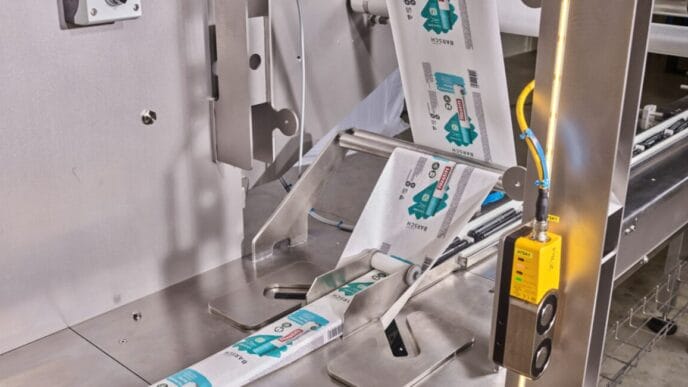
Digimarc and Omron have worked hand in hand to develop a solution that integrates digital watermarks into industrial automation systems. (Image: Omron)
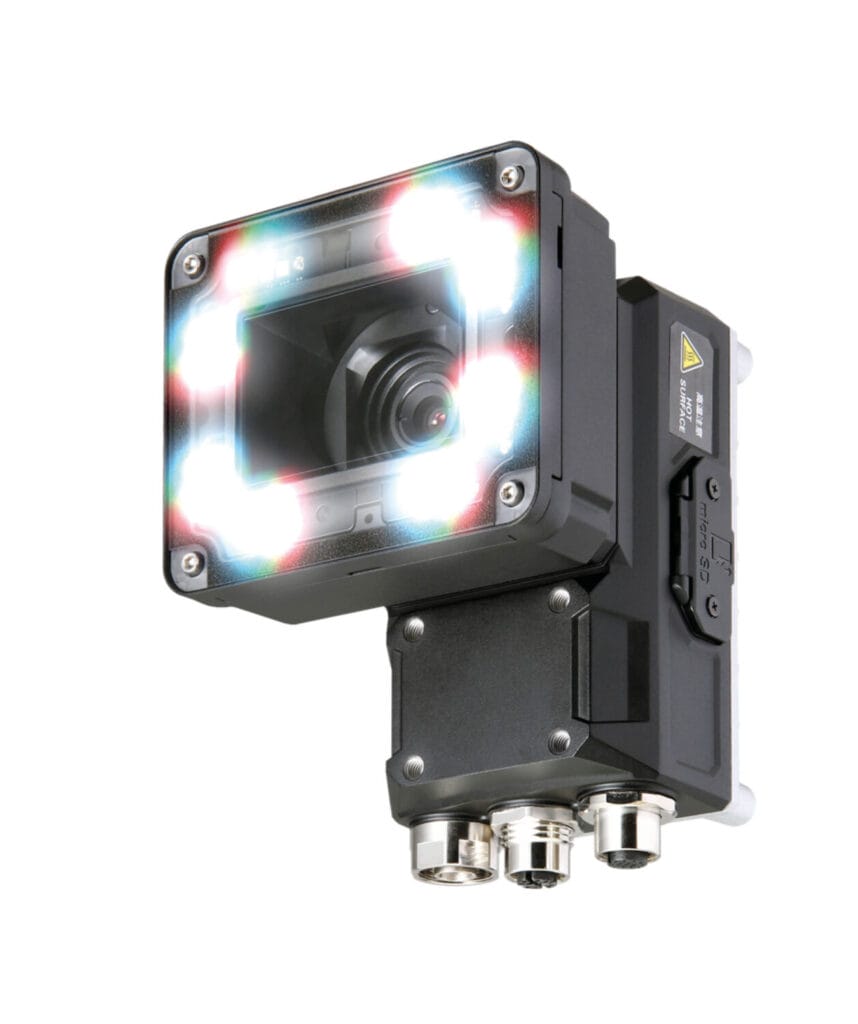
The powerful Smart camera and image processing systems from Omron, that use AI and deep learning algorithms, The new sensors offer new possibilities for fast and precise identification, inspection and initiation of track-and-trace features at high speeds. They are even suitable for the Scanning more difficult packaging formats such as transparent films or cylindrically labelled bottles.
The technology partnership combines the strengths of Omron's FH-Vision system and FHV7 smart camera with Digimarc's watermarking expertise. (Image: Omron)
While the introduction of such technologies for the identification and sorting of packaging materials is important in the context of the PPWR Directive, their benefits go beyond mere compliance. „These technologies can add value by automating checks and verifications to prevent misclassification or mislabelling of finished product components, for example, as well as increasing the speed and accuracy of manufacturing, filling and delivery of packaged goods,“ emphasises Patricia Torres. She sees the PPWR as an opportunity and emphasises the importance of cross-chain collaboration, traceability and intelligent packaging as important criteria for their implementation.
packaging journal 2/2025
This article was published in packaging journal 2/2025 (April).