Optimised consumption in packaging printing

Südpack has extended its SPQ technology to gravure printing. The printing process can be a resource-saving alternative. 

Südpack has extended its SPQ technology to gravure printing. The printing process already ensures savings in CO2footprint and can be an efficient and resource-saving alternative. 

A prerequisite for the use of this technology in gravure printing is also a continuous Standardisation of machine and process parameters and intelligent colour management. As with flexographic printing, all designs are automatically mapped in the pre-press stage using a reduced colour palette.

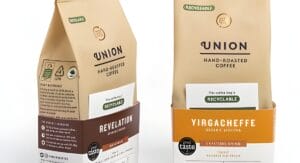
Thanks to the PUR-based (polyurethane) ink system used, the printing inks are also suitable for pasteurisation and sterilisation. This opens up a wide range of options in the field of heat applications, such as for the Packaging of ready meals, pet food or baby food. The technology is also particularly suitable for finishing flexible films for high-quality fast-moving consumer goods such as coffee, tea or confectionery, as metallic colours such as gold, silver or even haptic and other finishing lacquers can also be applied. Also for the Imprinting Digimarc Digital Watermarks the process is suitable.  

Reduction and sustainability

By using SPQ, the CO2-footprint in packaging printing reduced are being realised. The reduction of the standard colour palette from ten to just seven colours, which results in lower ink and solvent consumption, contributes to this in particular.

Display

„With SPQ, we significantly reduce ink consumption, colour waste and the number of colour changes. Despite the reduced colour palette of seven colours, almost the entire colour spectrum and additional metallic colours can be reproduced - with outstanding, photo-like print quality and excellent colour brilliance.“

Enrico Riesel, Senior Site Director at Südpack Bioggio

Due to the limitation to seven colours, internal calculations of South pack According to the study, the savings in a typical standard process amount to around 36.5 per cent for a print job of 15k linear metres. Other factors in terms of sustainability are a Lower energy consumption as well as the reduction of film waste, which usually occurs when the presses are converted for the subsequent print job.

Customers benefit from reduced effort in the pre-press stage: The use of a firmly defined colour space not only makes Permanent colour adjustments obsolete, but also time-consuming and cost-intensive print approvals on site. Another advantage is that Combine different print designs even within one print job leave.

The new technology is characterised not least by high register accuracy as well as colour consistency and brilliance. This is due to the continuous, intelligent colour management along the process chain, which Südpack, as Enrico Riesel confirms, „completely rethought and redesigned at the beginning of the project.“ Realistically speaking, the standardised colour palette can be used to produce around Cover 95 per cent of all Pantone shades - and this with stable, reproducible colour conversion, so that the adjustments required in conventional printing processes are completely eliminated with SPQ.

Source: South pack

Further news on packaging printing