How can the life cycle assessment of steel drums be improved? Roundliner GmbH approached Fraunhofer Umsicht with this question and commissioned a life cycle assessment. Various processing methods were analysed that would allow the drums to be reused more often. The result: CO2 emissions can be reduced by up to 73 per cent.
The 200 litre steel drum is the first choice of packaging for many materials such as products containing solvents, highly flammable substances or hot fillings and is an absolute standard in many industrial sectors. However, according to the Biganzoli study 37 per cent of them damaged after first use and therefore disposed of. From the extraction of raw materials to production and final utilisation, a steel drum for transporting materials causes greenhouse gas emissions. The resulting quantities of greenhouse gas emissions have been analysed by the Fraunhofer prudence now quantified in a life cycle assessment study and expressed in kg CO2-equivalents.
Analyse viewer wasted scenarios
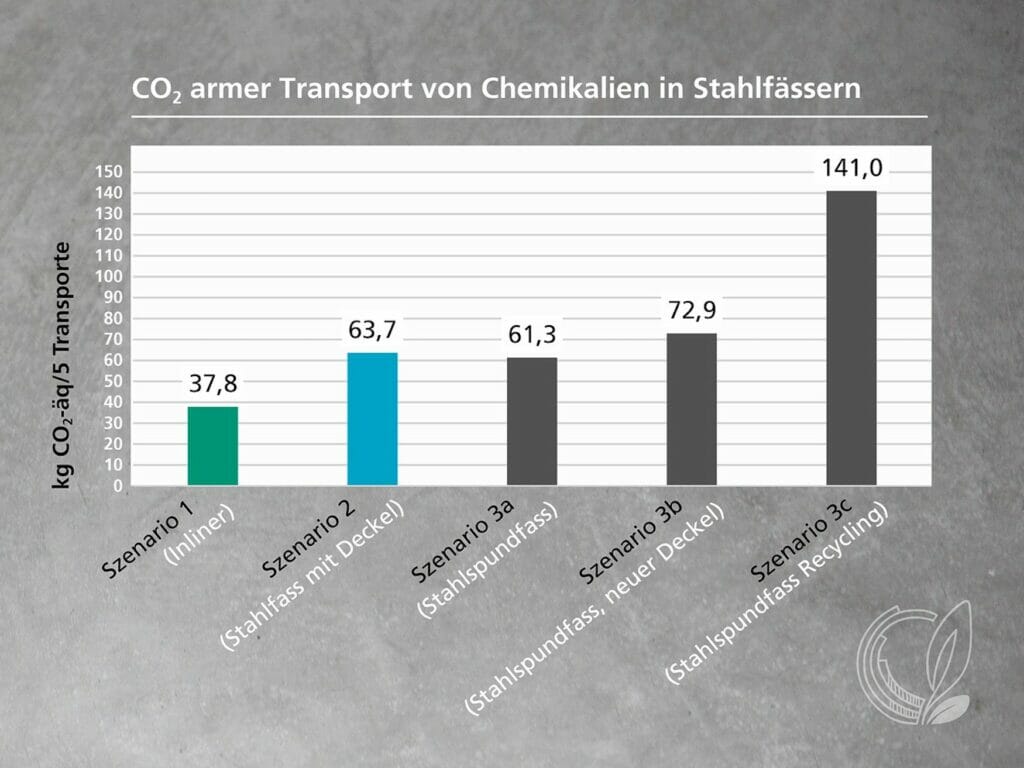
The following were analysed Five different scenarios. In the first scenario, a steel lidded drum with an inliner inside is analysed. After use, this is upgraded again using the refurbishing process - i.e. the inliner is disposed of and the seals are replaced. In a second scenario, the researchers examine the same type of drum without an inliner and analyse a subsequent reconditioning of the drum. To do this, the drum is cleaned, burnt out and repainted before the seals are also replaced here.

In the third scenario 3a, a steel bunging drum without inliner with subsequent reconditioning is analysed. In addition, the variants of a steel bung barrel without inliner with subsequent reconditioning of the barrel and conversion to a lidded barrel after first use (scenario 3b) and a steel bung barrel without inliner for single use and subsequent recycling of the barrel (scenario 3c) are analysed.
Inline ensure fewer greenhouse gas emissions
The life cycle assessment study shows the Greenhouse gas emissions from production, transport and final disposal or utilisation of the transport drums.
„By evaluating the drums ‚from cradle to grave‘ - i.e. over their entire life cycle - we found that, assuming five uses (= observation period), the use of steel lidded drums with inliners and subsequent refurbishing (scenario 1) emits 37.8 kilograms of carbon dioxide per observation period.“
Dr Daniel Maga, Group Leader Sustainability and Resource Management at Fraunhofer Umsicht
Of these 86 per cent of total emissions from steel barrel production without deduction for reuse and only 8 per cent can be attributed to the production of the inliner. »Steel sheet pile drums without reconditioning, on the other hand, emit 141 kilograms of carbon dioxide per observation period and therefore cause 73 per cent more emissions,« says the scientist, explaining the significant differences in emissions. And even in comparison with the scenarios that take reconditioning into account, there are significant differences in emissions. save approx. 40 to 50 per cent of greenhouse gas emissions by using inliners.
Source: Fraunhofer prudence
More news about Fraunhofer Umsicht


Fraunhofer: Packaging systems in competition

The cycle works

Optimised life cycle assessment of steel drums

Fraunhofer Umsicht tests tool for evaluating packaging