Paboco paper bottle in consumer test

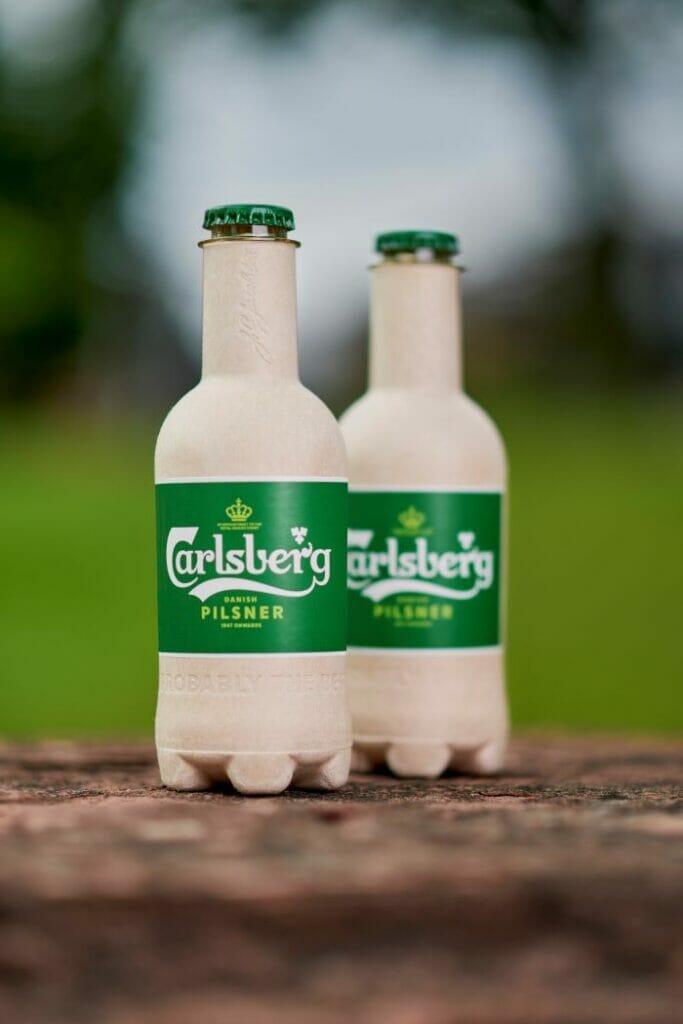
The paper bottle from Paboco is ultra-light and stable. The Carlsberg Brewery Group recently launched a large-scale practical test with the fibre bottle.

It is ultra-light, extremely stable and very pleasant to the touch - no wonder that brand manufacturers such as Coca-Cola, Absolut and Procter & Gamble showed an early interest in the paper bottle from Paboco. The Carlsberg Brewery Group has also been working on the fibre bottle project for years and recently launched a large-scale practical test. The first feedback from consumers is now available.

In the non-food sector, consumers will probably be able to reach for paper bottles as early as 2023. „Next year, the Procter & Gamble brand Lenor is expected to be launched in the fibre bottle for the first time, but initially only in north-west Europe,“ says Michael Michelsen, Commercial Director at Paboco. In 2015, the Paper Bottle Company (Paboco), a Joint venture between BillerudKorsnäs and Alpla, The company started the project to produce sustainable fibre bottles and has been working on optimising them ever since. The goal: a completely bio-based paper bottle.

„The paper bottle still consists of 85 per cent paper and a thin PE layer, which can be easily removed, sorted and recycled in waste paper processing. However, PE does not work well with carbonated drinks. That's why we use a slightly thicker PET coating here.“

Michael Michelsen, Commercial Director at Paboco

Display

Fibre Bottle utilises the potential of PEF

Carlsberg Brewery is now going one step further: the bottles for its consumer test are coated with PEF (polyethylene furanoate), a bio-based polymer that has similar properties to PET. The Fibre Bottle 2.0 is therefore the first beer bottle made from sustainably produced wood fibres and PEF that is already almost completely bio-based and fully recyclable. The coating with the plant-based polymer, which was developed by Carlsberg's partner Avantium, is an important milestone for the Fibre Bottle, according to the company.

The bio-based polymer acts as a highly effective barrier between the beer and the outer fibre shell. It protects the flavour and is said to retain the beer's carbon dioxide better than conventional PET. The biopolymer is also compatible with PET recycling systems and can be broken down in nature.

Carlsberg Fibre Bottle
In eight European markets, selected consumers were able to test Carlsberg beer in paper bottles. (Image: Carlsberg)

Carlsberg recently a large-scale market test with an initial 8,000 fibre bottles was launched. In the eight Western European markets of Germany, Denmark, Sweden, Norway, Finland, the United Kingdom, Poland and France, selected customers were able to scrutinise the new type of beverage packaging. Their experiences with the paper bottle will then be incorporated into the next generation of packaging design.

So far, the feedback from customers who have received sample bottles has been consistently positive, according to a Carlsberg company spokesperson. „Consumers were very curious about how the bottle feels in the hand and how the drink tastes in it, and they were pleasantly surprised that the flavour and freshness of the beer were the same, given the completely different look and feel of the bottle. A special experience is that the coldness of the drink is not completely noticeable in the hand or on the lips - as would be the case with a glass bottle or can - due to the insulating properties of the wood fibres.“ Carlsberg is awaiting the final feedback from Denmark and the UK in the next few weeks. Only then will all the data from the eight participating markets be analysed.

The current prototypes are the Generation 2.0 design, which is the PEF coating and a new base to improve the stability of the bottle contains. Earlier this year, Paboco had already announced its Generation 3.0, which will also be equipped with a fibre-based cap and closure. „The year 2022 therefore marks an important milestone for Generation 2.0, and our next steps will focus on turning the vision of Carlsberg Generation 3.0 into reality,“ says Kasper Emil Jakobsen, External Communications Manager at Carlsberg.

According to the company generation 2.0 of the fibre bottle already performs better than disposable glass bottles in the life cycle assessment, and Carlsberg has even greater ambitions for the next generation 3.0: The paper bottle should then produce up to 80 per cent fewer emissions than conventional disposable glass bottles.

From the magazine - More news

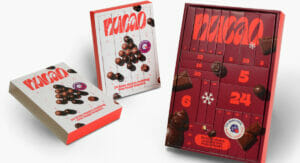
Karl Knauer completed several work steps for the Leipzig-based confectionery start-up Nucao, from packaging to quality control and interim storage.

Co-packing as an option for SMEs and start-ups

One solution that SMEs and smaller companies can use to counter supply bottlenecks and skills shortages is to outsource the assembly and packaging process to specialised service providers. This is what the Leipzig-based company Nucao has done and now has its Advent calendars packaged by Karl Knauer KG.
Read more "
Piranha bites

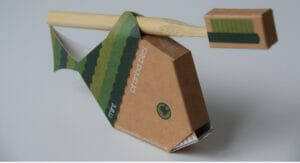
Dental care set in piranha look

Two students at Stuttgart Media University have now realised a clever packaging concept for a dental care set consisting of tablets and a toothbrush that stands out at the PoS. The two have won two prestigious packaging awards for their Piranha Bites.
Read more "
Piston pump unit and hot-melt adhesive

Stages: Safe and sustainable bonding

Bremer Bühnen GmbH specialises in hot melt adhesives and, in addition to adhesives, also offers the right application equipment - a unique selling point in the industry. Recently, new software developed in-house has made the bonding process even safer.
Read more "