Combining good design with a high level of user-friendliness, minimising plastic consumption and conserving fossil resources: Pöppelmann FAMAC develops practical solutions in line with these goals. The three approaches „ReDuce“, „ReUse“ and „ReCycle“ provide the framework for this.
Resource-saving article concepts and efficient production processes reduce the use of materials. Products are designed for multiple use. And where possible, innovative recycling concepts are used to achieve a circular economy. We asked Jörg Wilke, Head of Development at Pöppelmann FAMAC, about product development according to eco-design standards. He has been with the company for 27 years and is responsible in particular for product/process development in the area of packaging.
Mr Wilke, when a customer comes to you with an enquiry, what requirements have to be met before the development department can „get started“?

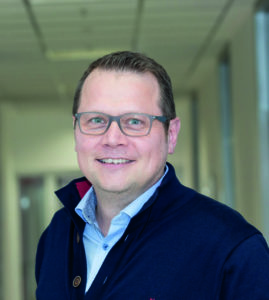
(Image: Pöppelmann)
Jörg Wilke First of all, the specification of the product is important to us: for example, is it filled hot or cold, pasteurised or shock-frozen? How will it be stored? These and other questions influence the choice of material. In addition, we often have to take a range of specifications into account - from the parameters of an existing filling line to very specific customer requirements in terms of appearance. To clarify the feasibility and define the framework conditions, we have developed a detailed questionnaire, our Quick-Check. But no matter what the conditions: Our aim is always to find the best possible solution for the customer.
What options are available in principle?
Jörg Wilke We offer our customers all process steps from product development to series production under one roof. This has many advantages, e.g. no sensitive data has to be passed on to third parties, the entire schedule is in our hands and we are independent of suppliers. This allows us to Realise packaging developments within the shortest possible time.
And how does this work in practice?
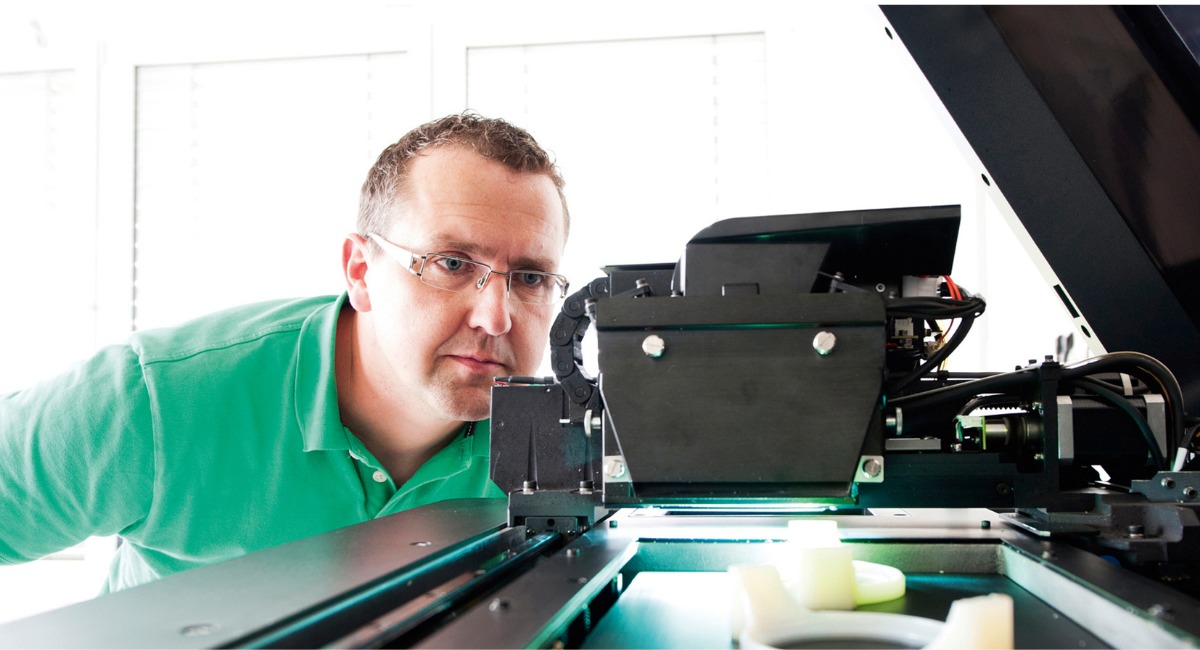
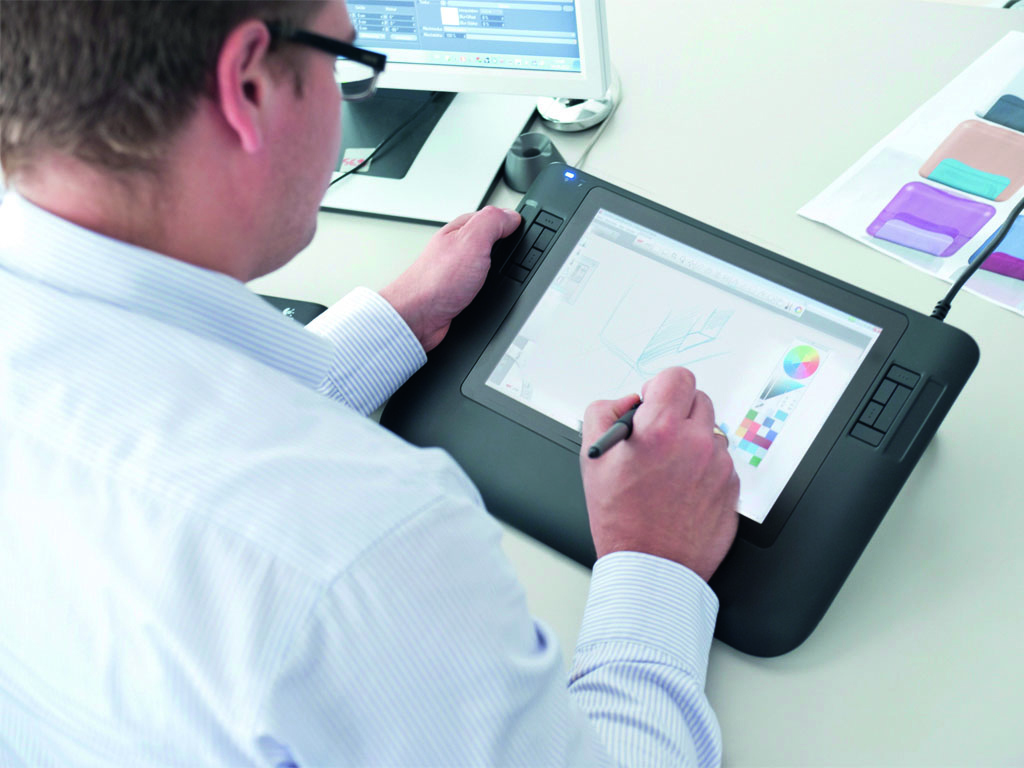
Jörg Wilke In the first stage of development, ideas are formulated and realised in drafts. Our product designers create 3D visualisations and photorealistic images for the first visual impression. In the next step, we produce by means of rapid prototyping and rapid tooling illustrative samplesWe use 3D printing to produce prototypes of the packaging and/or to manufacture tools that we use to produce initial samples from series material.
Rapid prototyping is intended for small product quantities, while rapid tooling can be used to produce prototypes in larger quantities, which are then ready for test filling. These two processes often take place in parallel. Finally a pre-series tool in our in-house toolmaking department made of steel or aluminium, which we use to manufacture products for more extensive test runs. In this way, we optimise the initial designs.
Product development under eco-design criteria
How are customers involved in the processes?
Jörg Wilke A partnership-based relationship is the prerequisite for a good result: in order to be able to fully fulfil our customers' expectations, we identify possible limitations at an early stage. Each development step then takes place in close coordination. Customers often have internal conflicts of interest, e.g. between marketing and production. Our task is to harmonise the various wishes and requirements and to develop a solution in which all sides can find common ground. It pays to invest sufficient resources in development work at the outset.
Are there any projects that were particularly challenging and where the company is particularly proud of the solution?
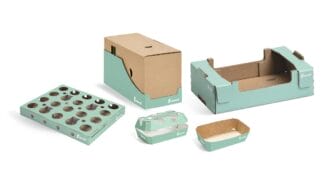
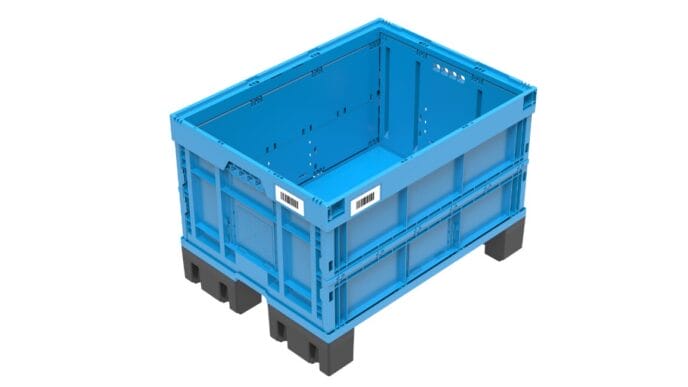
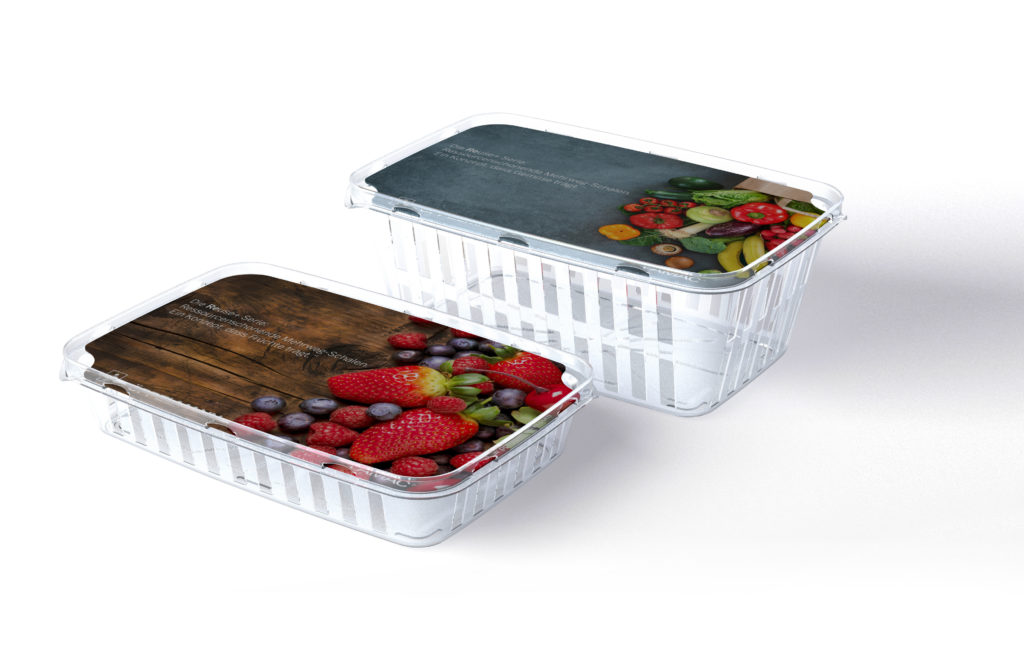
Jörg Wilke Yes, this includes many of our current developments that have been created with eco-design criteria in mind: In cooperation with a customer, we have developed our ReDuce+-series created a bucket with a grid structure for snack tomatoes that saves up to 30 per cent material and thus also reduces logistics costs and DSD fees. We are currently developing this concept further into ReUse+-series: reusable trays with a grid structure made of recyclable plastic for fruit and vegetables, which are intended to replace disposable trays in food retail. In a current project, we are also further developing a lid for packaging from the dairy sector in order to combine functionality and an attractive appearance with reduced use of materials.
All of these developments, in which we take economic and ecological aspects of the product along its entire life cycle and combine more sustainability and product functionality with maximum added value for the customer make us very proud.
As part of the company-wide initiative PÖPPELMANN blue you bundle all activities that are committed to a closed material cycle and are intended to shape the transition from a linear to a circular economy. What goals have you set yourself for the near future?
Jörg Wilke The entire Pöppelmann Group strives for, use post-consumer recyclates (PCR) wherever possible, materials from the recycling collections. This is the only way to create a genuine circular economy. Due to legal requirements, the Pöppelmann FAMAC division, which manufactures packaging for food, cosmetics and pharmaceutical products, can only use secondary raw materials for a few products.
In future, we want to enable the use of PCR here too. Until then, the aim is to develop packaging for which only one minimal use of materials is required and are 100 per cent recyclable. are. We believe that plastic is a very sustainable material - if you handle it correctly and use it responsibly.