Packaging industry and Brexit: supply bottlenecks and production stoppages loom
The packaging industry fears a „hard“ Brexit. Associations such as the Industrievereinigung Kunststoffverpackungen and Packaging Europe see particular risks in the area of food packaging. The pooling of pallets and other load carriers will also become more difficult.
21 August 2020
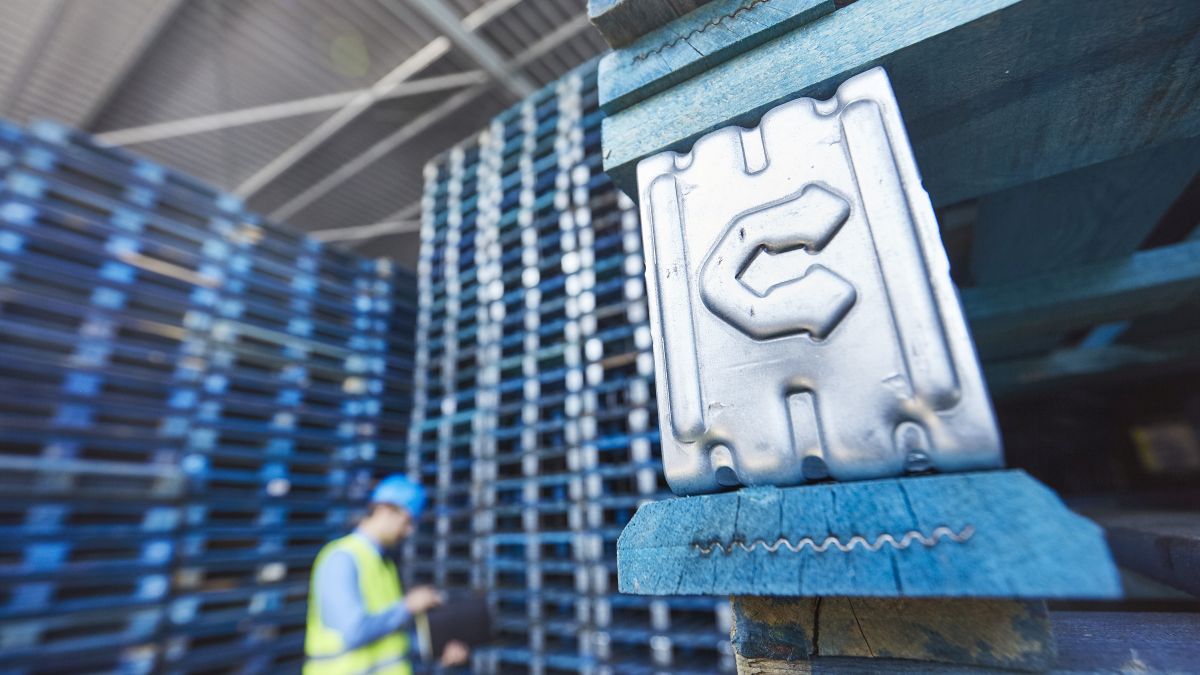
111 million wooden pallets were produced in Germany last year. Suppliers are also replenishing their stocks due to Brexit. (Image: CHEP)
Has the risk of a „hard“ Brexit on 31 October 2019 increased since Boris Johnson took office as British Prime Minister? It currently looks that way. In any case, the British packaging industry fears massive repercussions. And what does the German packaging industry think? packaging journal asked around and met a worried plastics packaging industry and equally sensitised logistics service providers.
The European economy fears an unregulated exit Great Britains from the EU. For the German mechanical engineering industry VDMA-Managing Director Thilo Brodtmann: „The British Prime Minister must finally realise his responsibility that a chaotic Brexit jobs and prosperity across Europe, but especially in the UK.“
The British economy is already suffering from the threat of a hard Brexit, reports Dr Rüdiger Baunemann, Managing Director of Plastics Europe Germany, The uncertainties are already causing companies and institutions to relocate and foreign investors to reconsider their commitment or threaten to withdraw their capital or production sites from there.„ The Packaging industry is affected. The British packaging group filed a lawsuit back in 2018 DS Smith The lack of or postponement of investments by mainland customers was recently reported in a British trade journal.
Dr Rüdiger Baunemann, Managing Director of Plastics Europe Deutschland. (Image: Plastics Europe Germany)
The uncertainties are already causing companies and institutions to relocate and foreign investors to reconsider their commitment.“ Dr Rüdiger Baunemann, Managing Director Plastics Europe Germany
Display
Exports to the UK are becoming more difficult
For the British Plastics industry Dr Baunemann sees difficult times ahead. The company exports 69 per cent of its products to the EU. If this intensive networking comes to a standstill, there is a risk of supply bottlenecks and even production stoppages. Pitfalls for the entire European Post-Brexit economy There are several: „Possible customs duties, delays in the movement of goods due to border controls, exchange rate fluctuations due to destabilisation of the British pound and other barriers to trade,“ outlines Dr Lorena Fricke from the Economics Department at the Industrial Association for Plastic Packaging (IK) the risks. Iñigo Canalejo, Brexit Lead Director at the pooling service provider CHEP Europe, speaks of an almost unpredictable „risk for the entire industry“ when it comes to customs issues.
Exports to the UK are very likely to decline. However, Dr Rüdiger Baunemann qualifies: „However, the importance of the UK as a trading partner has been declining for years.“ Dr Lorena Fricke believes that the UK will feel the lack of deliveries from the EU more keenly than vice versa.
Dr Lorena Fricke from the Industrievereinigung Kunststoffverpackungen (Image: IK)
„Almost ten per cent of German exports of plastic packaging and semi-finished products are destined for the UK. Direct imports from the UK, on the other hand, only account for less than five per cent of total imports.“ Dr Lorena Fricke, Economics Department at the Industrievereinigung Kunststoffverpackungen (IK)
What's next for REACH?
All respondents are very concerned about packaging for Food, pharmaceutical and chemical products. Especially when it comes to food - 71 per cent of British food and agricultural imports come from the EU - the British are even threatened with sudden Supply bottlenecks. „It should not be forgotten that plastic packaging, especially for food, is the only class of recyclable material that is comprehensively harmonised and regulated at European level,“ explains Dr Baunemann: „This set of rules would no longer apply in the event of a hard Brexit in the UK.“
Both the IK and Plastics Europe Germany are complaining about the legal uncertainty surrounding REACH. The EU Chemicals Regulation specifies the registration requirements for certain chemical products before they can be placed on the market in the EU. This applies, for example, to monomers from which Plastics be manufactured. After a hard Brexit, chemical substances would then have to be registered in the EU and the UK, fears Dr Lorena Fricke: „However, the transfer of registration has not yet been completed.“
Is there a threat of a „beetle alarm“ for wooden packaging?
Particularly affected by Brexit are also manufacturers of Wooden packaging and Wooden pallets. After the UK's exit from the EU, they are threatened by a „beetle alert“, as the Handelsblatt called it. Behind this is „ISPM 15“, the International Standard for Phytosanitary Measures, according to which packaging made from raw wood in international trade must be specially heat-treated and labelled to protect against unwanted pests. These regulations do not apply within the EU. However, the UK is now threatening to become a „third country“. Exiting the EU would make pallet exchange problematic. CHEP Europe has been preparing for this for some time.
Iñigo Canalejo, Brexit Lead Director at CHEP Europe (Image: CHEP)
„Based on the changes in the supply chain that our customers have already shared with us, we have committed to investing in new pallets to meet their increase in stock levels. This will increase the demand for pallets and their cycle time.“ Iñigo Canalejo, Brexit Lead Director CHEP Europe
The fact that other suppliers have also made appropriate provisions may explain the German production record of 111 million wooden pallets in 2018 alone, as determined by the German Federal Association for Wooden Packaging, Pallets and Export Packaging (HPE).
The CHEP Brexit representative now believes it is unlikely that there will be a sudden „entry ban“ on EU wooden pallets to the UK. The industry association „The Timber Packaging and Pallet Confederation“ together with the UK Government's Department for Environment, Food and Rural Affairs DEFRA issued a joint declaration. „This confirms,“ explains Iñigo Canalejo, „that checks on wood packaging material in the UK will continue to be carried out on a risk-based basis only.“ This means that pallets from the EU to the UK will not be consistently checked for the time being. But he points out that „this may not be the case when pallets are transported from the UK to the EU.“