„Packaging of the Year“ goes to Haribo Gold Bears

Haribo has received the „Packaging of the Year“ award. The Gold Bears were already packaged in foil packaging in the 1930s.

To mark its 100th anniversary, Haribo has received the „Packaging of the Year“ award. Back in the 1930s, Haribo used film packaging for its Gold Bears (then still known as Dancing Bears). Today it is made of PP mono-material and protects the colourful and fruity Gold Bears.

The birth of this branded article took place in difficult times. The year was 1922, shortly after the end of the First World War. It was during the years of hyperinflation that the confectioner Johannes („Hans“) Riegel (1893-1945) founded his company in Bonn (Kessenich) („Haribo“, 1920). After just two years of self-employment, he came up with an idea that would later prove to be the basis of an iconic brand with global fame. The candy maker from Bonn produced a fruit gum that he gave the shape of a bear for the first time. These were the The world's first „gummy bears“.

The fruit gum bears were initially called „Dancing Bears“ and were a little taller and slimmer than the Gold Bears we know today. Cheerful, bright colours and fruity flavours have been part of the range since the first generation. The initially slimmer shape was to become somewhat rounder and smaller in the 1960s. A design innovation of the product, which was introduced in 1999, was of psychological importance: This was the year the colourful bears got their friendly smiles.

Picture of Haribo gummy bears
(Image: Haribo GmbH & Co. KG)

The bears have been called „Gold Bears“ since 1960. The oldest surviving pack labelled „Gold Bears“ is a blue cardboard box from 1960, which served as a sales tray. The basis for the innovations that followed was the Change in consumer behaviour due to the newly introduced self-service in food retailing. After the bears were initially sold by the piece, packs were now used as end consumer packs. Haribo had already introduced 1930s successful film packaging which at that time were still made of cellophane („cellophane“). Over the years, the company has continued to use every conceivable form of packaging, from cardboard boxes to tin cans. In the case of the „Goldbären“ brand, however, the flexible packaging in a pouch proved to be a brand-defining feature. The pouch is today is made from the mono-material polypropylene and can be almost completely recycled. become.

Display

As early as 1961, the „Gold Bears“ were given their first pouch packaging, on which the sitting bear (analogous to the posture of the product) was allowed to sit with a red bow. There was a viewing window right from the start - Just like in a kiosk, the window provides a clear view of the „Gold Bears“ in the bag and has created the so-called „appetite appeal“ ever since. It was not until 1968 that the viewing window became the wide, transparent „window strip“, which accentuates the colour mix of the bears.

The seated Gold Bear soon lost its significance for the brand image. From 1979, a graphically modernised form of the bear was used as a brand ambassador in brand communication, the „Presenter Gold Bear“. The new bear, which also wore a red neck ribbon, was no longer restricted to a sitting posture. He could, as in Sales folders of this era, actively handling the product and drawing customers„ attention to the product with the paw. The yellow (“golden") bear proved to be a strong ally of the brand. And so it is not surprising that it was allowed to take the place of the seated bear on the packaging from 1980. Today, the Combination of the wide viewing window with the friendly „presenter gold bear“ constitutive of a brand icon of worldwide renown. The brand product is Available in over 100 countries and an internationally recognised ambassador of German inventive and food expertise.

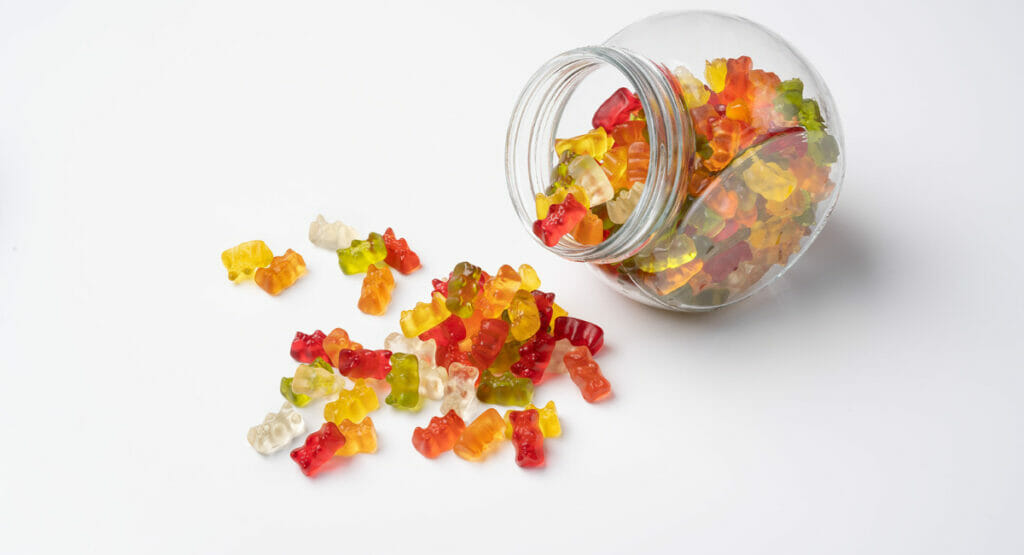
Picture of a jar of Haribo Golbären
(Image: Haribo GmbH & Co. KG)

The „Haribo Gold Bears“ are a real classic. As Patent and trademark protected by law since 1967, the bears were featured in their first TV advert in 1968. dedicated. They are therefore also a pioneer of German advertising television. They are so well known that 89 per cent of Germans can recognise the brand from the mere silhouette of the product. Currently, worldwide more than 160 million „Gold Bears“ produced per day. The annual production of Gold Bears would circle the globe more than ten times.

Important is the Consistency in the appearance of the brand design, which expresses perseverance and generates trust (and binds). The jury is impressed by the quality and the courage to continue the historical brand design of the „Goldbären“. Impressive is the Consistent validity of the design language, which continues to be used without compromise. In honour of its role as a „classic“ of international packaging design and at the same time in recognition of its proven courage to be self-similar, „Haribo Gold Bears“ will be awarded the „Packaging of the Year“ prize in 2022 to mark the product's 100th anniversary.

Source: German Packaging Museum

More news on confectionery

Dot meets sweet

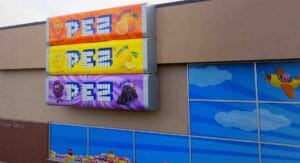
PEZ has converted its labelling technology in the packaging lines at its US site in Orange (Connecticut) and uses Leibinger printing systems for this purpose.
Read more "