New analyses from the Brewers Association (BA) and market research company NIQ show how the US craft beer market has developed in 2025. The focus is particularly on packaging formats and distribution channels – with clear shifts towards cans and extreme pack sizes.
The US craft beer market continues to be under pressure. According to data from the Brewers Association, the share of independently defined craft beer in the off-premise segment fell to 5.7 percent in 2025, down from 5.9 percent the previous year. The share also declined slightly under the broader NIQ definition. Despite this development, packaged beer remains a central part of the business model, as a large proportion of breweries distribute at least partially.
Aluminium packaging reaches saturation levels
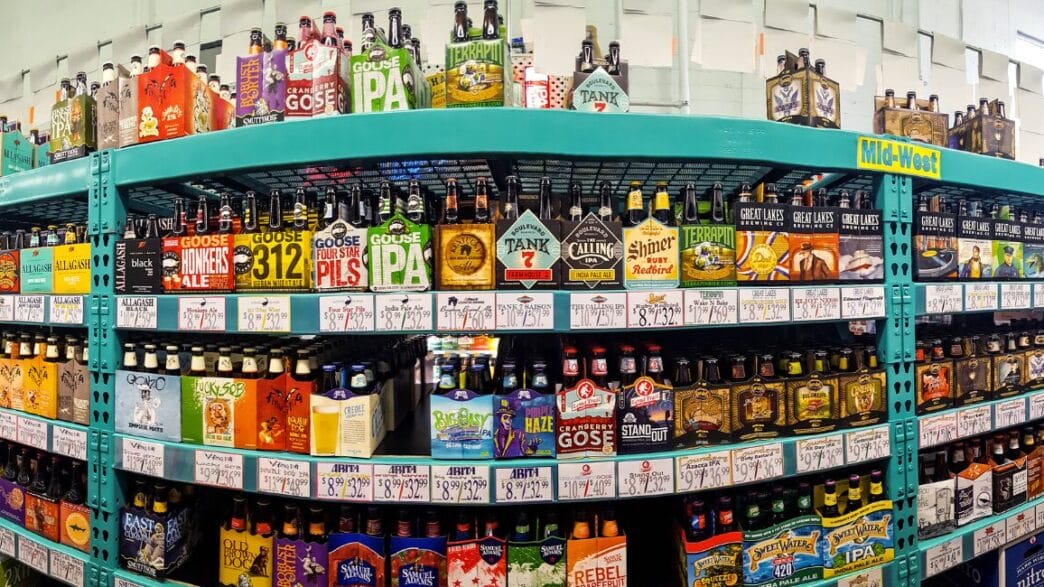
Aluminium cans are further solidifying their dominant role in the craft segment. In 2025, cans accounted for 78 percent of packaged volume, while glass bottles made up only 22 percent. This continues the long-term trend in favour of aluminium, although growth has recently slowed.

The development suggests that the market is approaching equilibrium. Factors such as largely achieved consumer acceptance, limited remaining substitution potential from glass, and possible effects of aluminium tariffs could explain this stabilisation. However, regional differences remain significant: while can shares exceed 90 percent in states with a strong outdoor connection, glass bottles continue to hold a stronger position in other markets.
Pack sizes are developing in two directions
Alongside the material question, increasing polarisation is apparent in packaging sizes. Although classic six-packs remain the leader with a 45 percent market share, they are continuously losing importance.
Both smaller and larger packaging formats are seeing growth. Individual packs („singles“) as well as 12-packs and 24-packs are gaining market share, while 4-packs are declining slightly. This development is primarily attributed to changing consumer behaviour: on the one hand, consumers are seeking lower entry prices per purchase, while on the other hand, demand for volume-based price advantages is increasing.
The development in single-serving containers is particularly striking. Here, large-volume can formats, such as 19.2-ounce containers, dominate and have been able to increase their share. At the same time, the segment remains strongly characterised by hop-forward beer styles.
Price pressure and concentration in large-format printing
In the area of larger packaging units, increasing market concentration is apparent. A significant proportion of the volume sold in 12-packs and 24-packs is accounted for by a few major suppliers. At the same time, prices are coming under pressure: while average prices in the overall market are rising moderately, they are actually falling in the case of 24-packs.
This development underscores the growing importance of value-for-money aspects in the market, it states. Larger packaging units benefit from economies of scale and particularly appeal to price-sensitive consumers.
Sales channels under pressure
Shifts are also apparent at the sales level. Overall, craft beer volume in retail declined by 6.6 percent. While convenience and grocery stores remained relatively stable, specialist drinks retailers recorded significantly steeper declines.
However, similar patterns are evident across all channels when it comes to packaging: single units are developing most stably, followed by packs of 12, while smaller multi-packs are under greater pressure.
Packaging remains a strategic lever
The current data make it clear that packaging plays a central strategic role in the craft beer market. Material choice, container size, and price positioning are closely linked to consumer behaviour and market conditions. While aluminium has established itself as the dominant packaging material, competition is increasingly shifting towards format and pricing strategies.
Source: Brewers Association