The Fraunhofer Institute UMSICHT has carried out a life cycle assessment study on paper made from silphie fibres for OutNature. The result: Silphie paper has positive environmental effects compared to cellulose cardboard, but the energy consumption during production on an outdated test paper machine is still high.
The basis for paper production is currently almost exclusively wood pulp, whether as virgin fibre or deinking material. Another - as yet little-known plant - could now become a new, sustainable fibre supplier for paper production: the perennial energy plant „Silphie“. Fraunhofer UMSICHT produced the study for OutNature, a supplier of silphia-based fibre and paper products, a life cycle assessment study on paper made from silphane fibres, The study investigated the potential environmental impact of silphie paper and compared it with conventional packaging paper made from virgin fibres.
Paper production from wood pulp is energy and resource-intensive and requires a high use of chemicals. At the same time the demand for paper packaging is increasing, which replace plastic, for example, among other things due to increasing demand in online retail. Alternative renewable raw materials and environmentally friendly processes for paper production are therefore in demand.

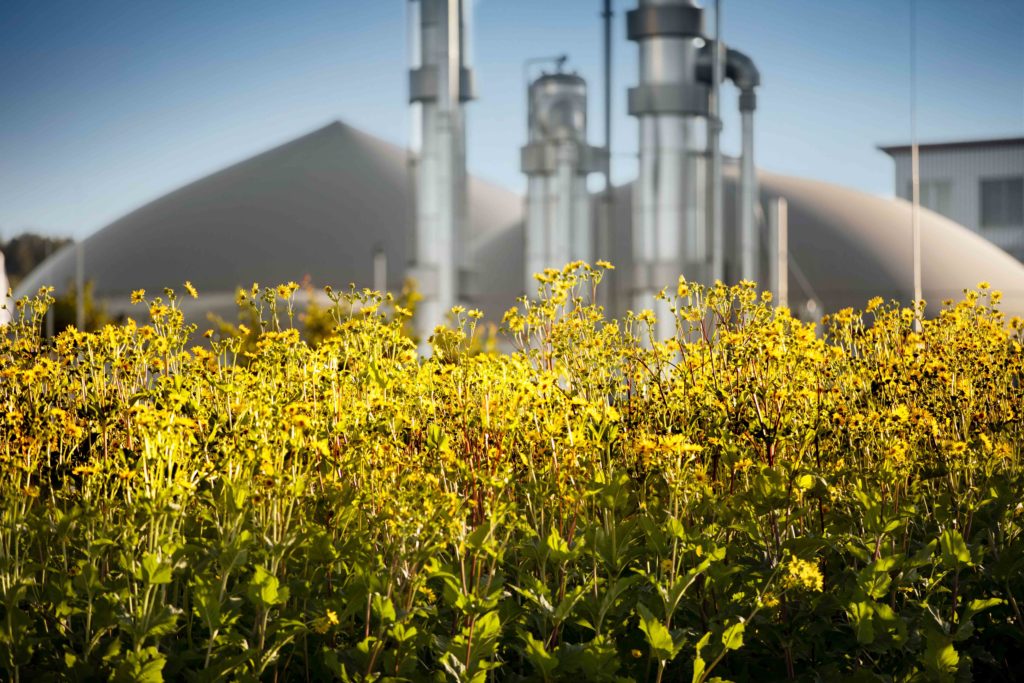
OutNature, a subsidiary of the environmental services provider PreZero, specialises in manufacturing fibre and paper products as the basis for sustainable packaging solutions, in particular on the basis of the energy crop „Silphie”. Originally from North America, this plant has gained importance in Germany in recent years as an alternative to maize cultivation and is used as biomass in biogas plants. The Silphie plant is a perennial wild perennial that is insect-friendly and also has positive effects on erosion and water protection.
From cultivation to disposal
For OutNature, Fraunhofer UMSICHT compared the life cycle assessment for paper made from Silphie with that of paper made from bleached or unbleached cellulose board and included both the cultivation of Silphie as biomass and the material and energy recovery of Silphie fibres, including end-of-life disposal, in the analysis. There is no difference in quality between the two types of paper, both can be further processed and printed into packaging. Silphie paper is also suitable for packaging applications with direct food contact.
Papers and cardboard based on Silphie fibres can be returned industrially via the paper cycle or household collection and processed into new paper. More in-depth studies on this will be presented soon. Part of the biomass is utilised for energy in both pulp board production and in the production of silphie paper. In the case of pulp board, this is the lignin content of the wood; in the case of silphie paper, the fibre is separated and a fermentation substrate is produced which is used for biogas production.
Positive climate effects through silphie paper
The LCA study has shown that silphie paper has a number of positive environmental effects compared to pulp board: fresh water is less eutrophic, ozone depletion and smog formation are lower, resource utilisation of minerals and metals is more environmentally friendly, and the paper is more environmentally friendly. Land utilisation improves due to the high yield of silphia. In terms of climate change and the consumption of fossil raw materials, cellulose cartonboard has advantages, particularly because it primarily utilises renewable energy from integrated cellulose production.
Environmental impacts relevant to cultivation, such as soil acidification, are also higher for Silphie paper than for pulp board, as no fertilisation is applied to the forest. The evaluation of the individual life cycle stages has shown that the energy consumption of the non-integrated paper machine is decisive for the environmental impact of the silphie paper, as the energy used today for the production of silphie paper has a higher impact on the environment. Test paper machine at the technical level of the 1960s is located.
Another important aspect for the life cycle assessment is the proportion of pulp in the Silphie paper. Currently, up to 50 per cent silphie fibres and up to 50 per cent pulp are used for paper production. Silphie fibre production has a lower environmental impact than pulp production. Compared to cellulose, Silphie fibres have a significantly lower climate impact. „The production of biogas from silphia and its conversion into electricity has a positive effect on the overall balance,“ explains Dr Daniel Maga, Group Manager, Sustainability Assessment at Fraunhofer UMSICHT.
»The results of the life cycle assessment study are promising; the paper production process alone still causes the largest amount of greenhouse gas emissions. With Silphie fibres, we have succeeded in generating a regional and renewable raw material with a transparent supply chain that is as a pulp substitute also makes sense from an ecological point of view is«, explains OutNature Managing Director Thomas Tappertzhofen.
Source: Fraunhofer prudence