Consumers want to buy their food as fresh as possible: If processing steps such as sorting fish by size or weight and packaging are carried out directly on board a ship, for example, this shortens the production process and the consumer receives a fresher product.
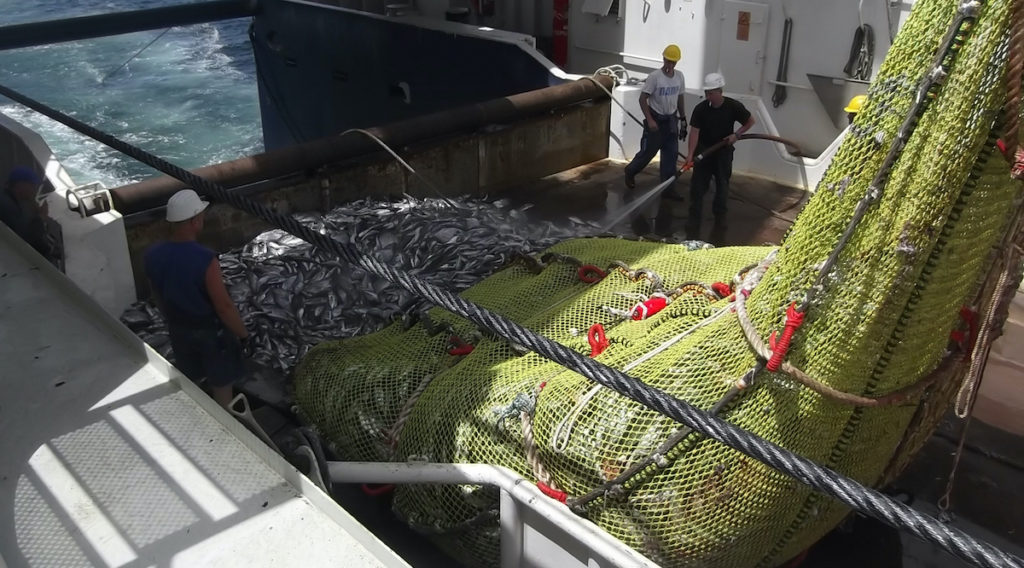
All types of weighing face similar challenges in terms of accurate mass control, which have a direct impact on costs and profit margins. In addition to these factors, however, users must also take into account special requirements with regard to the working environment. Especially the Precise weighing on board a sea fishing vessel is no easy task due to constant movement. On the one hand, the swell causes the ship to rock and sway. On the other hand, engines, winches and the like cause numerous vibrations.
Avoidance of losses
Weight plays a central role in all processes that the catch goes through in the production chain. Whether weighing individual fish, filled crates or entire pallets - weighing systems specially developed for the fish industry by Penko Engineering make it possible to Weight determination on board with equalisation of wave movements and thus ensure fast and precise processing.

However, each individual section of the weighing process requires a customised approach and corresponding technology. Above all, the Overweight and underweight fish batches the process. This is because inaccurate weighing not only increases waste, but also results in late deliveries and potential financial losses.
Technique for equalising movements
In addition to saving energy, precise dosing is primarily used to fill crates quickly and efficiently. By suppressing the motor vibrations, the system developed by Penko Engineering enables Motion-compensating weighingto compensate for external influences on the ship. Due to the irregular movements at sea, pre-set compensation is not possible. In addition, a ship at sea is more or less "alive" - engines, winches and windlasses cause vibrations that affect the overall dynamics.
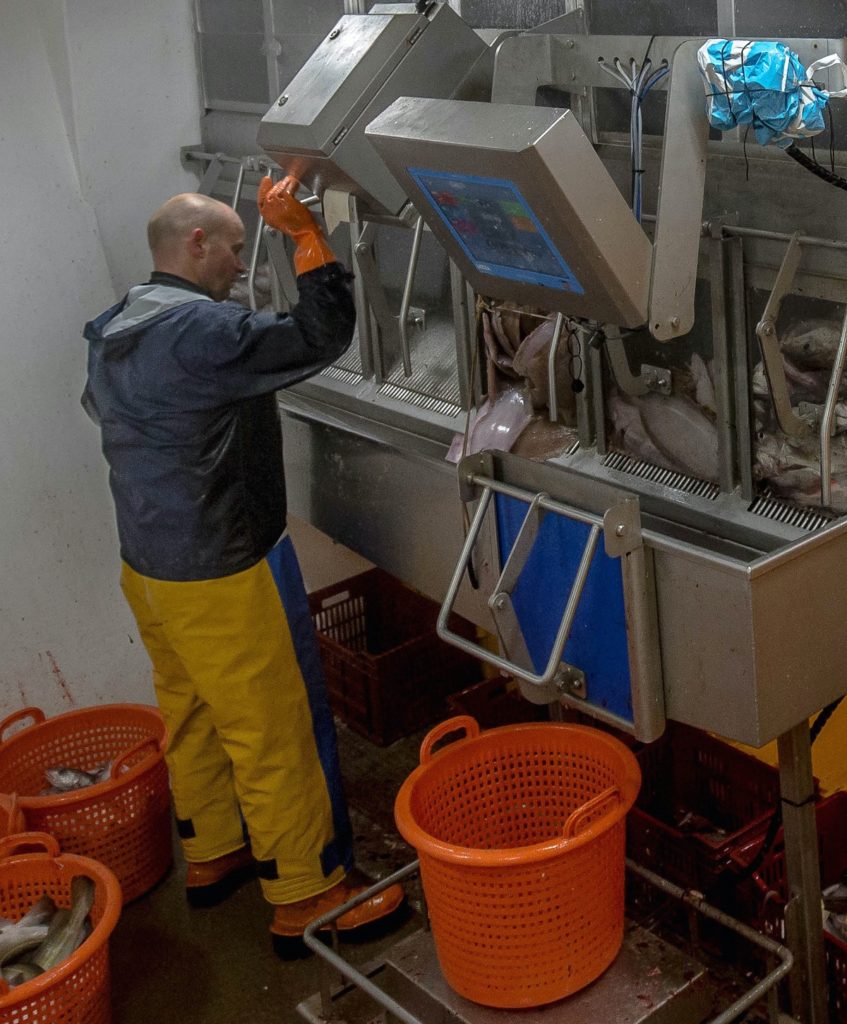
A specific measuring speed and the internal resolution of the weighing system ensure a high level of accuracy. arithmetic equalisation. This means that the user can accurately determine the weight of the fish per crate despite the constant movements of the ship. In addition, the construction is made of seawater-resistant and hermetically sealed stainless steel due to high humidity and salty water. In addition, when handling fish or other foodstuffs, it is important to use a Intensive cleaning of the devices The process therefore always requires fast processing with thoroughly cleaned equipment.
It all comes down to accuracy
In practice, the process developed by Penko Engineering is so accurate that the weighing process can be carried out in accordance with legal requirements and international trade standards. The system, which is based on numerous patented product developments, also has a type approval with an accuracy of 2,500 d (0.04 per cent). Thanks to several registration systems, the data can be accessed directly for evaluation.
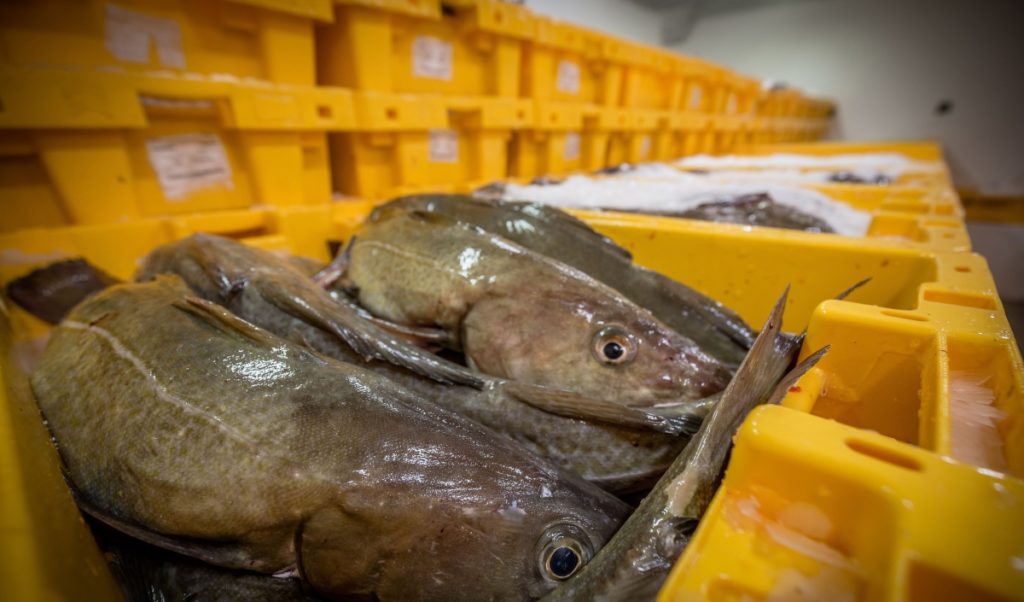
In the fishing industry, motion-compensated weighing enables batches with a low Error limit of around 0.5 per cent to generate. The interaction between the associated SGM700 and SGM800 series digitisers and the all-in-one FLEX controller model allows for all types of weighing applications at sea and thus completes the overall motion-compensated weighing system.
Fast and precise weighing on board
With the help of customised technology, the fisherman carefully measures the quantity and reduces the excess weight at the same time. While the catch is being brought on board, the user records the weight of the net and its contents. As freezing usually takes place directly after sorting, the fishermen adjust the size of the freezer to the quantity ordered by the customer.
The full batches consist of several small so-called freezers, each filled with a maximum of around 20 kilograms of fish. It is therefore important to weigh the fish batches precisely in order to ensure Efficient loading of the freezers guarantee. Additional costs associated with excess weight can thus be effectively reduced. In addition to economic savings, this type of weighing also means ecological sustainability in the food and packaging industry.
[infotext icon]Penko Engineering B.V. is a Dutch company and part of ETC Inc., a globally active group of companies. The company has been developing and manufacturing high-precision weighing and dosing systems for the process industry for over 40 years. In the packaging industry, the main focus is on weighing, portioning and dosing solids and liquids in the food sector as well as in the pharmaceutical and paper industries.